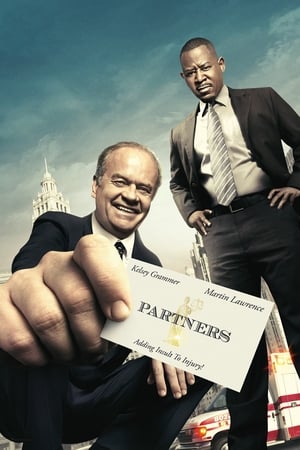
Young teacher Alfie Wickers is "the worst teacher ever to grace the British education system" – at Abbey Grove School, in Watford, Hertfordshire.
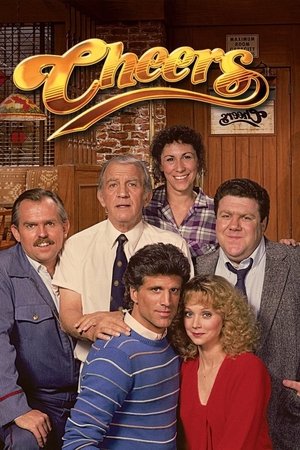
The story about a blue-collar Boston bar run by former sports star Sam Malone and the quirky and wonderful people who worked and drank there.
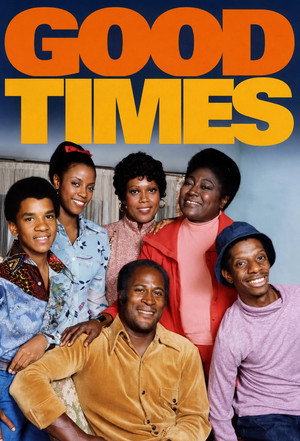
Good Times is an American sitcom that originally aired from February 8, 1974, until August 1, 1979, on the CBS television network. It was created by Eric Monte and Mike Evans, and developed by Norman Lear, the series' primary executive producer. Good Times is a spin-off of Maude, which is itself a spin-off of All in the Family along with The Jeffersons. The series is set in Chicago. The first two seasons were taped at CBS Television City in Hollywood. In the fall of 1975, the show moved to Metromedia Square, where Norman Lear's own production company was housed.
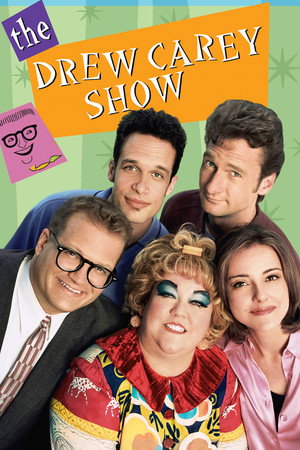
Drew is an assistant director of personnel in a Cleveland department store and he has been stuck there for ten years. Other than fighting with co-worker Mimi, his hobbies include drinking beer and not being able to get dates. To make a few extra bucks he has a micro-brewery going in his garage with his buddies.
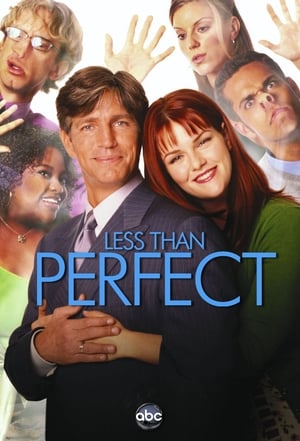
Claude Casey moved up in the secretarial world of television news, from temp to the anchor's desk. After her boss hires her full time, Claude realizes she may be in over her head in this world of assistants fighting to get ahead. But Claude is determined to prove that though she may not be perfect, she's not going down without a fight.
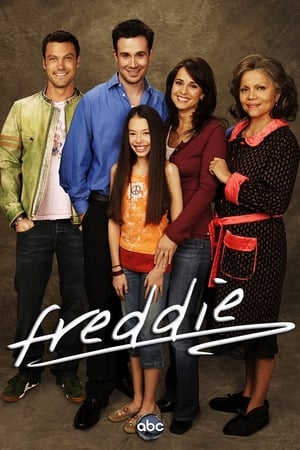
Freddie Moreno had finally escaped from the raucous house of women with whom he grew up. Having achieved some success as head chef at a trendy Chicago restaurant, he's ready for love and everything else that single life has to offer, including hanging out with his best friend and neighbor, Chris. Unfortunately, there's one slight hitch: After the death of his older brother and the collapse of his sister's marriage, goodhearted Freddie took in his impulsive sister-in-law, his pragmatic sister with her 13-year-old daughter and their irascible grandma, who refuses to speak English and only responds in Spanish – even though she understands every word. But while the members of this unconventional brood may test Freddie's patience endlessly, they also support and take care of one another, just as they always have. Now all Freddie has to do is figure out how to maintain his thriving bachelor lifestyle in a house overflowing with estrogen.
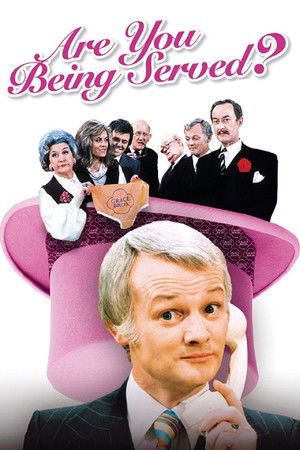
This comedy series, which follows the exploits of employees at London's fictional "Grace Brothers" department store, is full of sexual innuendo, slapstick, visual gags, and double entendres. Much of the show's humor parodies Britain's class system, and many of the show's characters are based on stereotypes of the period, including the effeminate Mr. Humphries and the rich, but stingy, store owner.
The Building is an American CBS television comedy that lasted only five episodes in 1993. Bonnie Hunt played Bonnie Kennedy, a commercial actress who was jilted by her fiance shortly before the show started and moved back to Chicago to pick up the pieces of her life in an apartment across from Wrigley Field. The series focused on Kennedy's struggles and the characters who lived in her apartment building. Making heavy use of Second City alum, the show was also filmed live; mistakes, accidents, and forgotten lines were often left in the aired episode.
Humans and aliens that work together at the country’s most mysterious place.
Cutters is an American sitcom that aired from June 11 until July 9, 1993.
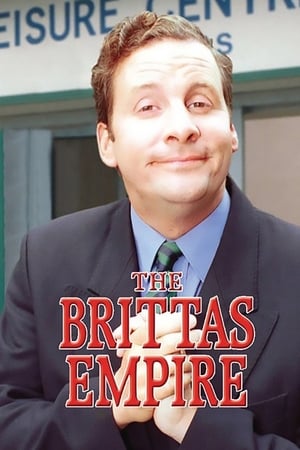
The Brittas Empire is a British sitcom created and originally written by Andrew Norriss and Richard Fegen. Chris Barrie plays Gordon Brittas, the well-meaning but incompetent manager of Whitbury New Town Leisure Centre. The show ran for seven series and 53 episodes — including two Christmas specials — from 1991 to 1997 on BBC1. Norriss and Fegen wrote the first five series, after which they left the show. The Brittas Empire enjoyed a long and successful run throughout the 1990s, and gained itself large mainstream audiences. In 2004 the show came 47th on the BBC's Britain's Best Sitcom poll, and all series have been released on DVD. The creators Andrew Norriss and Richard Fegen often combine farce with either surreal or dramatic elements in episodes. For example in the first series, the leisure centre prepares for a royal visit, only for the doors to seal, the boiler room to flood and a visitor to become electrocuted. Unlike the traditional sitcom, deaths were quite common in The Brittas Empire.
After 18 years of marriage, high school sweethearts Bill and Judy Miller still make each other laugh and try to keep their marriage intact, even when their family pulls them in different directions. Since Bill has a far more immature approach to marriage and raising their three children than Judy does, they work at striking a balance and remembering why they love each other, quirks and all.
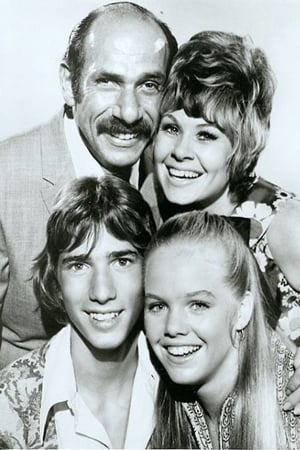
Arnie is a television sitcom that ran for two seasons on the CBS network. It stars Herschel Bernardi, Sue Ane Langdon, and Roger Bowen. Bernardi played the title character, Arnie Nuvo, a longtime blue collar employee at the fictitious Continental Flange Company, who overnight was promoted to an executive position. The storylines mainly focused on this fish out of water situation, and on Arnie's sometimes-problematic relationship with his well-meaning but wealthy and eccentric boss, Hamilton Majors Jr.. Because he still held his union card, Arnie could negotiate tricky management/labor situations that no one else could. Arnie's surname was presumably a pun on nouveau riche, and possibly also on Art Nouveau. In addition to Bernardi, Bowen, and Langdon, cast members included Del Russel and Stephanie Steele as Arnie's son and daughter, Richard and Andrea; Elaine Shore as Arnie's secretary, Felicia; and Herb Voland as sour-tempered executive Neil Ogilvie. In its first season, despite being the lead-in to The Mary Tyler Moore Show on Saturday nights and winning an Emmy nomination as best comedy series, Arnie received only fair Nielsen ratings. For its second season, in order to increase its viewership, CBS made a major cast change in the show's format. Charles Nelson Reilly joined the cast as Randy Robinson, a TV chef who called himself "The Giddyap Gourmet," apparently a reference to The Galloping Gourmet.
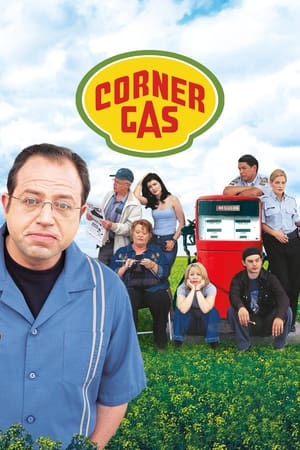
Following the adventures of a bunch of nobodies who get up to a whole lot of nothing in the fictional prairie town of Dog River, Saskatchewan, Corner Gas focuses on the life (or lack thereof) of Brent LeRoy, proprietor of a gas station that is the only stop for miles around and a hub of action on the Prairies.
Anime series about an entrepreneurial cat, Taishou, who runs a small ramen shop in Downtown Tokyo and Mr. Tanaka, his only real customer.
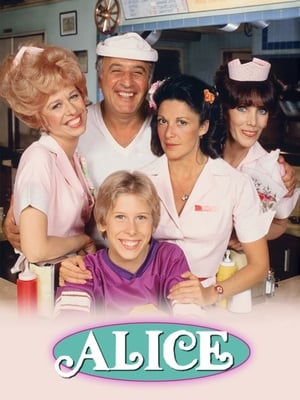
Alice is an American sitcom television series that ran from August 31, 1976 to March 19, 1985 on CBS. The series is based on the 1974 film Alice Doesn't Live Here Anymore. The show stars Linda Lavin in the title role, a widow who moves with her young son to start her life over again, and finds a job working at a roadside diner on the outskirts of Phoenix, Arizona. Most of the episodes revolve around events at Mel's Diner.
When an arrogant, maverick National Security Agent comes over from the US to join a newly-formed team tackling cybercrime at Britain's security headquarters, he enlists an inept and tactless computer analyst Joseph in a power grab that threatens to disrupt the team’s ability to combat cyber terrorism.
Good Company is an American television sitcom that aired on CBS on Monday nights from March 3, 1996, to April 15, 1996. The series is set at the offices of Blanton, Booker & Hayden Agency, a Manhattan ad agency.
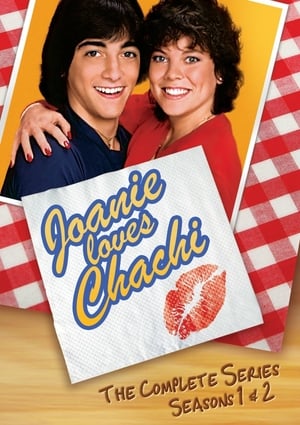
Joanie Loves Chachi is an American television spin-off of the American sitcom Happy Days that was originally broadcast on ABC from March 23, 1982 to May 24, 1983. It stars Erin Moran and Scott Baio as the titular Joanie Cunningham and Chachi Arcola, respectively.
Disillusioned after a long career at Sunshine Desserts, Reginald Iolanthe Perrin endures a midlife crisis and fakes his own death. Returning in disguise after various attempts at finding a 'new life', Perrin gets his old job back and finds nothing has changed. He is eventually found out, and later finds success with a chain of junk shops. However, it becomes so successful that he feels he has created a monster and decides to destroy it.