1989-1990. General Secretary of the CPSU Mikhail Gorbachyov begins global transformations in the USSR. He passionately wants to become a star in world politics and for this he is ready to go as far as he can to meet the West. But the perestroika planned by Gorbachyov leads to fatal, irreversible consequences. Intelligence officer Alexander Nechaev finds himself at the center of an operation organized by the intelligence services of several countries. During the months spent in Berlin at the moment of the breakdown of the entire post-war world order, Nechaev changed a lot. He no longer knows who is a friend and who is a traitor, but continues to defend the honor and interests of his Motherland...
Murderland is a 2009 British television drama miniseries created by David Pirie and directed by Catherine Morshead. The three-part serial concerns the points of view of a mystery surrounding a traumatic murder, as seen from the perspective of the three primary characters: Carrie, the daughter of the murdered woman; Douglas Hain, the detective in charge of the investigation; and Sally, the murder victim, all have their story to tell. Haunted by her mother's murder when she was a child, Carrie seeks to uncover the truth so that she can move on with her life. As the investigation unfolds, Carrie's yearning to discover who murdered her mother grows more intense, bringing her closer to the detective working the case.
In Barcelona’s Raval neighbourhood, the family-run restaurant “Can Mosques” faces eviction after an investment fund buys the building. The family’s fight to survive escalates, pushing them to cross any and all boundaries.
When Esther vanishes without a trace, her family is able to piece together her last movements thanks to José Jurado Montilla, a traveler who journeys across Spain sharing heartfelt videos of his trips on his TikTok account. But “Dynamite” Montilla – the last person to have been with Esther – hides a dark past
An old woman's possessions are auctioned, and orchestral conductor Timothy Clare and his family move into her large, though rather gloomy and dilapidated, old house in Bristol. It soon becomes clear that this is a house full of secrets, and that Mrs. Betterton had good reason to leave with her young granddaughter, the ethereal, otherworldly Emily; after a series of frightening experiences and disturbing discoveries - including a walled-up room containing a skeleton - the Clares realise that they are not the only occupants.
During the 2nd Sino-Japanese War, orphan Lu Feng returns to Shanghai as a Communist undercover agent, tasked with infiltrating No. 76 Headquarters. There, he crosses paths with the mysterious Hua Xiang Yu and his childhood friend Huo Fei, both hiding secrets of their own. As they circle each other in a dangerous game of loyalty and deception, these hidden agents must decide what they truly stand for, risking everything to fight for a better future.
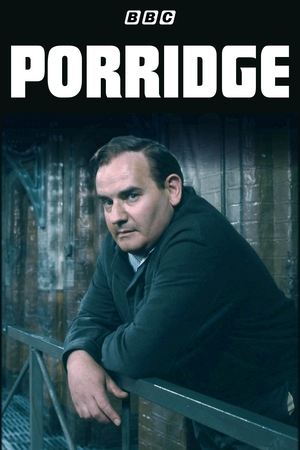
Porridge is a British situation comedy broadcast on BBC1 from 1974 to 1977, running for three series, two Christmas specials and a feature film also titled Porridge. Written by Dick Clement and Ian La Frenais, it stars Ronnie Barker and Richard Beckinsale as two inmates at the fictional HMP Slade in Cumberland. "Doing porridge" is British slang for serving a prison sentence, porridge once being the traditional breakfast in UK prisons. The series was followed by a 1978 sequel, Going Straight, which established that Fletcher would not be going back to prison again. Porridge was voted number seven in a 2004 BBC poll of the 100 greatest British sitcoms.
A retired professor with a knack for snooping gets a new lease on life when a private investigator recruits him to go undercover and crack a case.
Overworked and in love, Tawan struggles to balance his job, his relationship with Por, and a new friendship with the upbeat Mork.
Makio Sakaki, a 27-year-old aiming to become his father's successor. To prove his worth, he must pass high school and overcome various challenges including friendship, righteousness, and potential love.
Ernest Hemingway attained celebrity at the age of twenty-five. Some of his novels are among the greatest bestsellers of American literature. His life is a legend woven with countless passions, encounters and experiences. This colossus of a man was a novelist, journalist polemicist, playwright, hunter, fisherman, adventurer... A globetrotter with a hermit's soul, he went through three wars, had a life-long romance with danger, and made death his closest companion and his main source of inspiration. The son of a Puritan family, he was also a pleasure seeker. A self-confessed male chauvinist, he thought of Woman as a muse, a worshipper, a second mother. His four wives- Hadley Richardson, Pauline Pfeiffer, Martha Gellhorn and Mary Welsh - represented both his mirror and his straight man, seeking to appease his torments and contradictions and to accompany him to the end of his dreams.
The sole survivor of a lost whaling ship relates the tale of his captain's self-destructive obsession to hunt the white whale, Moby Dick.
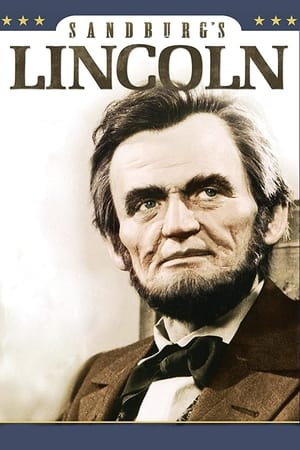
Lincoln (aka Sandburg's Lincoln) is an American six-part miniseries broadcast on NBC from September 6, 1974 to April 14, 1976.
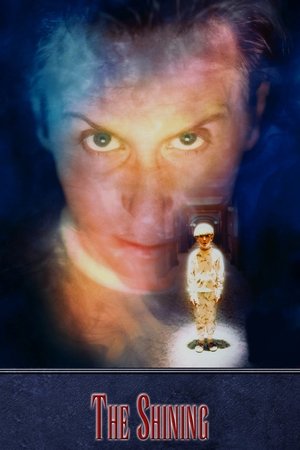
A new caretaker moves with his family into the mysterious Overlook Hotel for the winter.
永不消逝的电波
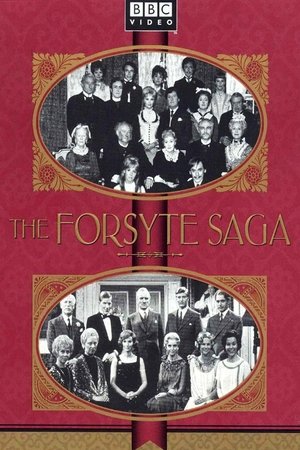
The Forsyte Saga is a 1967 BBC television adaptation of John Galsworthy's series of The Forsyte Saga novels, and its sequel trilogy A Modern Comedy. The series follows the fortunes of the upper middle class Forsyte family, and stars Eric Porter as Soames, Kenneth More as Young Jolyon and Nyree Dawn Porter as Irene. It was adapted for television and produced by Donald Wilson and was originally shown in twenty-six episodes on Saturday evenings between 7 January and 1 July 1967 on BBC2, at a time when only a small proportion of the population had television sets able to receive this channel. It was therefore the repeat on Sunday evenings on BBC1 starting on 8 September 1968 that secured the programme's success with 18 million tuning in for the final episode in 1969. It was shown in the United States on public television and broadcast all over the world, and became the first BBC television series to be sold to the Soviet Union.
The landmark documentary series that captures real life drama at its most intense, following police detectives around the clock as they investigate major crimes.
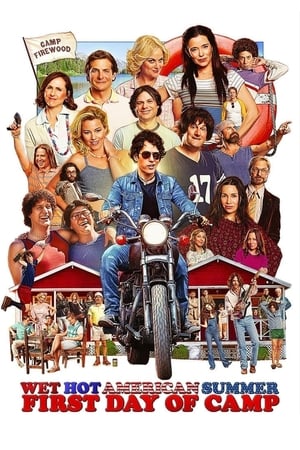
It's the first day of camp in this outrageous prequel to the hilarious 2001 cult classic movie. And at Camp Firewood, anything can happen.
The story of an empire: From its founding in 1922 to its dissolution in 1991, the Soviet Union was shaped by revolutionary idealism, but also by oppression and decay. The USSR evolved from Stalinist terror through the Thaw under Khrushchev to political processes such as glasnost and perestroika under Gorbachev. Finally, in 1991, it collapsed.
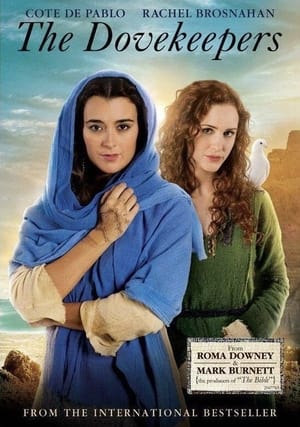
Set in ancient Israel, The Dovekeepers is based on the true events at Masada in 70 C.E. After being forced out of their home in Jerusalem by the Romans, 900 Jews were ensconced in a fortress at Masada, a mountain in the Judean desert. Besieged at Masada, the Jews held out for months against the vast Roman armies. The events are recounted from the perspective of a few extraordinary women who arrive at Masada with unique backstories, but a common bond for survival. Additionally, these women, who work together daily as dovekeepers, are all concealing substantial secrets. This four-hour limited event series is based on Alice Hoffman's bestselling, critically acclaimed historical novel.