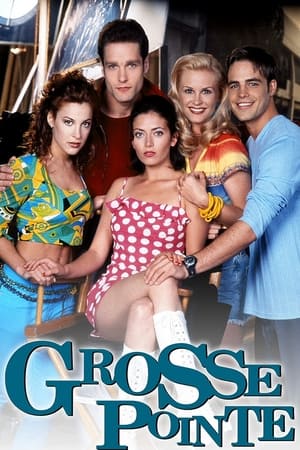
Louise, Adam and Lestor are good friends. They meet up in each other's flats or in a coffee bar to drink and discuss life, love and sex.
Retired mobster tries to get back in business by making friends with the kid of his ex-boss. To do so, he must became PE teacher in kid's school.
The story of a high school girl who asks to stay with her older sister in Bangkok during the school break to study extra and find out her passion. Her cuteness makes three young students in a rented house fall in love and compete to woo each other. Until it became chaos.
What could go wrong in a small Christian church? From failing sermons, to disagreements in the office, join this church staff as they go through the daily struggles of working in ministry.
Ferrari Thunderbird Taylor (aka Ferra) is never looking for trouble. Sometimes, and usually one of her good-for-nothing friends has something to do with it, it just sneaks right up and throws her for such a loop that she has no choice but to turn around strap on her heels, straighten her Bumpit and tell it what for.
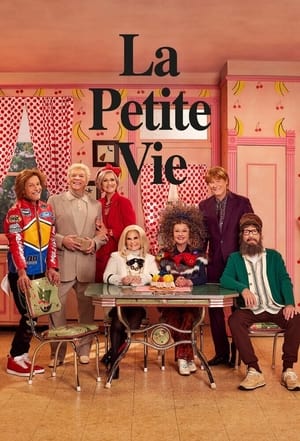
When Hulu reboots an early 2000s family sitcom, its dysfunctional cast is forced back together and now must deal with their unresolved issues in today’s fast-changing world.
A series of short mockumentaries which aired as a recurring segment in 'Charlie Brookers's Weekly Wipe'
A widower and father of three is on the verge of ruin, but he inherits an unexpected fortune from his uncle. But the money comes with one condition: that his family takes care of Chueco, an adult chimpanzee who has a huge secret: he can talk. Hiding this won't be easy, because the chimpanzee never shuts up and will get the family in all sorts of trouble.
Dom and Kay join the Met Police in the hope of cleaning up their community, but are unwittingly thrust into the murky world of deep cover infiltration as they become part of a powerful criminal enterprise. But for Dom and Kay it quickly becomes more of a fiasco than Donnie Brasco…
Paola y Miguelito, la serie
This show follows a middle-class family of five, each with their own distinct personality. In the context of their comfortable daily lives, they experience countless lighthearted and amusing scenarios. The father is a typical "macho man", while the mother works hard behind the scenes to raise their two sons. The eldest son is a middle manager who often plays the "peacemaker" role in his career, family and relationships, due to his fear of confrontation. His wife is a strong-willed insurance broker who cares deeply for her husband, but can also be overbearing at times. The youngest son is a capable young man who is lost when it comes to love. The show also features the family's neighbors, friends, and colleagues, each with their own distinct personality, and their interactions and relationships produce many heartwarming stories.
This innovative sitcom uses a surrealistic approach, featuring a different protagonist named Wu Gui in every episode. Although each Wu Gui has a different background and personality, they all appear to be silly and foolish. The show is not meant to be taken seriously and relies on absurd humor and random plotlines to make the audience laugh. Despite the lack of continuity between episodes, the characters are well-developed, and the acting is excellent.
After graduation, Diao moves in with his sister—but his new tenant, Rak, also becomes his demanding boss, leading to a chaotic clash at home and work.
In this edgy, irreverent reimagining of the TV classic, a new generation of the Evans family keeps their heads above water in a Chicago housing project.
Lost at Home is the name of a short-lived sitcom aired on ABC from April 1 to April 22, 2003. The show starred Mitch Rouse, Connie Britton, Gregory Hines, Stark Sands, Leah Pipes, Gavin Fink and Aaron Hill. The show was cancelled after only four episodes. This was Gregory Hines' last project before his death from liver cancer on August 9, 2003.
Her life reads like a country music tune: her husband cheated on her and spent all of their money, and after she gets mad, she's going to get even.
Turnabout is an American television situation comedy that first aired on NBC in 1979 and was based on a 1931 novel of the same title by Thorne Smith which had already been developed into the 1940 movie, Turnabout). The plot was about a married husband and wife who found themselves inhabiting each other's bodies similar to the plot of Freaky Friday. Turnabout only lasted 7 episodes, partly because it aired right after NBC's poorly watched Hello, Larry and competed with CBS's hugely successful series, Dallas.
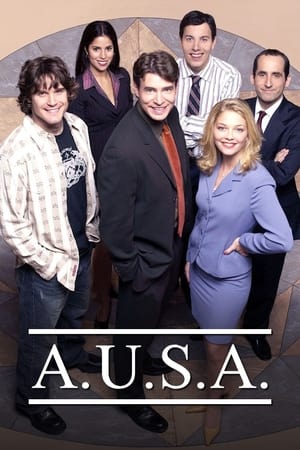
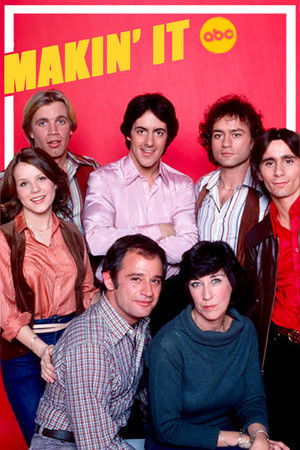
A sitcom about three divorced men sharing an apartment across the hall from their female divorce attorney, who is also their landlord.
The sitcom depicts a fictional street in Hong Kong and the inhabitants of two households in the same building. The "Chen Family" lives on the first floor, comprising the landlord, his wife, their eldest son & daughter-in-law, and their youngest son. The "Xu Family" are their tenants - the father, his daughter, and a pet bird. The show reflects various facets of life in the city, such as government allowances for seniors, subway gate regulations, stock trading, theft, beggars, gambling, and daily household chores. It portrays heartwarming moments that leave viewers with a smile.
This sitcom series premiered in 1981 and changed its name every year, from "Hong Kong 81" to "Hong Kong 86." It was eventually replaced by a new sitcom called "City Stories." A total of 1330 episodes were produced, making it the second-longest-running series in Hong Kong, after "Come Home Love: Lo and Behold". Each episode of this series is inspired by current social issues, with early storylines often satirizing society's flaws. The characters, such as "Chen Ji," "Mrs. Shun," "Uncle Mao," "Jue Wu Yin," "Miss Su," "A Wei," and "Ah Kang," mostly hail from the grassroots, leaving a lasting impression on the audience. For example, "Mrs. Shun," portrayed by Lydia Shum, later became a term to describe uneducated women who follow trends blindly. "Chen Ji," played by Lawrence Ng, is a stockbroker who loves to show off his wealth, and his behavior typified that of many Hong Kongers, becoming a byword for the city's nouveau riche.