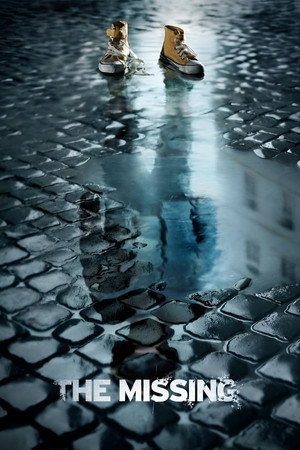
In a small town, a priest opens fire on his congregation, killing five parishioners. One year later, a journalist arrives to investigate the tragedy, and after digging beneath the surface finds himself in a life-and-death race to uncover the truth.
The murder of a young boy in a small coastal town brings a media frenzy, which threatens to tear the community apart.
Stop Susan Williams is an American horror television series that premiered on February 27, 1979 on NBC as part of the series Cliffhangers.
A star journalist moves to Alaska for a fresh start after a career-killing misstep, and finds redemption personally and professionally joining a daily metro newspaper in Anchorage.
Le Bleu du ciel
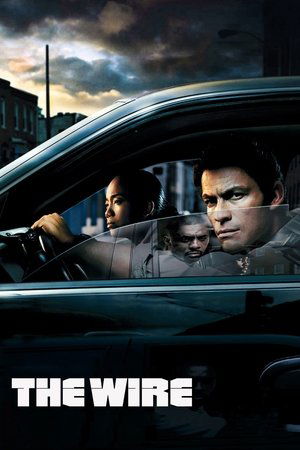
Told from the points of view of both the Baltimore homicide and narcotics detectives and their targets, the series captures a universe in which the national war on drugs has become a permanent, self-sustaining bureaucracy, and distinctions between good and evil are routinely obliterated.
O'
Boogie-woogie '47
Born in September of 1995, Momone Nagaura lived with her parents, grandfather, and sister in Kesennuma City, Miyagi Prefecture. After failing her college entrance exams, she went to live in Tome City with an acquaintance of her grandfather's. Momone's life changes when she meets a popular weather forecaster from Tokyo, who teaches her how weather forecasts can predict the future. She decides to study to become a weather forecaster.
In the fictional city of Saint Andrews, Brett Montgomery, a wealthy cosmetics businessman and doctor at the local hospital, and Brad, his evil twin brother, battle for control of the Montgomery family fortune. Brett’s fiancée, Cricket, is a journalist with the local television station and has a twin sister, Ashley, who is a nurse at the hospital.
Dunia Tanpa Koma tells the story of Raya, a young female journalist in a weekly news magazine called Target, who tries to publicize a piece about a drug syndicate at her magazine.
Peter Verås is an uncompromising journalist in the most respected newspaper in Norway. He makes his life’s biggest mistake when he gets hold of evidence of a financial fraud from an anonymous source. It turns out the evidence points to his own brother. As he still pursues and the story breaks, the brother commits suicide. Peter tries to track down the anonymous source, only to discover that the source was the brother himself. A search for the truth has commenced that involves media, high – ranked politicians as well as the financial elite. The closer he gets to the truth, the more dangerous it becomes for him and his brother’s family.
Audacious entrepreneur or con artist? A journalist chases down the story of Anna Delvey, who convinced New York's elite she was a German heiress.
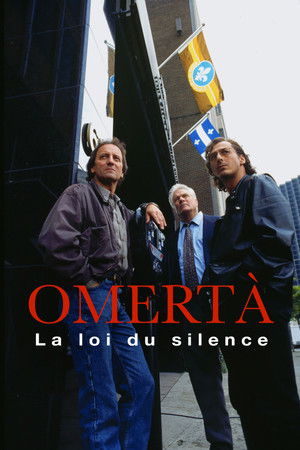
Omertà or Omertà, The Code of Silence is a Quebec television series of 11 forty-five minute episodes, created by Luc Dionne and aired from January to April 1996 on Radio-Canada. In France, the series aired on France 3 in 1998. A second season, titled Omertà II – The Code of Silence, had 14 forty-five minute episodes and was broadcast between September and December 1997 on Radio-Canada. A third season, titled Omerta, The Last Men of Honor, had 13 episodes and was broadcast from January to April 1999, on Radio-Canada.
A terrible child kidnapping incident takes place in a mansion complex, where only the top 1% of the most luxurious population reside. With no time to be shocked, the child returns dead and the killer is unknown. However, this incident was just the start of a tragedy. While the crowd is hiding the truth, there are some who start to reveal the twisted hypocrisy and ugly secret inside the mansion.
Idoles
Fragile tells the story of two diametrically opposite families: the wealthy, influential Bachands, and the salt-of-the-earth Coutures. It’s also the story of an unlikely friendship, that of Dominic Couture (Pier-Luc Funk) and Félix Bachand (Marc-André Grondin). The pair’s mysterious death sends shock waves through their families and community, exposing jealously guarded secrets, dangerous liaisons, and hidden agendas.
April, an aspiring journalist, is balancing her ambitious career with her family and a new office romance. In an unexpected twist of fate, April learns that she has leukemia.
With humour and compassion, Annie et ses hommes shows us the ups and downs of a modern family, focusing on the emotions and experiences of a woman in her forties. This dramatic comedy is a subtle portrait of a singular woman, Annie, and her clan. It’s a thought-provoking exploration of family life.
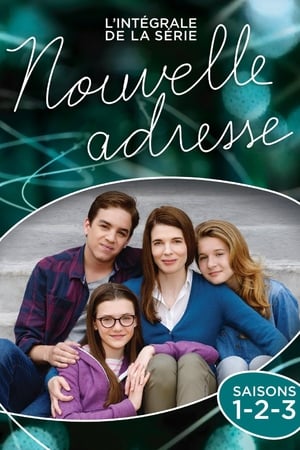
Nathalie Lapointe is in her early forties, a single mother of three with a successful career as columnist at a major newspaper. Just as she’s starting to think she might be able to pay more attention to her own needs, she gets terrible news: the cancer from which she recovered two years previously is back. How can she break the news to her kids? How can the family plan for the future with this sword of Damocles hanging over them? Despite the shock, life goes on. Nathalie must cope with evolving circumstances at the paper as well as at home. She wonders if she can allow herself to fall in love with her daughters’ school principal. As for her children, they must deal with their own teenage life challenges, all the while knowing that their mother may soon be gone. Nathalie’s best friend and neighbor is particularly hard-hit by the news: she’s already suffering from her husband’s infidelity and from the absence of her son, who is overseas. Nathalie’s misfortune also has a powerful effect on her three siblings. They must re-think their priorities at a time when all three are facing crucial choices in their emotional and professional lives. For Nathalie’s parents Janine and Gérard, her illness makes no sense. How do you face the very real possibility that your child will die before you?