The story revolves around a family whose life was destroyed due to the consequences of black magic. Salima believes in black magic and keeps going to these people for amulets and other things to solve her family problems. On the other hand, the story also revolves around the lifestyle of Ujala, Salima's teenage daughter who starts practicing black magic to obtain her love Fahad who is in love with Dua.
绝命鸳鸯
A loving couple become rivals when Belle opens a fusion bistro next to her ex-boyfriend Kram’s traditional restaurant in Bangkok’s chic Ari district.
An arranged engagement between a village girl and her city cousin shows signs of true love, but an indiscretion decades ago could doom their romance.
Surpassing personal conflicts, Ajooni and Rajveer embrace love. But with conspiracies brewing within the family, their relationship must stand the test of time.
幸せになろうよ
Follows the story of love, friendship and growth of six young men and women who move from countryside to the big city of Tokyo, each with their own dreams and aspirations. Among them is Sugihara Oto and Soda Ren. After her mother died, Oto was raised by adoptive parents in Hokkaido. Although she has given up on having any high hopes or big dreams for her future, she still remains positive and faces life with optimistic attitude. One day, she finds out the fact that her adoptive parents are planning to marry her to the wealthy man in town in order to solve their financial debt. Soda Ren was raised by his grandfather in Fukushima. Ren works hard on one job after another in order to earn the money to buy back his grandfather's land so that they can start farming again. By chance, Oto and Ren meet in Hokkaido and they decide to move to Tokyo to find new life to change their fate and future. However, as soon as they arrive Tokyo, they get separated in the crowds...
Amos, a 28-year-old baker, still lives with his parents and works in the family business. Noa is the most famous woman in the country and the beautiful daughter of a hotel magnate. Noa and Amos will meet by mistake, but it's a meeting neither will ever forget...
Eighteen Springs (also known as Affair of Half a Lifetime) is a 2003 drama-romance TV series based on the novel of the same name by Chinese author Eileen Chang. The series stars Ruby Lin, Patrick Tam, Jiang Qinqin and Li Liqun. It had the most simultaneous broadcasts on China cable/satellite TVs during 2004. The series was filmed in Shanghai and Taiwan.
Professor Luciano Lima arrives in the fictional town of Nova Esperança to take over as principal of a school. A widower, he hires a governess to take care of his four children: Júnior, Babi, Zizi, and Rui. The professor and the governess, Paula, fall in love, but the romance faces strong resistance from the children, especially Babi, the most rebellious of the four. Luciano also encounters difficulties at the school. His former girlfriend, English teacher Maria do Carmo, does everything she can to steal his position as principal. Meanwhile, a group of maladjusted and rebellious students, led by the biker Rafa, disrupts the school environment and bothers the other students. In this scenario, Giovana, a young psychologist hired by Luciano to help him deal with the rebellious students, emerges. She ends up forming a love triangle with Paula and the professor.
An anthology of sweeping true love stories that captured the world’s attention.
The telenovela tells the story of Pedro, a young singer seeking recognition and success. The son of Celso and Anita leaves his parents' home when he discovers that his brother Claudio has become involved with his girlfriend Selma. The singer then goes to live in a student community, where he meets the siblings Bruno, a composer, and Nina. Pedro and Bruno begin a professional partnership. Nina ends up falling in love with the singer, but is torn between him and the former seminarian Chico.
Alessandro and Anna, just over the age of 18, meet by chance during an Interrail trip to Spain. It is a hot summer in the late 1990s, and the two immediately fall in love. Their lives, however, are much more complicated than the fate that brought them together, and soon the two are forced to separate. Over the years they remain linked by an intense correspondence, never able to muster the courage to see each other. However, 20 years after their first meeting and now adults, they meet again in Bologna. Their feeling, which has never faded over time, will have to clash with the interferences of a reality more complex than the one they had created only through words.
Taiyo no Kisetsu is a Japanese drama TV miniseries which first aired on July 7, 2002. It starred Hideaki Takizawa and was directed by Nobuhiro Doi. The program was a remake of an earlier film of the same name, released in 1956.
Khushi and Arnav have diametrically opposite ideologies. If Khushi believes in means, Arnav believes only in ends. Khushi's relationships are the most important to her, whereas Arnav believes all people come with a price and can be manipulated for one's benefit.
When an estranged friend resurfaces after 12 years, a prosecutor starts connecting disjointed events to unveil the truth behind her father's tragic death.
Nora produces a podcast about hidden love stories—ranging from forbidden workplace romances to desires that clash with identity, family, and self-image. She helps others bring their clandestine romances out into the open, sometimes with far-reaching consequences. And Nora herself? She is, in a way, one of those secret loves—making the podcast, in essence, a quest of her own.
The intimate tale of two young people, Canadian singer and poet Leonard Cohen and extraordinary Norwegian woman Marianne Ihlen, falling in love during a period of their life when they are trying to figure out who they are and their place in the world, while one is becoming one of the most famous singers of all time.
A seemingly fake marriage sets the stage for a journey of unexpected turns, propelling two souls towards genuine affection; a choice awaits-unite in their adventure or embrace separate paths.
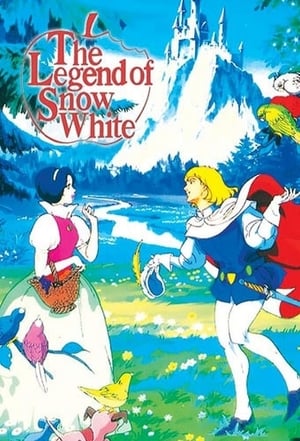
The Legend of Snow White is a Japanese anime series produced by Tatsunoko Production and based on the European fairy tale. Directed by Tsuneo Ninomiya and using a screenplay written by Jinzō Toriumi, the series premiered on NHK on April 6, 1994 and ran for 52-episodes until its conclusion on March 29, 1995. The series uses two pieces of theme music: one opening theme, "Heart no mori e tsuretette" by Miki Sakai with Red Dolphins, and one ending theme, "Folk Dance" by Mebae Miyahara.