Documentary covering the current state of both the theoretical and practical development of the various scientific basic principles that served, as per Gene Roddenberry's dictum, as a believable basis at the time for The Original Series. Several real-world scientists are interviewed, not a few of them unabashedly admitting they went into their chosen field of profession because of Star Trek: The Original Series.
In unusual circumstances, scientists from different countries work together to achieve a common scientific goal. Locked in their spinning space lab, they are isolated from the world — family and friends - and can only watch from the outside as life on Earth continues without them. The space station is a monument not only to the weaknesses of humanity, but also to its ability to do the impossible for the sake of life in space.
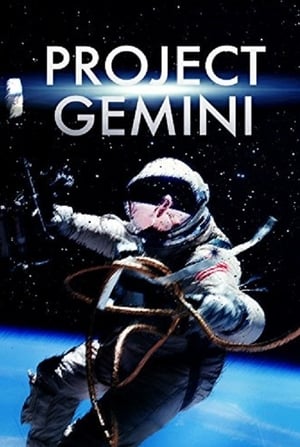
National Geographic's riveting effort recounts all 12 crewed missions using only archival footage, photos and audio.
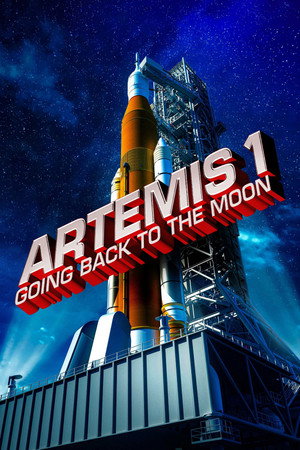
### Because of technical problems, the original broadcast date, intended as a companion program to the current mission, was postponed until at least April 2026. ### NASA’s Artemis II will mark the first crewed Moon mission since Apollo 17, set for early 2026. Four astronauts—Reid Wiseman, Victor J. Glover, Jeremy Hansen, and Christina Hammock Koch—will embark on a ten-day journey beyond Earth orbit, circling the Moon before returning home, reaching farther into space than humans have in over 50 years. Using the Space Launch System and Orion capsule, the mission tests every system for future lunar landings and a lasting human presence. This documentary provides exclusive, behind-the-scenes access—from astronaut training in Texas to rocket assembly in Florida—revealing the people, technology, and challenges behind this historic endeavor. Artemis II is a first step toward Artemis III and humanity’s next frontier: Mars.
Explores achievements of Eileen Collins, the first woman to pilot and command a spacecraft, paving the way for the next generation of female space explorers.
Sally Ride's groundbreaking journey as the first American woman in space concealed a deeply personal story. Her life partner, Tam O'Shaughnessy, unveils their covert 27-year romance and its accompanying sacrifices.
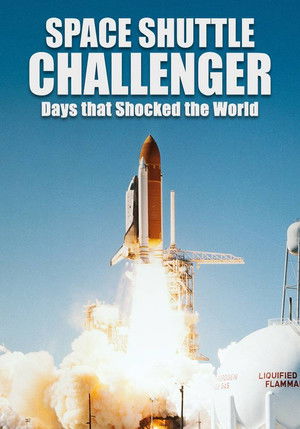
Tragedy struck when the Space Shuttle Challenger disintegrated just 73 seconds into flight. Hours earlier, engineers argued to cancel the launch, amid fears of such a tragedy – so why did it go ahead?
July 1969. Astronauts Neil Armstrong and Buzz Aldrin are 240,000 miles from earth facing the most hazardous venture in the history of space flight; the first human landing on another world. They'll succeed, abort, or die in the attempt.
The captivating tales of the people and events behind one of humanity's greatest achievements in exploration: NASA's Voyager mission.
Recently discovered footage reveals the secret history of NASA's first landing on the moon, and using this brand-new evidence, former astronauts and experts challenge everything known about the Apollo missions.
Who were the men and women of Project Apollo? Where are they today? What do they think of the extraordinary effort they helped make possible? Coinciding with the 50th anniversary of the first moon landing in 2019, When We Were Apollo is an intimate and personal look at the Apollo Space Program through the lives and experiences of some of its most inspiring behind-the-scenes figures: engineers, technicians, builders and contractors who spent the better part of a decade working to get us to the moon and back.
Apollo 11 : Retour vers la lune
At the heart of the Apollo program was the special team in Mission Control who put a man on the moon and helped create the future.
John Glenn goes on another journey into outer space for tests on how old age is affected there. His whole life is chronicled in this informative documentary, from his first mission above to his experience as a senator and finally, his blast into space at age 77.
C Jamy - Émission spéciale Thomas Pesquet
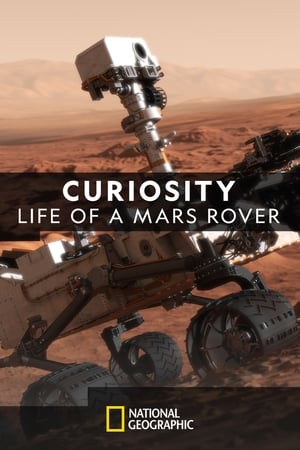
NASA launches its most ambitious hunt for traces of life on Mars, landing a car-sized rover in a rocky, ancient river delta. The rover will stow samples for possible return to Earth and test technology that may pave the way for human travel to Mars.
Documentary of Apollo 11 mission from NASA footage.
March 1965. In the heat of the Cold War, the USA and the USSR are competing for supremacy in space. What both superpowers aim for in this race, is to be the first to have a man walk in outer space. To accomplish that, no price is too high and no risk is too great. Now it’s up to the unlikely duo of a seasoned war veteran and a hot-headed test-pilot to fulfill this mission. Two men in a tiny spaceship, without proper testing, facing the complete unknown. They were supposed to do what no man has done before—and no man imagined what would happen next.
In 1962, spurred by the Cold War, President John F. Kennedy famously made the bold proclamation that NASA would send astronauts to the moon by the end of the decade, not because it was easy, but because it was a challenge. The Space Race inspired a generation to pursue careers in science and technology, but as the balance of world power shifted, interest in space exploration declined. "Fight for Space" serves as an urgent call to re-awaken our sense of wonder and discovery.
It contains 99.9 percent of all the matter in our solar system and sheds hot plasma at nearly a million miles an hour. The temperature at its core is a staggering 27 million degrees Fahrenheit. It convulses, it blazes, it sings. You know it as the sun. Scientists know it as one of the most amazing physics laboratories in the universe.