After their father's death, Sofía Ripoll, the oldest of three sisters, takes over the family's fictional successful chocolate factory. Though she is engaged to a man who uses her for money, she quickly falls in love with Salvador Cruz, a former racecar driver who takes a job as her chauffeur.
La paloma
Primeiro Amor
In this new era, Catalina, now head of the DEA in Colombia, has a new challenge: to track down a criminal organization that is trafficking a new synthetic drug. What she ignores is that her daughter is part of the Cartel that traffics them and that Yésica, her worst enemy, is infiltrated in the DEA.
Violetta is a lonely but exceptionally talented teenager who returns to her hometown of Buenos Aires after living many years on the “old continent”. Back home, she will visit Studio 21, a space full of art and music, and will become a frequent visitor. In her new life, she finds true friends and love, as she discovers her innate talent and passion for music and, in turn, builds and faces the great experience of growing up.
Fernanda Linares (Livia Brito) is a woman thirsty for revenge after the murder of her husband on their wedding night, where in addition, Fernanda was a victim of rape after the event occurred. However, Fernanda's life will change when she meets Rafael Toscano (José Ron), a handsome young man who recently just received his university degree with whom she will empathize and return to Fernanda the opportunity to love again.
El hogar que yo robé
Gabriela is a good and generous young woman studying at a university, without knowing who pays for her education since she has no family. After a series of circumstances, she decides to replace a classmate Leticia, a rich and vicious girl who after escaping never returned home.
Milagro y magia is a Mexican telenovela produced by Roberto Gómez Bolaños and Florinda Meza for Televisa and originally broadcast on Canal de las Estrellas from April 29 to August 30, 1991. Written by Florinda Meza and directed by Roberto Gómez Bolaños, the telenovela marked the duo's debut as telenovela producers and Florinda Meza's first leading role in the genre. The story is set in post-revolutionary Mexico and follows two orphaned children, Elisa and Pepe, as they leave their rural hometown in search of a better life in Mexico City. Separated by fate after escaping exploitation, they face hardship, love, and betrayal while struggling to reunite and build a brighter future.
This show is located in the picturesque Oštrovac, a village on the edge of the national park. Katarina, Tomislav and Krešo will get a million euros from his grandfather - but only if they spend a year in his ruined house in Oštrovac. Otherwise, the money belongs to the locals.
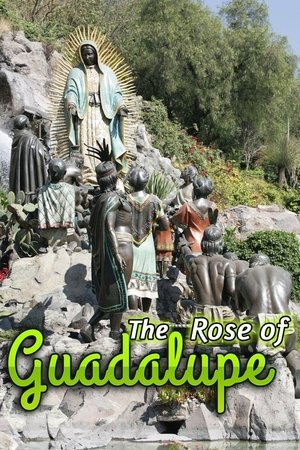
Stories about people who get into problems who use the help of Virgin Mary and where a rose appears and their problems are solved.
Vidas de Sal
The story of Renata Flores del Angel, a young woman from a wealthy family who falls for Pablo Ramos, the foreman of her father's estate.
Las secretas intenciones is a Mexican telenovela produced by Lucy Orozco for Televisa and originally broadcast on Canal de las Estrellas from August 17 to November 27, 1992. Created by Alberto Rudich and directed by Francisco Franco, the telenovela stars Yolanda Andrade and Cristián Castro in their first leading roles. The story follows Larisa Cardenal and Miguel Ángel Curiel, two young people whose romance is threatened by family conflicts, hidden secrets, and the manipulations of Antonieta Alcántara, a woman determined to take revenge on Larisa's family. As long-buried truths come to light, their lives become entangled in a web of love, betrayal, and ambition.
La sonrisa del diablo is a Mexican telenovela produced by Ernesto Alonso for Televisa and originally broadcast on Canal de las Estrellas from February 24 to July 31, 1992. It is the second adaptation of the 1970 telenovela of the same name, originally created by Luisa Xamar, and was adapted by Fernanda Villeli and Marcia Yance. The story follows Déborah San Román, a beautiful and ambitious young woman who stops at nothing to achieve wealth and power. After marrying a wealthy widower while secretly maintaining a relationship with her unscrupulous lover, she manipulates and betrays everyone around her. As her web of lies and crimes grows, love, honesty, and justice begin to threaten her ruthless ambitions.
After a family tragedy, the sweet Dulce Maria is cared for by kind nuns at a boarding school. But things change when Dad comes back into her life.
El cristal empañado
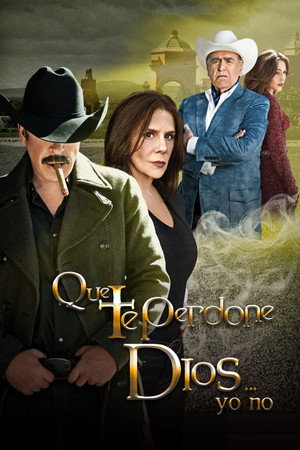
El Capo, the most wanted drug dealer in Mexico, has been intercepted while hiding with his trusted men, his wife and his lover. During his escape, he declares war on the government and his own past.
Lo blanco y lo negro
La fuerza del amor is a Mexican telenovela produced by Gonzalo Martínez Ortega for Televisa and originally broadcast on Canal de las Estrellas from June 4, 1990, to January 4, 1991. The story follows three young medical students who arrive in a remote town in Pachuca to complete their professional training. There, they face the influence of a local healer who has manipulated the community through false beliefs. As they try to gain the trust of the residents, they become involved in conflicts, love, and the struggle between knowledge and superstition.