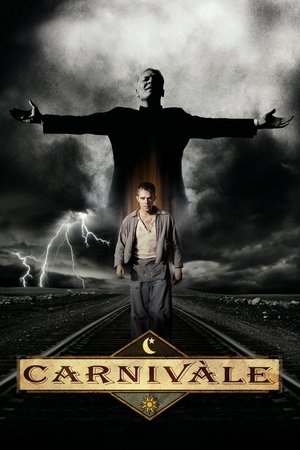
Carnivàle is an American television series set in the United States during the Great Depression and Dust Bowl. In tracing the lives of two disparate groups of people, its overarching story depicts the battle between good and evil and the struggle between free will and destiny; the storyline mixes Christian theology with gnosticism and Masonic lore, particularly that of the Knights Templar.
The story of George, who being frustrated by memories of fighting in the great war and living with his extended family, wants to bring more beauty into the world. When he comes across a camel and monkey that are about to be abandoned, he embarks on a plan to set up a zoo.
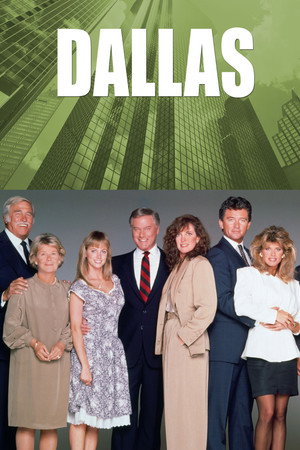
The world's first mega-soap, and one of the most popular ever produced, Dallas had it all. Beautiful women, expensive cars, and men playing Monopoly with real buildings. Famous for one of the best cliffhangers in TV history, as the world asked "Who shot J.R.?" A slow-burner to begin with, Dallas hit its stride in the 2nd season, with long storylines and expert character development. Dallas ruled the airwaves in the 1980's.
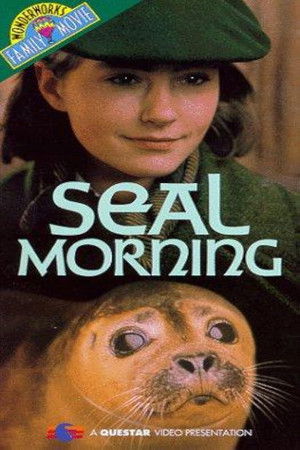
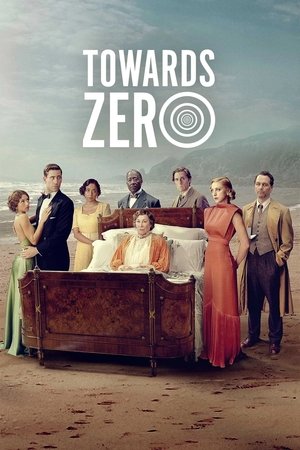
Nick Faunt, a Manchester millionaire's son, leaves home at the height of the Depression to become an artist. When he meets Irish serving girl, a strange love story begins.
Ten strangers, drawn away from their normal lives to an isolated rock off the Devon coast. But as the mismatched group waits for the arrival of the hosts -- the improbably named Mr. and Mrs. U.N. Owen -- the weather sours and they find themselves cut off from civilization. Very soon, the guests, each struggling with their conscience, will start to die -- one by one, according to the rules of the nursery rhyme 'Ten Little Soldier Boys' -- a rhyme that hangs in every room of the house and ends with the most terrifying words of all: '... and then there were none.
Special Agent Eliot Ness and his elite team of incorruptible agents battle organized crime in 1930s Chicago.
When the Boat Comes In is a British television period drama produced by the BBC between 8 January 1976 and 21 April 1981. Taking place between 1919 to 1937, Jack Ford is a First World War veteran who returns to his poverty-stricken (fictional) town of Gallowshield in the North East of England. It dramatises the interwar political struggles of the 1920s and 1930s, and explores the impact of national and international politics upon Ford and those around him.
In a backwater corner of the South Pacific in 1938, a young American adventurer and his ragtag group of friends become involved in death-defying hi-jinx, transporting people-on-the-run in a well-worn Grumman Goose seaplane.
In 1939, a town in the coal city of Zonguldak, a disaster occurs in the mine due to the neglect of the boss. While fighting for this cause, Davut will fall in love with his cruel boss's daughter
14 de abril, la República
In 1935, financially strapped widow Louisa Durrell, whose life has fallen apart, decides to move from England, with her four children (three sons, one daughter), to the island of Corfu, Greece. Once there, the family moves into a dilapidated old house that has no electricity and that is crumbling apart. But life on Corfu is cheap, it's an earthly paradise, and the Durrells proceed to forge their new existence, with all its challenges, adventures, and forming relationships.
After World War I, political divisions deepen in a village in Upper Bavaria. Julius Kraus, a reclusive cobbler, finds himself caught between the fronts when his Jewish identity is revealed. The two 90-minute feature films are based on the novel "Unruhe um einen Friedfertigen" (Unrest Around a Peaceful Man) by Oskar Maria Graf, a masterpiece of German-language exile literature.
The Family Holvak is an American drama series that aired on NBC from September, 1975 to June 28, 1977. The series centers on Rev. Tom Holvak, played by Glenn Ford, and his family living in the South during the Great Depression.
Epic drama set in the summer of 1932 where India dreams of independence, but the British are clinging to power. Set against the sweeping grandeur of the Himalayas and tea plantations of Northern India, the drama tells the rich and explosive story of the decline of the British Empire and the birth of modern India, from both sides of the experience. At the heart of the story lie the implications and ramifications of the tangled web of passions, rivalries and clashes that define the lives of those brought together in this summer which will change everything.
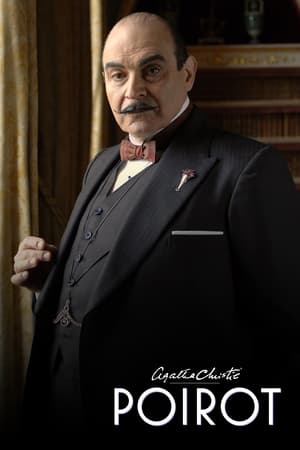
From England to Egypt, accompanied by his elegant and trustworthy sidekicks, the intelligent yet eccentrically-refined Belgian detective Hercule Poirot pits his wits against a collection of first class deceptions.
An extended family and four young people are drawn into the world of ska and two-tone music, which exploded from the grass roots of Coventry and Birmingham in the late ‘70s and early ‘80s, uniting black, white and Asian youths.
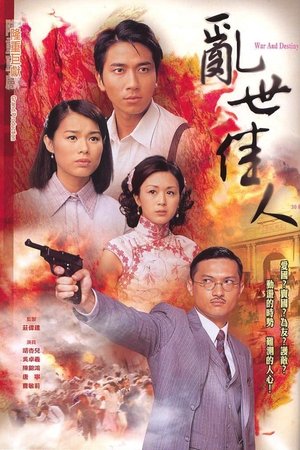
Set in 1930s Shanghai, Jiang Xin, an heir to a wealthy family, loses her memory in an accident. Du Xiaohan assumes her identity, while the real Jiang Xin is captured by powerful businessman Bai Zhangjie.
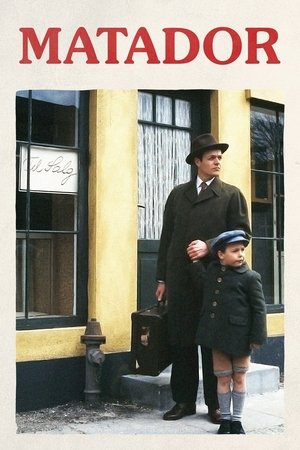
Matador is a Danish TV series produced and shown between 1978 and 1982. It is set in the fictional Danish town of Korsbæk between 1929 and 1947. It follows the lives of a range of characters from across the social spectrum, focusing specifically on the rivalry between the families of two businessmen: The banker Hans Christian Varnæs, an established local worthy, and social climber Mads Skjern, who arrives in town as the series opens. The name Matador was taken from the localised edition of the boardgame Monopoly, also the series' tentative English title. In addition, in contemporary Danish a "matador" is often used to describe a business tycoon, in the series referring to the character of Mads Skjern and his craftiness as a self-made entrepreneur. Directed by famed Danish film maker Erik Balling, Matador was the idea of author Lise Nørgaard who wrote the bulk of the episodes alongside Karen Smith, Jens Louis Petersen and Paul Hammerich. The series is one of the most well-known and popular examples of Danish television and represents the peak of longtime development of Danish TV drama by the public service channel Danmarks Radio. The series has become part of the modern self-understanding of Danes, partly because of its successful mix of melodrama and a distinct warm Danish humour in the depiction of characters, which were portrayed by a wide range of the most popular Danish actors at the time; but also not least because of its accurate portrayal of a turbulent Denmark from around the start of the Great Depression and through Nazi Germany's occupation of Denmark in World War II.
Lu Yiping, one of many children of a retired general with nine wives, is banished from her family home due to Wang Xueqin. Driven by resentment, she plots revenge by targeting her stepsister's love interest, He Shuhuan. But as Yiping navigates life with her mother, she unexpectedly finds forgiveness and love through the people she meets, transforming her journey of vengeance into one of self-discovery and healing.
Beneath the decadence of 1929 Berlin, lies an underworld city of sin. Police investigator Gereon Rath has been transferred from Cologne to the epicenter of political and social changes in the Golden Twenties.