Na Paz dos Anjos
In this new era, Catalina, now head of the DEA in Colombia, has a new challenge: to track down a criminal organization that is trafficking a new synthetic drug. What she ignores is that her daughter is part of the Cartel that traffics them and that Yésica, her worst enemy, is infiltrated in the DEA.
Carrie Jung lost her husband and child. She now lives only take revenge on those responsible for their deaths. Carrie Jung raises Han Yoo Jin as a tool in her revenge plan. Han Yoo Jin is a smart and beautiful woman, but she falls in love with a man who she should not love.
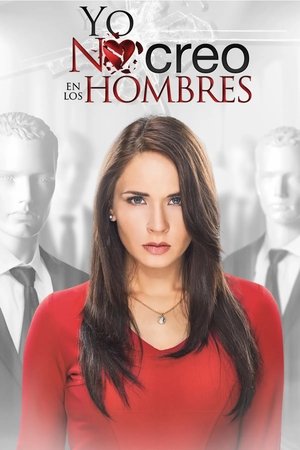
Yo no creo en los hombres (I don't trust men anymore) is a Mexican telenovela produced by Giselle González for Televisa. It is based on Yo no creo en los hombres (1991), produced in México.
Milagro y magia is a Mexican telenovela produced by Roberto Gómez Bolaños and Florinda Meza for Televisa and originally broadcast on Canal de las Estrellas from April 29 to August 30, 1991. Written by Florinda Meza and directed by Roberto Gómez Bolaños, the telenovela marked the duo's debut as telenovela producers and Florinda Meza's first leading role in the genre. The story is set in post-revolutionary Mexico and follows two orphaned children, Elisa and Pepe, as they leave their rural hometown in search of a better life in Mexico City. Separated by fate after escaping exploitation, they face hardship, love, and betrayal while struggling to reunite and build a brighter future.
La sonrisa del diablo is a Mexican telenovela produced by Ernesto Alonso for Televisa and originally broadcast on Canal de las Estrellas from February 24 to July 31, 1992. It is the second adaptation of the 1970 telenovela of the same name, originally created by Luisa Xamar, and was adapted by Fernanda Villeli and Marcia Yance. The story follows Déborah San Román, a beautiful and ambitious young woman who stops at nothing to achieve wealth and power. After marrying a wealthy widower while secretly maintaining a relationship with her unscrupulous lover, she manipulates and betrays everyone around her. As her web of lies and crimes grows, love, honesty, and justice begin to threaten her ruthless ambitions.
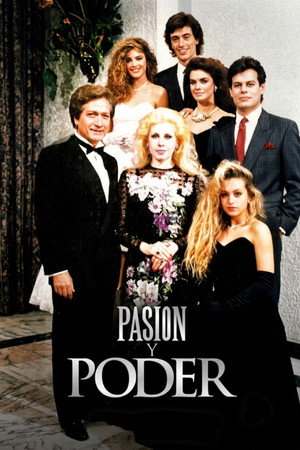
The telenovela revolves around the family dramas and corporate power struggles of two rival families. This rivalry dates back many years to when Arturo Montenegro and Eládio Gómez Luna vied for the love of the beautiful Ana Laura; ultimately, it was Eládio who married her. Years later, Ana Laura is deeply unhappy, enduring her husband's abuse and cruelty; her only solace is the love of her son Federico, who is the complete opposite of his father. Meanwhile, after being widowed, Arturo married the frivolous Nina, with whom he had three children: Rogelio, Ana Karen, and Paulina. Arturo is so consumed by his business affairs that he fails to notice the humiliations Nina and her children—Rogelio and Paulina—inflict upon Pedro, his son from his first marriage.
Balada por un amor
El camino secreto
A comedy-drama following a chaste young woman who is accidentally impregnated via artificial insemination as she struggles to inform her devoutly religious family and make the right choices concerning the child. Based on the telenovela "Juana la virgen."
Louco Amor
Clarisa is a Mexican telenovela produced by Juan Osorio for Televisa and originally broadcast on Canal de las Estrellas from March 15 to June 11, 1993. Created by Ramón Obón, Lupita Obón, Pilar Obón, and María Teresa García, with literary editing by Dinorah Issak, the telenovela stars Gabriela Roel and Manuel Landeta. Set in the 1930s, the story follows Clarisa González León, a kind-hearted young woman who becomes the target of her ambitious and resentful sister, Elide. After tragedy strikes her family, Clarisa loses her husband and is led to believe that her newborn daughter has died. Years later, determined to uncover the truth, she embarks on a journey marked by love, betrayal, family secrets, and the hope of reuniting with her child.
Las secretas intenciones is a Mexican telenovela produced by Lucy Orozco for Televisa and originally broadcast on Canal de las Estrellas from August 17 to November 27, 1992. Created by Alberto Rudich and directed by Francisco Franco, the telenovela stars Yolanda Andrade and Cristián Castro in their first leading roles. The story follows Larisa Cardenal and Miguel Ángel Curiel, two young people whose romance is threatened by family conflicts, hidden secrets, and the manipulations of Antonieta Alcántara, a woman determined to take revenge on Larisa's family. As long-buried truths come to light, their lives become entangled in a web of love, betrayal, and ambition.
The life of a single, carefree man suddenly changes when he has to take care of three nieces.
Sueño de amor
La última esperanza is a Mexican telenovela produced by Eugenio Cobo for Televisa and originally broadcast on Canal de las Estrellas from February 1 to May 14, 1993. It is a remake of the 1973 Mexican telenovela Muñeca, which was itself based on the 1971 Argentine telenovela Así en la villa como en el cielo, created by Abel Santa Cruz. The story follows Estelita Suárez, a kind-hearted young woman who lives in the impoverished neighborhood of La Última Esperanza while caring for her alcoholic father. Her life changes when she meets Daniel Burana, a wealthy young man who disguises himself as a poor resident to win her love. As their romance blossoms, they must confront family greed, corruption, and betrayal while fighting to protect their community from those determined to destroy it.
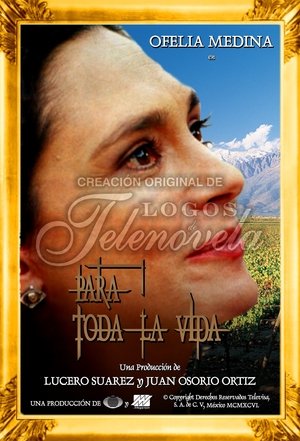
Para toda la vida is a Mexican telenovela produced by Lucero Suárez and Juan Osorio for Televisa, in co-production with Megavisión, and originally broadcast on Canal de las Estrellas from April 15 to August 2, 1996. It is a remake of the 1985 telenovela Vivir un poco, which was itself based on the Chilean telenovela La madrastra by Arturo Moya Grau. The story follows Elena, a woman who is wrongfully convicted of murder during a trip to Chile. After spending fifteen years in prison, she returns to Mexico under a new identity to uncover who framed her, expose the truth behind the conspiracy that destroyed her life, and reunite with the family that believes she died years earlier.
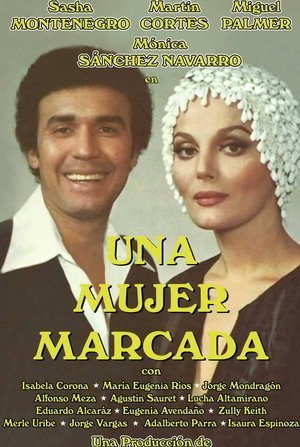
Una mujer marcada
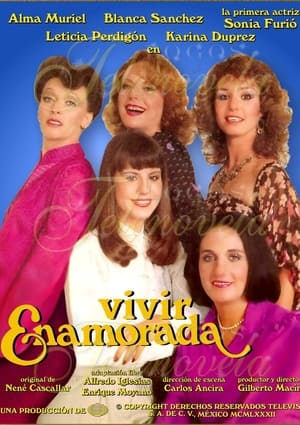
Vivir enamorada
Natalie, a poor but beautiful girl from a humble neighborhood, falls in love with and wins the heart of Victor Afonso—her childhood friend and the son of the city's wealthiest family. Natalie lives with a cruel old woman who forces her to beg to support her, yet also foresees through fortune-telling cards that "The Beast"—as Natalie is known—will one day find happiness and wealth. Believing this fortune is linked to "The Greek," a wealthy man in love with Natalie, the old woman sells her to him—unaware that Natalie and Victor Afonso had secretly married before he left the country for his studies. When the young man's parents discover the truth, they annul the marriage, indifferent to the fact that "The Beast" is pregnant with his child. Supported by her friend—a cabaret performer known as "La Costeña"—and by The Greek himself, Natalie turns her life around and gives birth to twins; however, she has no idea that The Greek intends to exact a price for all his generosity.