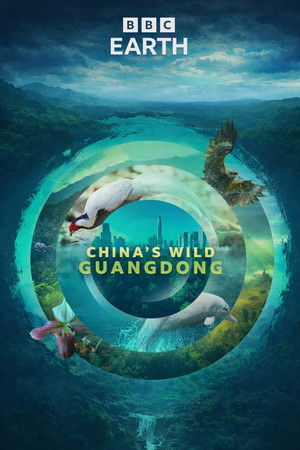
In new six-part series Untamed China, wildlife adventurer Nigel Marven explores the country's mountains and grasslands, crosses its greatest deserts and treks through its deepest jungles in search of the rare, little-known and extraordinary creatures that live there. Over half of China's plant and animal species live in Yunnan Province in the far southwest of the country. In episode one, Nigel goes there to explore the ancient city of Dali and the surrounding mountains and forests. He meets some bizarre and deadly reptiles and amphibians, goes on a very unusual fishing trip, enjoys the fairy-tale lifecycle of butterflies and gets up close to highly endangered Yunnan snub-nosed monkeys.
See It Now is an American newsmagazine and documentary series broadcast by CBS from 1951 to 1958. It was created by Edward R. Murrow and Fred W. Friendly, Murrow being the host of the show. From 1952 to 1957, See It Now won four Emmy Awards and was nominated three other times. It also won a 1952 Peabody Award, which cited its
Sitting on top of one of the world’s largest super-volcanos are 3,500 square miles of the most spectacular American wilderness. This summer, National Geographic Channel opens this world to you LIVE with a four-night special event. The action reaches boiling point in the world’s first National Park, Yellowstone.
Sir David shines the spotlight on some of nature’s evolutionary anomalies and reveals how these curious animals continue to baffle and fascinate.
Sir David discovers a microscopic world that’s invisible to the naked eye, where insects feed and breed, where flowers fluoresce and where plants communicate with each other and with animals using scent and sound.
Chilling tales of survival unfurl in this documentary series that captures the drama, danger and dark beauty of nature from the perspective of its prey.
The law of the wild is kill or be killed; learning how animals kill.
Millions of years ago, incredible forces ripped apart the Earth’s crust creating seven extraordinary continents. This documentary series reveals how each distinct continent has shaped the unique animal life found there.
Zoologist Jack Randall journeys into Australia's Outback to encounter extraordinary wildlife.
Capturing the high drama of the Serengeti’s distinctive wildlife up close.
Australian host Steve Irwin and his wife Terri run a wildlife refuge. Their shared passion is educating the world about wildlife, including the much feared crocodile and numerous venomous snakes. Steve's specialty is the capture and relocation of crocodiles. No animal appears too threatening to Steve, his true respect for animals is the foundation for everything he does.
Three Big Cats occupy the top of the food chain, but they must compete for prey and territory on the shores of Botswana's Gomoti River.
Observing badger behaviour at its wildest, with cameras in setts to capture every moment.
Meet the bizarre, amazing and breathtaking creatures and landscapes of a vibrant lost world; and discover how life not only survived during the cataclysmic events of this prehistoric era, but thrived.
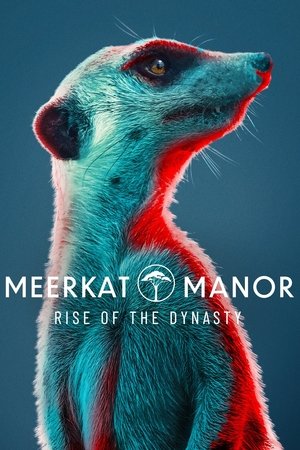
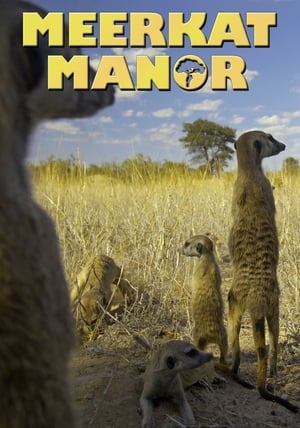
Meerkat Manor is a British television programme produced by Oxford Scientific Films for Animal Planet International that premiered in September 2005 and ran for four series until its cancellation in August 2008. Blending more traditional animal documentary style footage with dramatic narration, the series told the story of the Whiskers, one of more than a dozen families of meerkats in the Kalahari Desert being studied as part of the Kalahari Meerkat Project, a long-term field study into the ecological causes and evolutionary consequences of the cooperative nature of meerkats. The original programme was narrated by Bill Nighy, with the narration redubbed by Mike Goldman for the Australian airings and Sean Astin for the American broadcasts. The fourth series, subtitled The Next Generation, saw Stockard Channing replacing Astin as the narrator in the American dubbing.
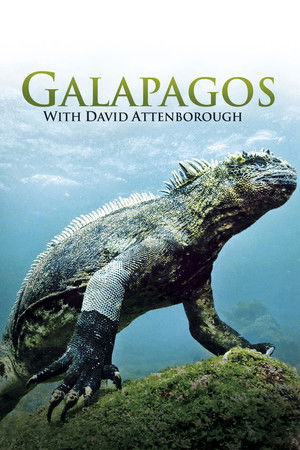
David Attenborough uses pioneering 3D-techniques and technology to explore the unique environments and species of the Galapagos.
A journey into the heart of Costa Rica's unique landscape following the efforts undertaken by scientists and citizens to preserve and restore the country's valuable natural heritage.
Discover the remarkable ways animals of all shapes and sizes are adapting to make the most of opportunities in the newest and fastest changing habitat on the planet - our cities.
Traveling to the far corners of the world, we discover the extraordinary ways animals are adapting to our rapidly changing planet. We witness nature’s remarkable resilience, as our perception of evolution and its potential is forever transformed.
An intimate and powerful experience, looking at some of the planet’s most fearsome animals in their own unique neighborhoods.