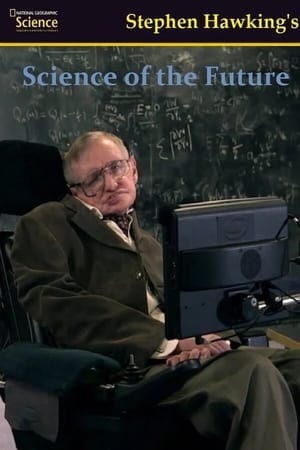
Stephen Hawking’s Science of the Future investigates the very latest game changing innovations. Each episode takes one area of progress and sends five top scientists out to actively test the inventions and breakthroughs that are driving it. The team explore human upgrades, the virtual world, bio-mimicry, high-tech emergency responses, and more. Featuring a wide range of examples, from advanced robotics and breathtaking digital actors, to cutting edge smart homes and electronic brain stimulation, the series reveals how science is delivering astonishing improvements to all our lives. Using the evidence they gather, the team reveals the year when each innovation will be rolled out for us all to benefit from, and Hawking then draws out his own uniquely insightful predictions about what our world will be like in the years to come.
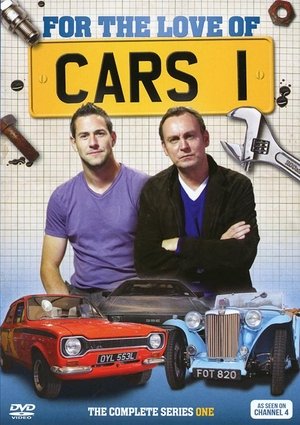
James May takes a look at the 'peoples car'. Covering every form of cars for the masses - from the Beetle to the Kei Car, May looks at the many forms of people's car, their origins and their effect on history. Each episode covers a particular theme; these being cars from dictatorships, microcars and the dream cars we aspire to.
Explore the impact of A.I. and how it is transforming the way we live and work -- both now and in the future, featuring some of the brightest minds in science, philosophy, technology, engineering, medicine, futurism, entertainment and the arts to tell the dynamic story of A.I.
嫦娥六号
Humains 3.0
The series investigates Paolo Macchiarini’s claims to have invented a ground-breaking method to create new organs. His method using plastic tracheas sown with stemcells has been operated on patients in the US, Russia, Sweden and the UK. So far, unfortunately, the track record of his plastic organs is not very good. Almost all patients are dead. And several of his former surgeon colleagues in Sweden claim that not only does the method not work, but that his scientific claim to fame is based on falsified and misrepresented data. Some even claim that his patients have been used as human guinea-pigs.
Using state-of-the-art technologies, Richard Hammond goes beyond the limits of the naked eye and explores the hidden secrets of the invisible world around us.
Explores the scientific, social, economic and environmental consequences of supposedly time-saving inventions, ideas and objects. Throughout a lifetime, the minutes that are actually lost or saved can add up to days, weeks, months or even years.
The Secret Life of Machines is an educational television series presented by Tim Hunkin and Rex Garrod, in which the two explain the inner workings and history of common household and office machinery. According to Hunkin, the show's creator, the programme was developed from his comic strip The Rudiments of Wisdom, which he researched and drew for the Observer newspaper over a period of 14 years. Three separate groupings of the broadcast were produced and originally shown between 1988 and 1993 on Channel 4 in the United Kingdom, with the production subsequently airing on The Learning Channel and the Discovery Channel.
HISTORY’s longest-running series moves to H2. Modern Marvels celebrates the ingenuity, invention and imagination found in the world around us. From commonplace items like ink and coffee to architectural masterpieces and engineering disasters, the hit series goes beyond the basics to provide insight and history into things we wonder about and that impact our lives. This series tells fascinating stories of the doers, the dreamers and sometime-schemers that create everyday items, technological breakthroughs and manmade wonders. The hit series goes deep to explore the leading edge of human inspiration and ambition.
Bill Nye explores science and its impact on politics, society and pop culture. Each episode tackles a topic from a scientific point of view, dispelling myths, and refuting anti-scientific claims that may be espoused by politicians, religious leaders or titans of industry.
Notre part animale
From renowned author, educator and television presenter Ted Rimmarniet comes "Our Fascinating Planet", an exciting new educational series that explores our Universe and ourselves - and our place in both of those things. Featuring episodes on Space, Energy, The Brain and The Earth, this staggeringly monumental series contains all of the passion, wonder and curiosity of award-winning programs like “NOVA" but with double or triple the amount of fascinatingness.
James May takes a look at some of the greatest developments of the 20th century.
Chasing Classic Cars follows master car restorer Wayne Carini as he embarks on a mission to uncover the world's most rare and exotic cars. Get an insider's look at the elite club of car collectors as Wayne buys, restores, and sells vintage rides.
Georg Riha is and will remain the master of aerial shots. In this series, Riha uses aerial shots only. In shootings that took several years he flew over almost all of Austria and shows the country's most beautiful places from the aerial perspective during the course of a year.
Extremely popular with French audiences, Jamy Gourmaud made science accessible to all with the cult programme “C’est pas sorcier” (It’s not rocket science). Today, he travels all over the world with journalist Églantiné Éméyé to demystify the world around us: climate change, food, road safety, air traffic, animal intelligence…even fireworks and roller coasters! Filled with funny, lively experiences, explanatory 3D images and breathtaking landscapes, “Jamy’s World” is the go-to, popular science show.
A nine part television series, produced by J.C. Crimmins for PBS. Music composed, arranged and performed by Pat Metheny and Lyle Mays. The stated purpose of “The Search for Solutions” is to stimulate interest in science and technology, primarily among the young. The film comprises nine 18-minute sections touching on various aspects of scientific inquiry that its makers say can be shown as a whole, as it is in this engagement, or in any combination of its parts.
Geologist Iain Stewart retraces the steps of a band of maverick pioneers who made ground-breaking discoveries in the landscape of Scotland about how our planet works.
Enjoying the best and worst of new and old technology.