Bamzooki is a mixed reality television gameshow on the BBC which features a toolkit developed by Gameware Development. The first series aired in March 2004 on CBBC. The show was presented by Jake Humphrey. It has occasionally featured specials with Sophie McDonnell. In July 2008, it was announced on CBBC on BBC One that Bamzooki was returning. A new thirteen part series began in November 2009 and was now hosted by Barney Harwood and Gemma Hunt.
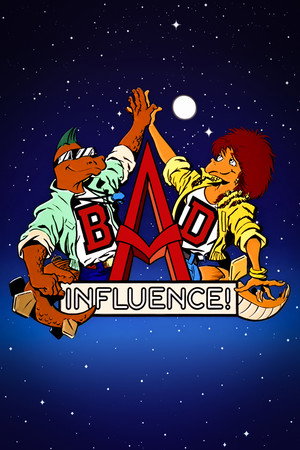
Bad Influence! is an early to mid-1990s British factual television programme broadcast on CITV between 1992 and 1996, and was produced in Leeds by Yorkshire Television. It looked at video games and computer technology, and was described as a "kid’s Tomorrow's World". It was shown on Thursday afternoons and had a run of four series of between 13 and 15 shows, each of 20 minutes duration. For three of the four series, it had the highest ratings of any CITV programme at the time. Its working title was Deep Techies, a colloquial term derived from 'techies' basically meaning technology-obsessed individuals.
Herre på täppan
Hollywood Squares is an American panel game show, in which two contestants play tic-tac-toe to win cash and prizes. The "board" for the game is a 3 × 3 vertical stack of open-faced cubes, each occupied by a celebrity seated at a desk and facing the contestants. The stars are asked questions by the host, or "Square-Master", and the contestants judge the veracity of their answers in order to win the game. Although Hollywood Squares was a legitimate game show, the game largely acted as the background for the show's comedy in the form of joke answers, often given by the stars prior to their "real" answer. The show's writers usually supplied the jokes. In addition, the stars were given question subjects and plausible incorrect answers prior to the show. The show was scripted in this sense, but the gameplay was not. In any case, as host Peter Marshall, the best-known "Square-Master" and the man in whose honor the show's first announcer, Kenny Williams, actually "coined" the term, would explain at the beginning of the Secret Square game, the celebrities were briefed prior to show to help them with bluff answers, but they otherwise heard the actual questions for the first time as they were asked on air.
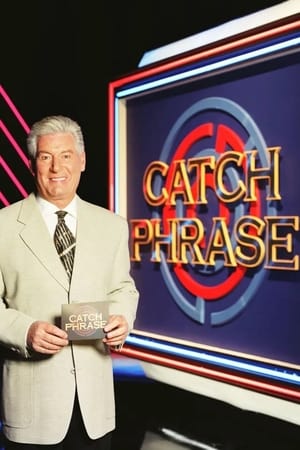
Catchphrase is a British game show based on the short-lived U.S. game show of the same name. It originally aired on ITV in the United Kingdom between 12 January 1986 and 19 December 2002. It was presented by Northern Irish comedian Roy Walker from 1986–1999; followed by Nick Weir from 2000–2002, and Mark Curry in 2002. In the original series, two contestants, one male and one female would have to identify the familiar phrase represented by a piece of animation accompanied by background music. The show's mascot, a golden robot called "Mr. Chips", appears in many of the animations. In the revived version of the show, the same format remains, but there are three contestants. In August 2012, it was announced that Stephen Mulhern would host a revived version of the show beginning on 7 April 2013. On 21 August 2013, it was confirmed that Catchphrase has been re-commissioned for a second series, following the success of the first.
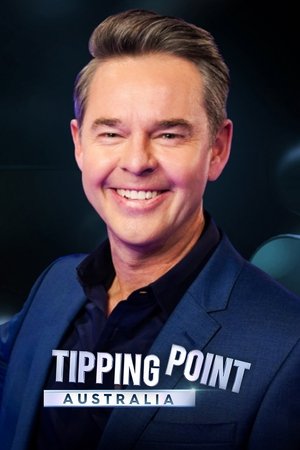
Australian version of British game show Tipping Point (2012). Contestants can win up to $40,000 by inserting counters into a jackpot machine.
Five contestants attempt to answer top 10 list questions for the chance to win a big cash prize.
Le Juste Prix is a French adaptation of the American game show The Price Is Right that airs on TF1. It first premiered in 1988 and ran until the original version was canceled in 2001. In 2002 a brief sequel, Le Juste Euro, ran on France 2 and was hosted by Patrice Laffont, it only ran for two episodes. On July 27, 2009 a new version of Le Juste Prix premiered on TF1. The current version is hosted by Vincent Lagaf with Gerard Vivès as announcer.
A contestant must choose from 26 sealed briefcases containing a marker for various amounts of cash from one penny to $1 million. The player then eliminates the remaining 25 cases one by one. The chosen ones are opened and the amount of money inside revealed. After several cases are opened, the player is tempted by the Banker to accept an offer of cash in exchange for not continuing the game and possibly winning a larger sum of money.
In this panel game show, contestants try to match answers given by six celebrities to humorous and often risque fill-in-the-blank questions.
French adaptation of the popular American game show.
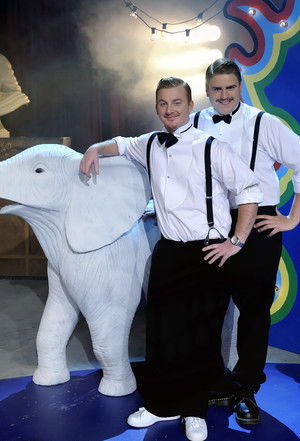
Hider in the House was a British children's game show presented by Jason King and Joel Ross. In the programme, a celebrity had to be hidden in a family's house by three children and a parent. If the family have fewer than three children, they use friends or related children to make up the numbers. The other parent of the family thinks they are taking part in a totally different programme. The children involved must undergo a series of tasks to win prizes which they will receive if the unaware parent does not work out what is really happening. The tasks are sometimes very messy or involve getting the unaware parent to do strange things. The format, was devised by Eyeworks UK, won the Best Entertainment prize at the 2008 Rose d'Or ceremony.
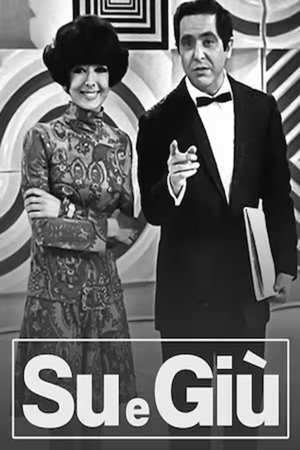
Su e giù
The Artist, les primes
Are You Smarter Than a 5th Grader? is a television game show format based on posing grade-school level questions to adults, hosted by Jeff Foxworthy. This television show began broadcast on the Fox Broadcasting Company network as a special in the United States and Canada on February 27, 2007, and it grew to be popular enough that a half-hour-long syndicated TV series was developed by the owners.
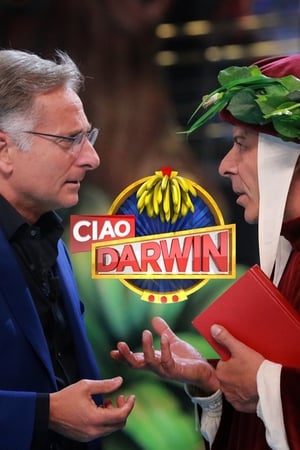
Ciao Darwin is a variety game show format from Italy sold under licence to several countries, including Romania, Hungary, Poland, Serbia, Canada, USA, China and Greece. There are two competing teams of about 50 people each, usually made up of people who fit certain opposing stereotypes. In each game two members of the audience are selected at random, one from each team, indicated by a light in front of them which remains illuminated when all the other team members' lights have gone off. The games involve contestants competing in acts of bravery, style and talent, some of which are designed to humiliate the contestants, especially an assault course which was introduced with the Italian version in 2010, and the Finale which is a water tank game.
Takeshi's Castle was a Japanese game show that aired between 1986 and 1990 on the Tokyo Broadcasting System. It featured the Japanese actor Takeshi Kitano as a count who owns a castle and sets up difficult challenges for players to get to him. Contestants throw themselves into daunting physical challenges as they attempt to storm Takeshi's Castle and win the grand prize of one million yen. The show has become a cult television hit around the world. A special live "revival" was broadcast on April 2, 2005, for TBS's 50th anniversary celebrations.
Stadskampen
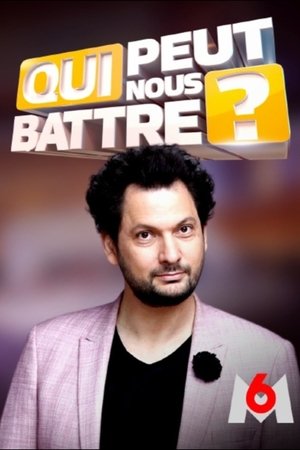
In each episode, four strangers join forces to give unanimous answers to general knowledge questions. The longer the team takes to respond, the lower the cash prize. At the end of each episode, the participants must also divide the accumulated money into three unequal shares, again unanimously. To pocket as much money as possible, players have to be as convincing as they are clever, because every second counts!
Qui peut nous battre ?