A well-respected announcer suddenly loses his ability to self-censor on air, catching the attention of a TV writer who invites him on her variety show.
Born on the same day and with the same name, Seok Ji-won and Yoon Ji-won have been enemies for generations, and reunite after 18 years.
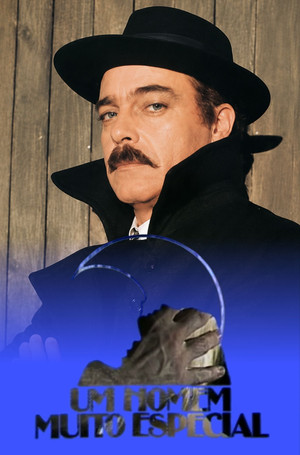
Vladimir, Count Dracula, leaves Transylvania and comes to Brazil to reunite with his son Rafael. Because of the turmoil in Europe during World War I, Rafael, still a boy, was entrusted to his nanny, Ana, who fled with him. Having discovered his son's whereabouts, Vladimir is determined to rescue him and make him claim his inheritance. Of seemingly humble origins, Rafael has secretly courted Mariana, granddaughter of the powerful Dona Marta, matriarch of the Matos Lacerda family, who dominate the city, since childhood. Rafael is unaware of his father's existence. In his struggle to win his son, Vladimir faces opposition from Ana, who knows all his weaknesses. Upon arriving in Brazil, in addition to his son, Vladimir finds the woman of his dreams, exactly like the one he loved and lost in the past – none other than Mariana, Rafael's beloved. Vladimir believes Mariana is the reincarnation of the great love of his past.
La Viuda Negra is a 2014 Spanish-language telenovela produced by RTI Producciones and Televisa for United States-based television network Univisión and for Colombia-based television network Caracol Television. It is an adaptation of the book La patrona de Pablo Escobar de José Guarnizo based on history from Griselda Blanco.
After her parents death, the little Cecilia is under the care of her aunts: Natalia and Evangelina. Evangelina is a cruel woman who doesn't love the child and she treats her bad. Unlike Evangelina, Natalia is good and will help Cecilia because she is her real mother. She was seduced and got pregnant by Padre Julio. Evangelina hates Padre Julio because in the past he preferred Natalia to her. Many years later, there is a problem, because Evangelina doesn't want to give Cecilia money to attend the University. But Cecilia wins a grant and she can study now. She is engaged and wants to marry Giovanni, but Evangelina is against. She will poison him with a drink. Then Cecilia meets and falls in love with Gerardo, who is engaged to Sofia. Sofia's parents are Marta and Armando. Armando returns home after abandoning his family for many years. Marta has a romance with Manuel, but Sofia and Armando are opposed. Ines and Renato, who are Gerardo's parents, also are opposed to his romance with Cecilia. She breaks up the romance and goes to sor Angelina's nunnery to become a nun. Sonia and Roberto try to separate Gerardo from Cecilia. Then Cecilia finds out the truth about her birth and meets padre Julio. Natalia discovers that Evangelina tries to appropriate the whole patrimony of Cecilia and Evangelina kills her.
Story about a woman that is unhappily married and with two daughters. She constantly reprimands Cristina and baby Raquel. What the people around her don't know is that Raquel is not her husband's daughter as everyone believes. Raquel is Eugenia and León's daughter. She has always loved him, not her husband. That is the reason she's always angry at Cristina.
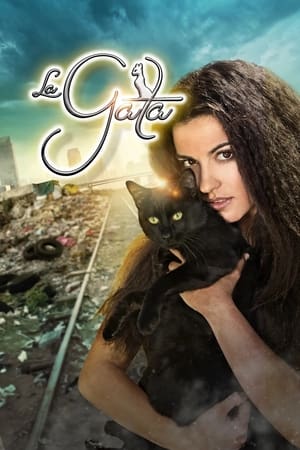
Esmeralda, whom everyone knows as "The Stray Cat," is a girl who grows up in wretched conditions, yet possesses a special sweetness and charm. Her best friend is Pablo, a wealthy boy who defends her against the other children's teasing.
The Poor, Rich Family is a story of love, romance, twists of fate, and countless amusing situations involving two families with nothing in common—yet who are now forced to live under the same roof. On one side are the millionaire Ruizpalacios family; on the other, the Mendonças, a classic working-class family.
La malquerida is a Mexican telenovela produced by José Alberto Castro for Televisa. It is an adaptation of the play "La malquerida", written by Spanish playwright Jacinto Benavente. Victoria Ruffo and Christian Meier will star as the adult protagonist, Ariadne Díaz and Mane de la Parra will star as the young protagonists, while Brandon Peniche will star as the main antagonist.
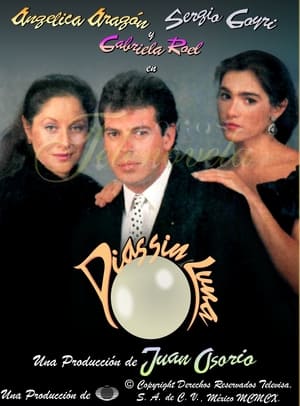
Días sin luna is a 1990 Mexican telenovela produced by Juan Osorio and directed by Rafael Banquells based on an original script by Eric Vonn. It was aired in Canal de las Estrellas Monday to Friday at 17:00 between May 14 and August 31, 1990.
Rosa is abandoned as a baby at a boarding school along with a payment of 18 white diamonds. Her mother is Rosaura Sotomayor, a distinguished socialite who needs to hide the fruit of her affair. Rosa grows up and befriends Eva Sotomayor, and both girls vow to live as sisters. Their lives change after they meet José Ignacio Altamirano, an attractive, intelligent and conquering man who takes advantage of Eva’s innocence. The rich heiress dies in a mysterious accident, and Rosa decides to take her identity to avenge her dear friend.
An Intelligence Agent is sent to El Principe, on the border with Morocco, to investigate a possible police collaboration with a terrorist cell but finds unexpected love in the least suitable person: a drug baron's sister.
An anthology of erotic stories by famous writers like Guy de Maupassant, Nicolas Edme Restif de La Bretonne, Marquis de Sade, Giovanni Boccaccio, Marquis de Foudras, Daniel Defoe, Anton Tchekov, Jin Ping Mei, and Aristophanes.
Rebeca murders her sister Adriana to end up with the man she loved, and becomes the step mother of her niece Lucía. Nora, Lucía's half sister and daughter of Rebeca, resents Lucía for the same reasons Rebeca hated Adriana, as history repeats itself.
Prohibido Amar is a Mexican telenovela produced by Azteca in 2013. It is a remake of Colombian telenovela, La Sombra del Deseo.
Carrie Jung lost her husband and child. She now lives only take revenge on those responsible for their deaths. Carrie Jung raises Han Yoo Jin as a tool in her revenge plan. Han Yoo Jin is a smart and beautiful woman, but she falls in love with a man who she should not love.
Cautiva
Tan Man Neel O Neel delves into the dark abyss of societal intolerance and the unbridled chaos of mob mentality. It masterfully unpacks the grim reality of how unchecked extremism and collective hysteria can spiral out of control, often turning on its very instigators. The story juxtaposes two love tracks—one blossoming in the digital age and the other steeped in nostalgia and providence.
Ídolo de Pano
Vidas de Sal