Based on Hashim Nadeem’s novel of the same name, the titular protagonist is born in unfortunate circumstances – a poor family of eleven people and dark skin. In a society obsessed with fair skin, he finds himself in start contrast with his name (lit. fairy's child)
“IS” stands for “intersexual,” a term referring to people who cannot clearly be classified as male or female, and who may biologically possess characteristics of both sexes. Rokuhana's manga primarily deals with the troubles faced by the young Hoshino Haru (played by Fukuda), an intersexual who was registered as a girl at birth but has been raised as a boy. Goriki plays Aihara Miwako, a mysterious classmate who tries to get close to Haru. Inoue Masahiro has been cast as Ibuki Kenji, a member of the soccer club whom Haru begins having feelings for. Nishida Naomi and Minami Kaho play Miwako's and Haru's mothers, respectively.
Coverage of the annual Sydney Gay and Lesbian Mardi Gras.
Three beautiful women – grandmother, mother and daughter – struggle bravely through five eventful decades of hidden love, high drama and sudden death. From 1926 to present day, from the Yorkshire Dales to London, Paris and New York, how each woman commits an act of will that changes their life and world. Based on Barbara Taylor Bradford's 1986 novel of the same name.
Paloma is a willful woman whose newborn baby is kidnapped by her own brother, Félix, who plans to become sole heir to the family’s fortune. Bruno is an honest man who, during the same night, loses his wife and son in childbirth and miraculously finds Paloma’s child in a dumpster. Destiny will unite their lives in a plot of secrets, revelations, and disputes, with the unpredictable consequences of lives based on a dangerous and surprising network of lies.
When a gifted young woman suffers from retrograde amnesia, it's up to her husband - who is her complete opposite - to win back her love.
Les Belles Histoires des pays d'en haut is a Canadian television drama series, which aired on Radio-Canada from 1956 to 1970. One of the longest-running programs in the history of Canadian television, the series produced 81 episodes during its 14-year run and was one of the first influential téléromans. Written by Claude-Henri Grignon as an adaptation of his 1933 novel Un Homme et son péché and initially set in the 1880s, the series starred Jean-Pierre Masson as Séraphin Poudrier, the wealthy but miserly mayor of the village of Sainte-Adèle, Quebec, and Andrée Champagne as Donalda Laloge-Poudrier, the young daughter of a village resident who is given in marriage to Séraphin as payment for a family debt even though she remains in love with her suitor Alexis Labranche.
El Puntero was a 2011 Argentine miniseries, produced by Pol-Ka and starred by Julio Chávez and Gabriela Toscano. "Puntero" is a word from Argentine slang for a man who works as an intermediate between poor people and political parties, in a clientelist relation. The miniseries received the Golden Martín Fierro Award.
Starting Out is seven series of programmes made for UK schools by ATV and Central from 1973 to 1992. The writers included Catherine Storr, Dave Simpson, Anthony Horowitz and Grazyna Monvid. Comprising 56 episodes in total, the series were repeated until 1994. The episodes were designed for older students who were about to leave school and who would soon be starting out on life as adults. Each series was made roughly every three years and was totally unrelated to that which came before, so that it was self-contained and relevant to the needs of each new generation of students. Several of the series were first broadcast late at night for preview by an adult audience, sometimes months before they were available to students.
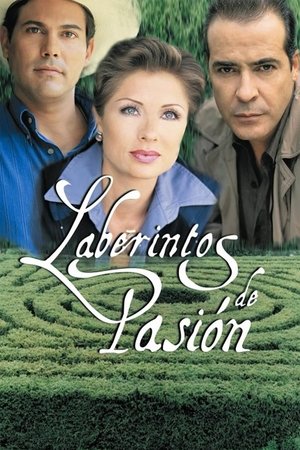
Laberintos de pasión is a Mexican telenovela produced by Televisa in 1999. Starring Leticia Calderon, Francisco Gattorno, César Évora, in addition to the participation of Manuel Ojeda, Monika Sanchez and Azela Robinson.
A four-part miniseries about Air New Zealand Flight 901, which crashed in Antarctica in 1979.
Mga Basang Sisiw or Lost Children is a Filipino drama television series developed by Dode Cruz and produced by GMA Network. It premiered on June 3, 2013, replacing Unforgettable on the network's coveted Afternoon Prime block, and on June 5, 2013 worldwide via GMA Pinoy TV. The series is inspired on Agustin dela Cruz's classic Filipino film of the same title and topbilled by Lani Mercado, Raymond Bagatsing, Gardo Versoza, Maxene Magalona, Mike Tan and featuring Renz Valerio, Bianca Umali, Kimberly Faye, Hershey Garcia and Miko Zarsadias in the titular characters. The show is executive produced by Kaye Atienza-Cadsawan and directed by Ricky Davao. The series chronicles the story of five siblings – Justin, Faye, Shine, Cha and Mickey – and their long and painful journey to rebuild their once happy family.
Baby Boom is a Singaporean TV series aired on MediaCorp Channel 8 in 2003.
A story revolving around a debate club that is about to disband, and how its members try to revive it.
An Iraqi series about an Iraqi high school and talks about the youth in that time
Biff Baker, U.S.A. is an American crime drama television series that aired on CBS from November 6, 1952, to March 26, 1953 starring Alan Hale, Jr. as Cold War spy Biff Baker.
The View from Daniel Pike is a 1971–73 Scottish TV drama series created and written by Edward Boyd, and starring Roddy McMillan as Daniel Pike, a hard-boiled private detective based in Glasgow. A few of the stories were later adapted into book form.
Galang: Musuh Jadi Suami
Early 80’s. A group of criminal’s spreads terror across the Algarve with more than 20 bank robberies. The gang is led by a man they call "The Doctor" and a carpenter who earns the nickname of "The Cowboy". Captured and sentenced to 18 years in prison he becomes the protagonist of the bloodiest escape in Portuguese prison history.
During an eclipse in 1984, an iconic gang of armed robbers is dismantled after robbery of the Banco de Portugal. Part of the group is arrested, the other is murdered. Two members are left together. This event is the result of an anonymous call. Who denounced them? “Racing Horses” tells this gang's story, emphasizing the individual motivations that led each member to choose this way of life. As a backdrop, the bathing area of a Portugal about to enter the European Economic Community.