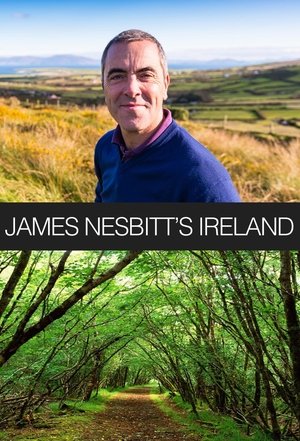
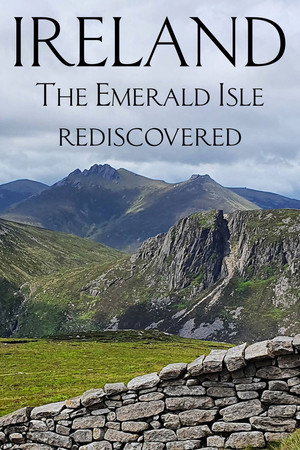
James Nesbitt's Ireland is a British documentary series about Ireland, presented by actor James Nesbitt. The first series began airing on ITV on 18 March 2013, this series contained eight episodes. Each episode is 30 minutes in length.
In a landmark 7-part series, Spotlight - Northern Ireland’s leading team of investigative journalists - reveal important new discoveries about the conflict known as the Troubles, in the 50th anniversary of the deployment of British troops to Northern Ireland.
John Creedon is a man on a mission, teasing and exploring the true meaning behind some of Ireland's most unusual, iconic and famous place names.
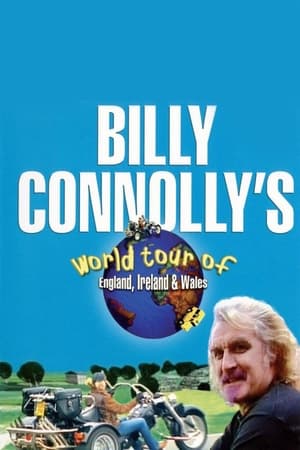
Travelogue of England, Ireland and Wales, presented by Billy Connolly, including clips from his stand-up performances.
Each episode looks back at the news and events of a particular year, using news archive footage, along with subtitles as the means of narration, to recount notable Irish and international events of the time.
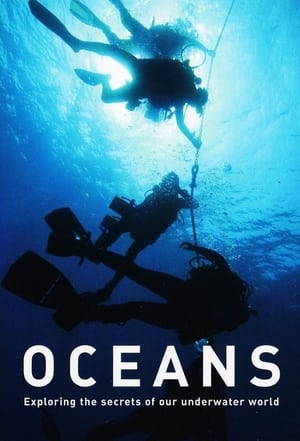
Discover the stories beneath the surface of the water in this stunning nature documentary series, which explores each of the Earth's five oceans.
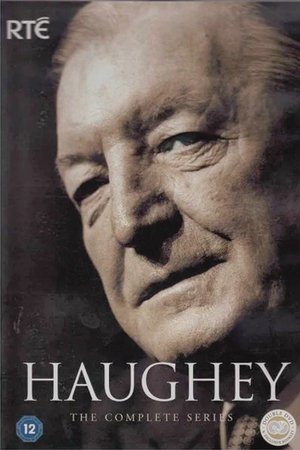
The story of the Irish politician Charles Haughey, told by his family as well as those who worked most closely with him in politics and in the private business circles from which his most controversial payments were drawn.
Oceans is an eight-part series on BBC Two, which seeks to provide a better understanding of the state of the Earth's oceans today, their role in the past, present and future and their significance in global terms. Paul Rose also documents some of the scientific observations his team made as a feature for BBC News.
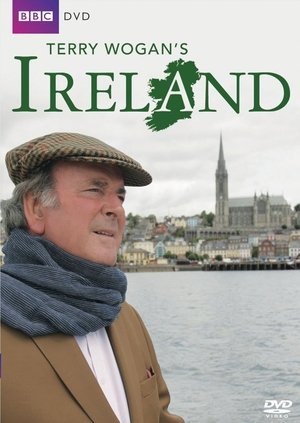
After 40 years, Sir Terry Wogan returns to Ireland, stepping back into his past to explore how the country helped shape him, and looking at what it means to be Irish in the 21st century.
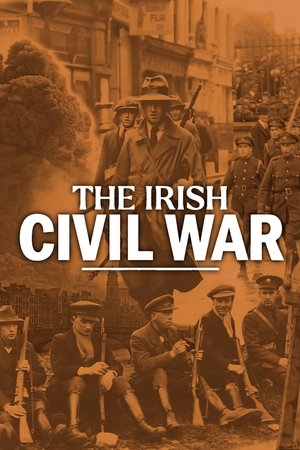
The 3-part documentary series The Irish Civil War tells the epic and often challenging story of the origins, conflict and legacy of the civil war that took place in Ireland in 1922 and 1923. Narrated by Brendan Gleeson, produced in partnership with University College Cork by RTÉ Cork as part of the Decade of Centenary commemorations and based on UCC’s “mammoth and magnificent” Atlas of the Irish Revolution, this documentary series features extensive archive film footage, photographs and materials, interviews with leading academics, archive interviews with contemporary participants and witnesses, firsthand witness accounts read by actors, detailed and dynamic graphic maps based on those featured in the Atlas of the Irish Revolution, and stunning cinematography of the very locations where events took place.
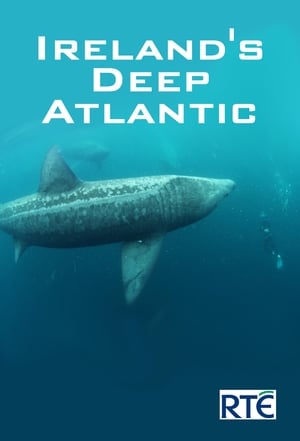
Ireland’s Deep Atlantic sees underwater cameraman Ken O’Sullivan embark on a series of voyages out into the open North Atlantic in search of large whales, sharks and cold water coral reefs 3,000 down on Ireland’s deep sea bed. The two-part series will document many of these creatures’ behaviour for the first time in any TV program and investigate the health of our deep Atlantic waters.
Three-part nature documentary series exploring the natural history of the Atlantic Ocean.
In this series forensic experts attempt to join the dots and identify some of the unidentified remains that lie in mortuaries, forensic labs and graveyards across Ireland.
Set against the backdrop of IRA activity, this gripping documentary investigates the extraordinary kidnapping of Shergar, a Derby-winning racehorse and global icon.
Sex & Sensibility is an RTÉ television series which reflects on changing attitudes to sex in Ireland. The four-part series was presented by Simon Delaney. Directed by Imogen Murphy, it was filmed in April and May 2008 on location in Dublin. It was broadcast in June and July 2008. Features included some commentary from Bill O'Herlihy, Mary O'Rourke, Michael McNiff, Claire Tully, John Kelleher and night club owners Valeria Roe and Maurice Boland. The series reflected on the changes that had taken place in Ireland since the 1960s, an era when the sexual revolution had not yet reached the shores of the island. It showed how television had played a major part in "loosening everyone up" and altered Irish society "from a gloomy 'Irish Taliban'-style theocracy to the nation of fun-loving sex maniacs we are today". Terry Prone demonstrated her view that soaps, rather than "dusty old current affairs programmes", had been central to social change. The Riordans caused scandal when one of the characters, named Maggie, went on the pill. The "contraceptive train" to Belfast was also focused on, evoking memories of an era when the devices were illegal in the Republic of Ireland, prompting people to travel to Northern Ireland to stock up on their contraceptive needs. Also featured was The Late Late Show and the uproar it caused when it gave airtime to a group of lesbian nuns, Bill Hughes, who spoke about the underground gay scene in Ireland, Senator David Norris having his sexuality called into question when he was asked if he was "sick" by a TV presenter, the Leeson Street clubbing scene in its early years and Toni the Exotic Dancer, a housewife from Tallaght, Dublin who flashed her ample bosom for the crowds who thronged the urban pubs after mass. Video of protesters with portable Virgin Mary statues at work outside the RTÉ studios were also shown.
Documentary series which goes behind the scenes of the five-star Merchant Hotel in the centre of Belfast
Michael Portillo charts the War of Independence in Ireland, following the journey from the Peace Conference in Versailles to the historic ceasefire in 1921.
Castles are the powerhouses that dot across our islands. History Hit’s Matt Lewis discovers Irish castles, from ancient high points to Norman keeps to medieval citadels.
John Creedon is hitting the road on a journey to explore how music has shaped the identity of Ireland and the profound impact music has on Irish culture.
In this two-part series, veteran broadcaster Cathal O'Shannon sets out on a journey across three continents to uncover the true story of Ireland's Nazis.