The Earth’s continents are instantly recognizable. These iconic landmasses seem permanent and unchanging, yet they are merely the wreckage of a much larger long-lost supercontinent – Pangaea. In this stunning four part series Professor Iain Stewart uncovers the evidence for this ancient past. He reveals how the world around us is full of clues – in the rocks, the landscapes and even the animals. All of which tell us how the land we live on was created.
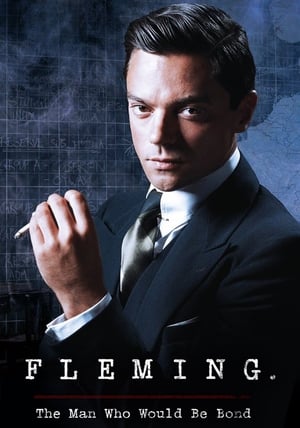
Set at the outbreak of WWII – mischievous playboy Ian Fleming is untroubled by the specter of impending war – chasing women, collecting rare books and living off his family fortune. Forever in the shadow of his brother Peter, and an eternal disappointment to his formidable mother Eve, Fleming dreams of becoming the ‘ultimate’ man – a hero, a lover, a brute and the one who always gets the girl. He is finally given some direction in his life when he’s recruited by the Director of Naval Intelligence to help in the effort against the Nazis. Suddenly, Fleming finds his chance to shine and prove his worth.
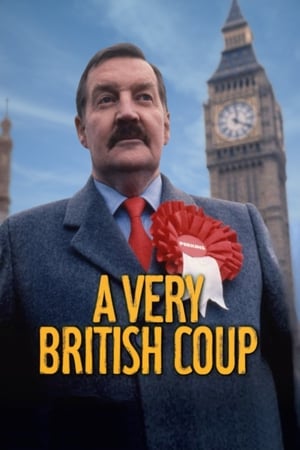
Working-class, left-leaning Harry Perkins is elected PM. As he works to implement social change via democratic process, the conservatives and their allies quietly begin working to remove him. Perkins' goals include nuclear disarmament, the dissolution of newspaper monopolies, open government and the closure of all US military bases on UK soil. While many members of the govnerment oppose him, he finds some support in Home Secretary Joan Cook and key members of his staff.
Around the World in 80 Days is an animated television series that lasted one season of sixteen episodes, broadcast during the 1972-1973 season by NBC. It was the first Australian-produced cartoon to be shown on American network television. Leif Gram directed all sixteen episodes, and the stories were loosely adapted by Chester "Chet" Stover from the novel by Jules Verne.
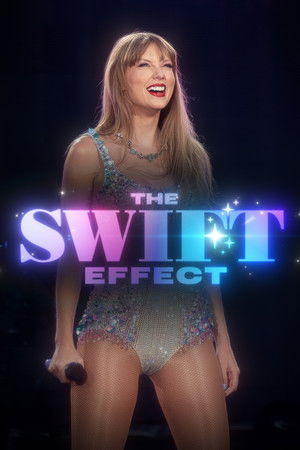
An exploration of the vast economic impact Taylor Swift's brand has through not only music but in fashion, sports, education and philanthropy.
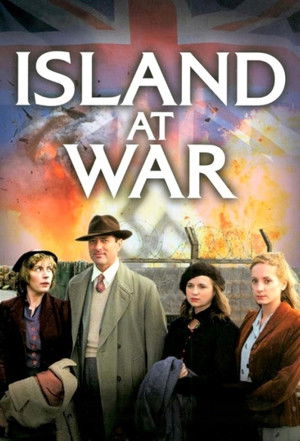
Island at War is a British television series that tells the story of the German Occupation of the Channel Islands. It primarily focuses on three local families: the upper class Dorrs, the middle class Mahys and the working class Jonases, and four German officers. The fictional island of St. Gregory serves as a stand-in for the real-life islands Jersey and Guernsey, and the story is compiled from the events on both islands. Produced by Granada Television in Manchester, Island at War had an estimated budget of £9,000,000 and was filmed on location in the Isle of Man from August 2003 to October 2003. When the series was shown in the UK, it appeared in six 70-minute episodes.
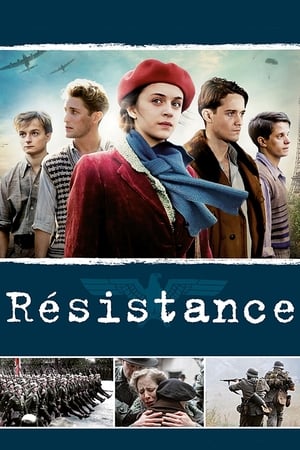
In occupied France, 17-year-old Lili encounters war before love, and joins the Resistance. Through the interconnecting destinies of its teenage heroes, Resistance tells the story of young people going to any lengths to defend their country.
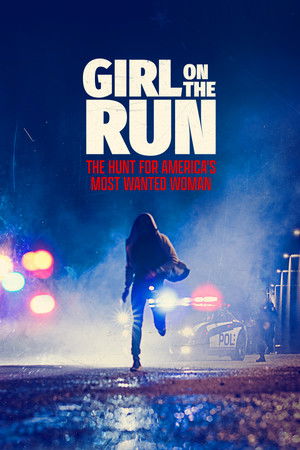
When convicted double murderer Sarah Pender escapes from a maximum-security prison in Indiana, a nationwide manhunt is immediately launched. Charged alongside her former boyfriend, who pled guilty, for the murder of a young couple, Pender has vanished, igniting fear, fascination, and a relentless pursuit that stretches across state lines.
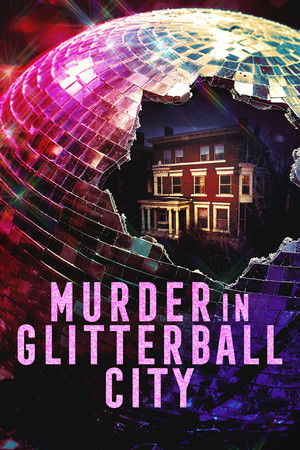
The city of Louisville, Kentucky, known for its historic Victorian architecture and birthplace of the mirrored glitterball, proves to be an unlikely backdrop for a dark tale of murder. This documentary explores the shifting landscape of a mysterious killing, a toxic relationship, a vulnerable victim and the unreliable accounts of two ex-lovers on trial for their lives.
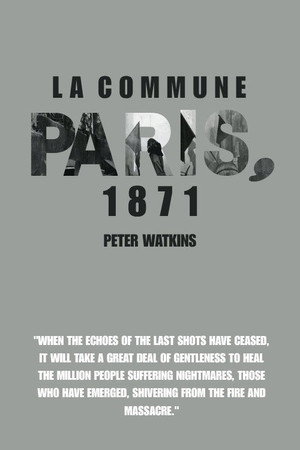
In 1871, a journalist for Versailles Television broadcasts a soothing and official view of events while a Commune television is set up to provide the perspectives of the Paris rebels. On a stage-like set, more than 200 actors interpret denizens of the Commune, especially the Popincourt neighborhood in the XIth arrondissement. They voice thoughts and feelings concerning the social and political reforms.
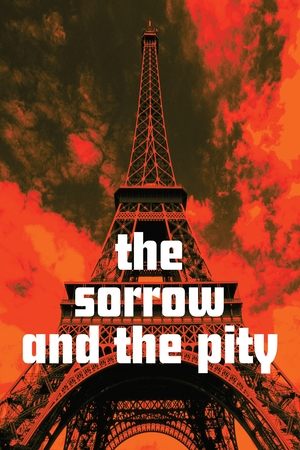
An investigation into the nature, details and reasons for the collaboration, from 1940 to 1944, during World War II, between the Vichy regime, established in the south of France and headed by Marshal Pétain, and Nazi Germany.
Louis Theroux’s LA Stories - three new films putting Los Angeles under the microscope.
A docu-fiction about the present starting from the future: with an optimistic attitude and a sci-fi approach, the last man on Earth is looking for lost memories from Italy in 2020.
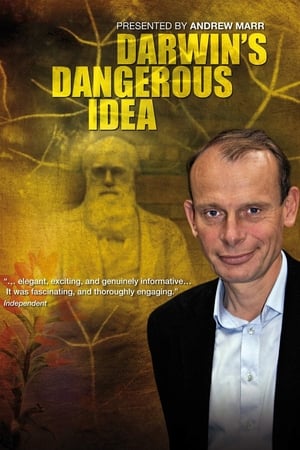
Andrew Marr explores how Darwin's theory of evolution by natural selection has taken on a life of its own far beyond the world of science.
On 23 August 1939, the world was shocked to discover that Hitler and Stalin, the most intractable of their enemies at the time, had signed a pact that allowed them to divide Poland between them and gave the Nazi leader complete freedom to concentrate his forces in the West, against France and the United Kingdom. Through this agreement, Europe was to be thrown into war. For a long time, the relationship between Hitler and Stalin was ignored: their mutual fascination, their moves to get closer, the marks of confidence they exchanged and all the benefits they derived from the German-Soviet pact, before resuming their war to the death in June 41 with the "Barbarossa" operation.
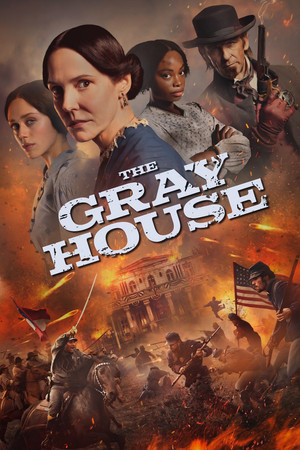
The untold true story of four brave women who served as key espionage agents and turned the tide of the American Civil War in favor of the North, risking life and liberty to help win the war and preserve democracy. A Richmond Socialite and her daughter, a formerly enslaved African-American, and a courtesan build the first successful female spy ring.
A four-part documentary series about enigmatic, legendary music producer Phil Spector and what happened on the fateful night of February 3, 2003 when actress Lana Clarkson was shot dead in his mansion.
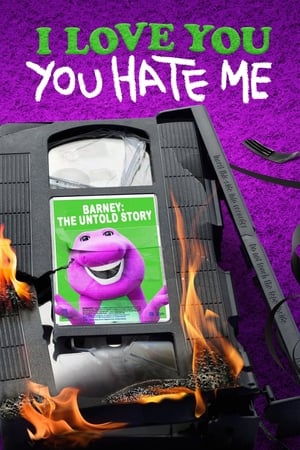
A thought-provoking exploration of the spectacular rise and fall of Barney the Dinosaur’s furious backlash — and what it says about the human need to hate. From Barney-bashing to frat parties to homicidal video games, something in American society broke into a million pieces, and it’s never been put together again… or is this just who we were all along?
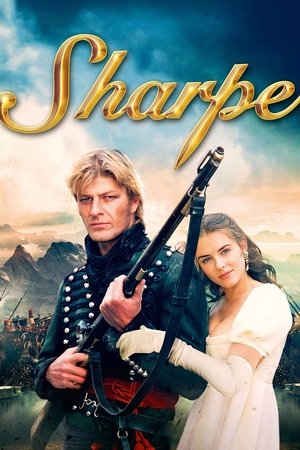
Sharpe is a British series of television dramas starring Sean Bean as Richard Sharpe, a fictional British soldier in the Napoleonic Wars. Sharpe is the hero of a number of novels by Bernard Cornwell; most, though not all, of the episodes are based on the books. Produced by Celtic Films and Picture Palace Films for the ITV network, the series was shot mainly in Turkey and the Crimea, although some filming was also done in England, Spain and Portugal. The series originally ran from 1993 to 1997. In 2004, as part of ITV's new set of drama, ITV announced that it intended to produce new episodes of Sharpe, in co-production with BBC America, loosely based on his time in India, with Sean Bean continuing his role as Sharpe. Sharpe's Challenge is a two-part adventure; part one premiered on ITV on 23 April 2006, with part two being shown the following night. With more gore than earlier episodes, the show was broadcast by BBC America in September 2006.
Life on a Knife's Edge