Four-time Emmy winner John Kastner was granted unprecedented access to the Brockville facility for 18 months, allowing 46 patients and 75 staff to share their experiences with stunning frankness. The result is two remarkable documentaries: the first, NCR: Not Criminally Responsible, premiered at Hot Docs in the spring of 2013 and follows the story of a violent patient released into the community. The second film, Out of Mind, Out of Sight, returns to the Brockville Mental Health Centre to profile four patients, two men and two women, as they struggle to gain control over their lives so they can return to a society that often fears and demonizes them.
Using home videos recorded by her voice coach, Diana takes us through the story of her life.
Otázky pana Lásky
Five subjects from Gen-Z take the PHQ-9 - a survey to assess the degree of one's depression severity. They -also- have a lot to say.
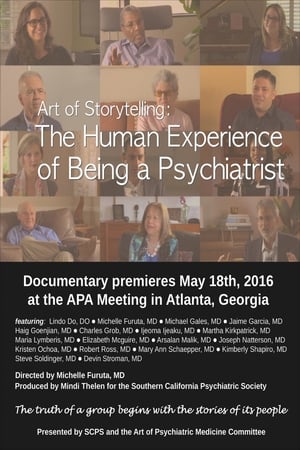
The story of who psychiatrists are today, what they do, and what they value has been told by almost everyone but them. Psychiatrists are notoriously private; cautious about revealing personal information, and noticeably absent in the media. What has been the consequence of this? If you don’t tell your story, someone else will tell it for you. Mental illness is the number one cause of disability worldwide, however many patients still fear coming to see a psychiatrist – that they will be overmedicated, not listened to, not understood, not cared for, or worse - maybe the psychiatrist will see how “crazy” they are and lock them up. The stereotype of being “crazy” is equated with being dangerous, weird, scary, and ostracized - and in some ways - so is being a psychiatrist.
Scott Panetti was tried for the capital murder of his parents-in-law on September 8, 1992 in Gillespie County, Texas. He was subsequently sentenced to death on September 22, 1995. Panetti has an extensive history of mental illness, including schizophrenia, manic depression, auditory hallucinations and paranoia. Panetti was hospitalized, both voluntarily and involuntarily for mental illness fourteen times in six different hospitals before his arrest for capital murder in 1992. Following his conviction, Panetti’s former wife, and daughter of the victims, Sonja Alvarado, filed a petition stating that Panetti never should have been tried for the crimes as he was suffering from paranoid delusions at the time of the killings.
The complex and controversial history of the mental institution in the U.S. through a detailed study of St. Elizabeths Hospital in Washington, D.C.
New York, 1980. Three complete strangers accidentally discover that they're identical triplets, separated at birth. The 19-year-olds' joyous reunion catapults them to international fame, but also unlocks an extraordinary and disturbing secret that goes beyond their own lives – and could transform our understanding of human nature forever.
The first time Regina tried to kill herself, she was 5 years old. Now she's 45 and hell-bent on trying to live.
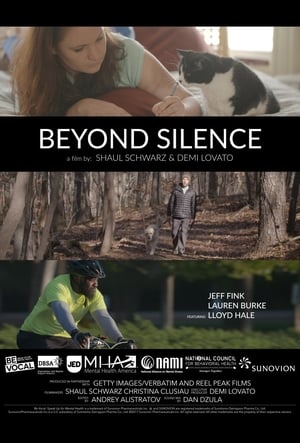
The lives of Jeff, Lauren and Lloyd—three very different people who share one common experience—have been transformed by speaking up for mental health. These inspiring stories depict what mental health in America really looks like and highlights just how important it is to speak up and seek help.
Initially airing on HBO's "America Undercover" series, this riveting documentary focuses on three families shattered by the psychiatric disorder of schizophrenia. Subjects "Bob," "Missy" and "Steven" have lived for over a decade with schizophrenia. The film documents the difficult day-to-day existence of both those afflicted with this order and the families searching for answers to their loved ones' suffering. This film also shows the varied and variably successful treatment methods for each of the subjects—one is placed in a group home, one is placed in an institution, and one is cared for at home. The documentary was critically acclaimed for its compassionate treatment of mental illness.
A documentary part of CBS reports. The plight of mental patients fit for discharge, but who find themselves thrust into communities unprepared to treat or accept them is the focus of this documentary narrated by Bill Moyers. The dilemma of being as scared of getting well as of remaining ill and facing a world with no home or job to go to is vividly portrayed as the film follows three patients as they move into rare transition programs.
Bubu is a poet who has been committed to state institutions for the insane twelve times. He challenges the meaning of hospital-jails, hybrid institutions which sentence the insane to life imprisonment. The poem "The House of the Dead" was written during the filming of the documentary and reveals the forgotten deaths that occur in these judicial asylums. There are three stories in three acts of death. Jaime, Antonio, and Almerindo are anonymous men, considered dangers to society, whose punishment is the tragedy of suicide, the unending cycle of being committed to the asylum, or surviving life imprisonment in the house of the dead. Bubu is the narrator of his own life and also of his own destiny-death in the asylum.
Billy is a film buff who films himself non-stop. During a film shoot, he meets Lawrence Côté-Collins and the two become friends. One night, he assaults her. Years later, in prison for the deaths of two people, Billy is diagnosed with schizophrenia. With the help of the filmmaker, his only remaining relationship apart from his family, his personal archives become an invaluable resource for understanding his illness. A formal deconstruction of schizophrenia through a remarkably open-minded gaze.
Hold mig fast. Før jeg forsvinder
What causes mental illness? Do our thoughts, moods, and behaviours depend upon what we eat? Psychiatrists Abram Hoffer and Humphry Osmond met in Saskatchewan in 1951. They set out to prove that the symptoms of schizophrenia could be controlled with healthy, unprocessed food and large doses of vitamins. 60 years later, it looks like they may have been right.
Too Young To Die
This ground-breaking cinéma-vérité classic documents five weeks in the lives of twelve residents of a home for emotionally disturbed children. It is the first in the form that King later described as actuality drama. All the action is spontaneous and undirected, with neither interviews nor narration. The theme is the outrage of life. The children asked the filmmakers, Why is it that whenever pictures of us are put in the papers, our faces are blacked out. What is so awful about us that we cant be seen? They wanted to be filmed so that they could be seen.
Grave robbing, torture, possessed nuns, and a satanic Sabbath: Benjamin Christensen's legendary film uses a series of dramatic vignettes to explore the scientific hypothesis that the witches of the Middle Ages suffered the same hysteria as turn-of-the-century psychiatric patients. But the film itself is far from serious-- instead it's a witches' brew of the scary, gross, and darkly humorous.
An unflinching documentary of those dealing with mental illness in the criminal justice system and a profile of families who tragically fell victims to that system.