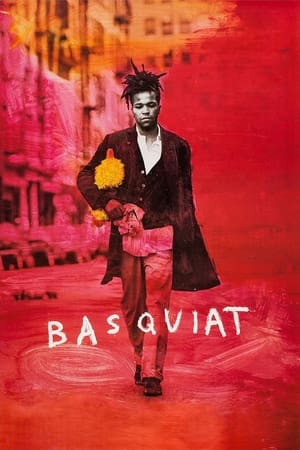
The brief life of Jean Michel Basquiat, a world renowned New York street artist struggling with fame, drugs and his identity.
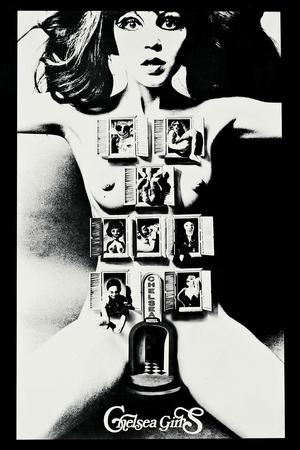
Lacking a formal narrative, Warhol's mammoth film follows various residents of the Chelsea Hotel in 1966 New York City. The film was intended to be screened via dual projector set-up.
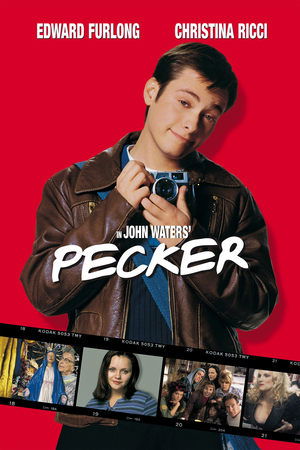
A Baltimore teenager who picks up a second-hand camera starts snapping his way to stardom, soon turning into a nationwide sensation, with a fateful choice between his life and his art.
Fred Taylor displays a number of items from the Building Centre's 'Inn Sign Exhibition' held in November 1936. Some signs in the exhibition date back to the reign of Charles II, while others are more contemporary.
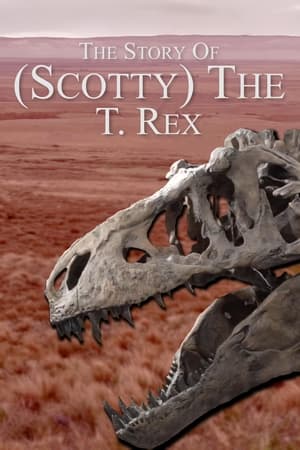
In this documentary, we go back to the beginning and tell the origin story of Scotty the T. Rex and how it was discovered on that fateful day in 1991. We also showcase the lasting impact the discovery had on the town of Eastend and the Paleo world in Canada. In 2019, Scotty was proclaimed the biggest in the world. Believed to be a female, she measured over 13 m or just over 42.6 feet long and weighed over 8.8 metric tons. Discovered in the dinosaur-rich Frenchman Formation, Scotty's bones have been carefully preserved and are stored at the T. Rex Discovery Centre in Eastend, Saskatchewan.
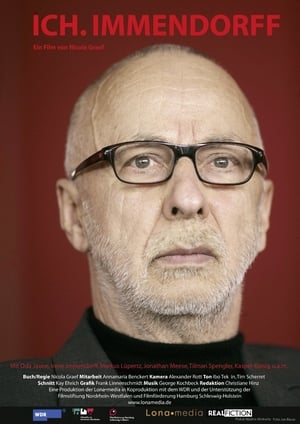
Documentary film about the painter and sculptor Jörg Immendorff who ranks among the most important German artists. The filmmakers accompanied Immendorff over a period of two years – until his death in May 2007. The artist had been living for nine years knowing that he was terminally ill with ALS. The film shows how Immendorff continued to work with unabated energy and how he tried not to let himself be restrained by his deteriorating health.
Some champion exhibits from the National Cat Club Show and the Combined Bird and Aquaria Show, described by W. Cox-Ife, F. Hopkins, and L.C. Mandeville.
Polar Life’s novelty was its theatre, with the audience seated on a central rotating turntable in the middle of eleven fixed screens. Viewers have described the intricate juxtaposition of screen images and narration and the complex relationship created between moving spectators and multiple screens. Documentation images and scripts of the bilingual narration by Lise Payette and Patrick Watson show elaborate temporal and spatial representations of the Arctic and Antarctic regions: the Inuit in daily activities in the Canadian North; other northern peoples of Alaska, Lapland, and Siberia; and settlers from the South, scientists, explorers, and other inhabitants of the landscape, including reindeer, bears, and birds. Archival film footage of early northern explorers, combined with newly shot documentary footage, was edited across the various screens to create spatial relationships that are sometimes coherent, sometimes fragmented.
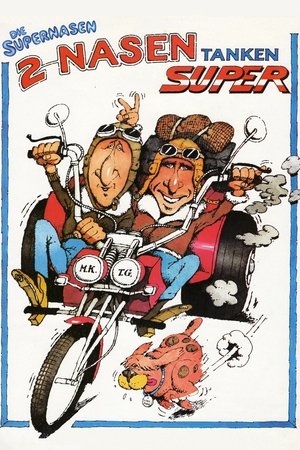
Tommy and Mike, again without a job and without money, are looking for a public toilet at a motor show.
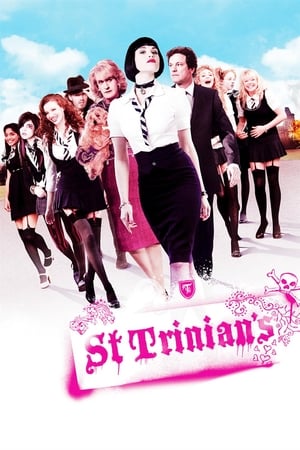
When their beloved school is threatened with closure should the powers that be fail to raise the proper funds, the girls scheme to steal a priceless painting and use the profits to pull St. Trinian's out of the red.
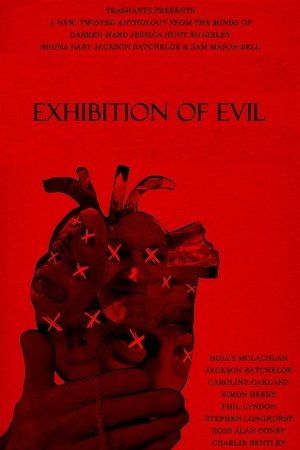
A special sideshow torture exhibit has the power, according to showman Dr Diabolo, to warn people of foreseeable evil. One by one, skeptics stand before the Fate Atropos to preview the greed and violence hiding behind their respectable façades.
A collection of horrifying stories, each centred around a museum exhibit with a gruesome past.
You Are Here draws on a rich archive of movies set in New York, combining thousands of cinematic moments across 16 screens. Sources include Hollywood blockbusters, independent films, documentaries, and experimental works. By juxtaposing these multiple visions, the dazzling montages of You Are Here make connections and contrasts that allow movies to comment on each other across time and space. Together, they shed new light on the varied New Yorks of our collective imagination.
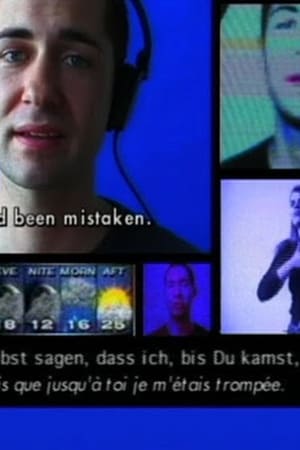
Using the structure and duration of a pop song, artist Benny Nemerofsky Ramsay comments on the pervasiveness of communication in “the information age” at the turn of this century. The video also acts as a reflection on the virtual reality we experience via innumerable screens today.
Unemployed Joseph Marti is hired as an assistant to Mr. Tobler, an inventor. However, it turns out that the inventions are useless and Marti becomes a Man for everything while he plunges into the everyday routines of Mr. and Mrs. Tobler.
The monotony of college life traps Murphey into disillusionment and apathy. She can't feel anything and can't figure out why until a phone call with her mother reminds her that there is life beyond school and that happiness is possible even when it has never felt further away.
A village drama about the tragic culmination of a forced marriage. The film was financed by a Brno company, which required interventions in the generally known original. The reason for moving the location of the action and rewriting the dialogues into the appropriate dialect was the idea of making the spectacular Vlčnov costumes more spectacular. Their distinctive color led the producers to the idea of filming several crowd costumed scenes (the wedding) on color material. However, the parts of the color copy processed abroad were not used in regular distribution. Another requirement was to emphasize the positive influence of the Catholic Church and have a more conciliatory conclusion.
Ella and Olaf are in love but childless. Their neighbors Viggo and Polly have three children, but their marriage is in ruins. When Ella and Viggo happen to be alone on a motorboat, she gives in to his advances and becomes pregnant. Ella conceals the circumstances, but when her daughter is seriously injured, only Viggo can be used as a blood donor.
After World War II, Europe lies in ruins and help is desperately needed everywhere. One person trying to make a difference is Dr. Jørgen Vedel, who travels with the Red Cross to Vienna to vaccinate children. There he meets Leni, a girl who has been to Auschwitz, where she lost her mother. Jørgen arranges for Leni to come to Denmark, where she can start a whole new life.
The celebrated operetta prima donna Elsa Bruun is famous nationwide for her amazing smile. One day she is approached by a shabby man who pushes a script on her. Without wanting to, Elsa becomes deeply involved in the story, which becomes her path to a renewed understanding of life, which must be lived out even if it may cost her trademark: the golden smile.