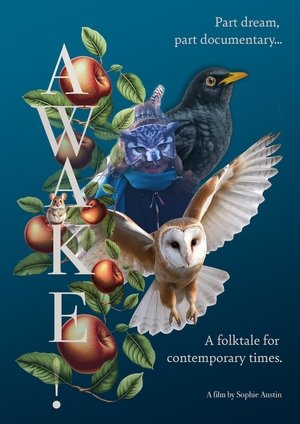
A long-form 'artist moving image' documentary film that sits in a fictitious conceit that begins in a distant future, inspired by Russell Hoban’s cult novel ‘Riddley Walker’. A medley of documentary, fantasy, song and dance: shot on a tapestry of celluloid film stocks and developed by hand.
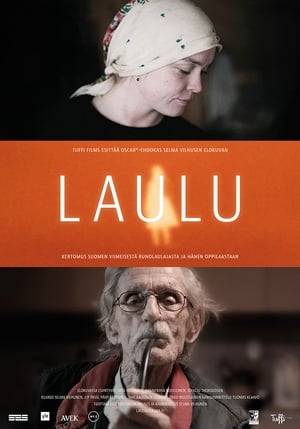
Song is a story of the last Finnish rune singer and his pupil, and the comforting power of singing.
Louisiana filmmaker, Pat Mire, teams up with veteran filmmaker and cinematographer, Charles Bush, to capture the natural drama of handfishing in this award-winning documentary. Highly visual, the film examines the thrilling regional phenomenon of Cajuns who wade in murky bayou waters to catch huge catfish and turtles by reaching into hollow logs and stumps with their bare hands. Friends and family accompany the handfisherman to the bayou banks for Cajun music, festive cooking, and storytelling, and to witness this increasingly rare tradition. Told from the inside with multiple voices, Mire and Bush explore the chain of events set off by man's attempt to "improve" his environment by dredging bayous in this remarkable study of the relationship between cultural and natural resources.
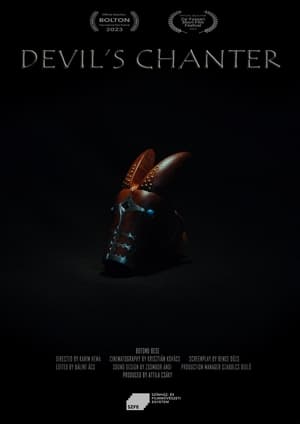
Ördögmuzsika
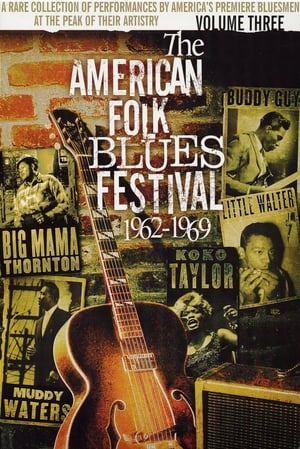
Taken from the European tours organised for American blues musicians between 1962 and 1969, this release features performances by several popular blues artists, including: Big Mama Thornton, Roosevelt Sykes, Buddy Guy, Dr. Isaiah Ross, Big Joe Turner, Skip James, Bukka White, Son House, Hound Dog Taylor and Little Walter, Koko Taylor and Little Walter, Sonny Terry and Brownie McGhee, Helen Humes, Earl Hooker, and Muddy Waters.
The story of how Norma Jeane Mortenson became Marilyn Monroe (1926-62), a lucid path of self-discovery, from anonymity to stardom: the painful birth of a myth.
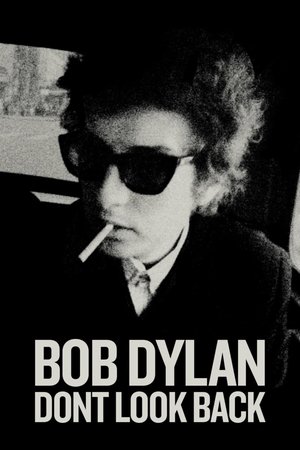
In this wildly entertaining vision of one of the twentieth century’s greatest artists, Bob Dylan is surrounded by teen fans, gets into heated philosophical jousts with journalists, and kicks back with fellow musicians Joan Baez, Donovan, and Alan Price.
Joni Mitchell has been called the queen of folk music and one of the biggest pop stars of the 60s and 70s. Even today, her lyrics and unique guitar style continue to inspire new generations of singers and songwriters.
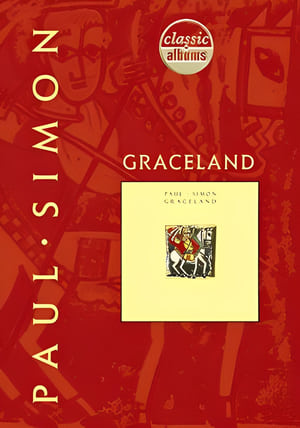
Singer-songwriter Paul Simon had been on the cutting-edge of pop music throughout most of the 1960s and the '70s, first as half of the seminal folk-rock duo Simon & Garfunkel, and then as a well-received solo artist. But the rise of 1980s rock and new wave saw a decline in Simon's commercial success, and the singer responded by experimenting with different musical styles--most notably, world beat--that culminated in his adventurous 1986 masterpiece GRACELAND. The album's fusion of American folk-rock songwriting and buoyant South African rhythms not only broke new ground in pop music, but became Simon's biggest-selling solo record. This episode of the CLASSIC ALBUMS series examines the making of Simon's groundbreaking work through interviews, behind-the-scenes footage, music videos, and live performances of album tracks such as "Boy in the Bubble," "Diamonds on the Soles of Her Shoes," "You Can Call Me Al," and "Under African Skies."
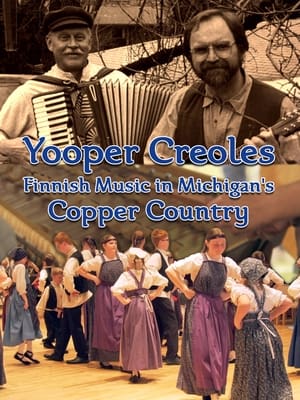
When the immigrants came to America, their cultures entered the "great melting pot." In Michigan's Upper Peninsula Finnish immigrants mixed their musical traditions with many other cultures, creating a sound that was unique to the "Copper Country."
Right in the heart of Hackney, The Cock Tavern is no ordinary East London pub. Renowned for its real ales, larger-than-life regulars, and a dose of eccentric charm, it also plays host to one of the capital’s quirkiest underground traditions: the pickled egg eating competition. How Fast Can You Eat a Pickled Egg? is a short documentary that dives headfirst into this bizarre yet beloved ritual, capturing the characters, chaos, and community spirit that make the event truly unforgettable. From local legends chasing eternal glory to wide-eyed newcomers testing their limits, the film is a funny and heartfelt portrait of a place where tradition is steeped in vinegar—and victory tastes oddly sulphuric.
Bratříčku, zavřel jsi vrátka...
Recitál Wabiho Daňka
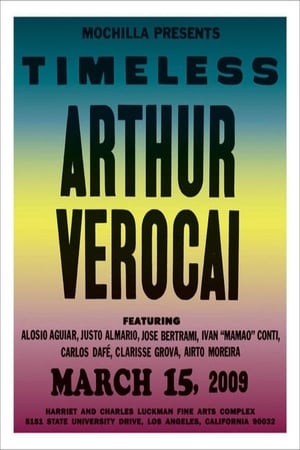
Folk-jazz composer/arranger Arthur Verocai was born in Rio de Janeiro. He has created challenging arragements and compositions for Brazilian artists Jorge Ben, Ivan Lins, Leny Andrade and Gal Costa. In 1972 Verocai recorded a self-titled solo LP. It is a stunningly innovative effort. It puts Verocai into a rarified field with the heavy string oriented music of Charles Stepney, David Axelrod and Frank Zappa. Released in a period marked by the Brazilian military government, the album fared poorly. Following its re-issue in 2003, the album has become a highly influential oft sampled classic (see Ludacris, MF Doom and Little Brother). The performance of this seminal 1972 record in its entirety brought the capacity Luckmann crowd to a stand still. According to Verocai, 'he had never played the record, alive or dead!' His delight can be seen on the DVD. The music has been mixed by Verocai himself in Rio. History turned on its head and musical justice served.
A short film documenting the dying tradition of Holmie Day, where islanders on Papa Westray, in Orkney, sail across to the nearby uninhabited island to shear the sheep.
King for a Day is a poetic archive-led documentary immersing us in the personal story of the people of Padstow in Cornwall, their ancient rituals and the challenges they face in a rapidly changing world. The tension between tradition and progress highlights the importance of cultural identity and the role of folk customs in our globalised society. King for a Day is an intimate portrait of a place and community pushed to the margins. A cinematic journey interweaving audio-visual archive spanning 150 years. Will this be the last generation to tease the ‘Old Oss’ from his stable to welcome the Summer?
Dusking is a project by the artist Lucy Wright—a newly invented tradition, conceived as the counterpart to the morris dancing that takes place on 1 May marking the arrival of summer. Taking place instead on 31 October, it invites participants—who join in remotely around the world—to ‘dance the sun down’ and honour the gifts of rest, reflection and replenishment associated with the darker months of the year. 'Mirie it is' is Lucy’s own contribution to this continuing tradition, a 3-part performance embodying each of the three stages of scientific twilight—civil, when the sun dips between 0 and 6 degrees below the horizon; nautical (when it’s below 12 degrees – and most stars can be seen with the naked eye) and astronomical, when just a little light is still left in the sky.
Following Simon on his maiden voyage with Eddie, his horse, travelling on foot from Dorset to Devon in time for the Sidmouth Folk Festival. Meeting friends and strangers along the way, a glimpse into the life of a British Traveller.
The fifties in Cuba, at the time of the "dias felices", the happy days, the American mobsters were the kings of the country, Hemingway lived there, the Hollywood stars came to hide their secrets, the number of bars and clubs rose amazingly, celebrities came to spend vacation, the business of cigars flourished, gambling was not a vice, everybody was dancing on frenzied music, while rum and cigars were flowing. At the beginning of the fifties, the huge storm that threatened Cuba was unpredictable.
BACK IN MY BODY is a short documentary about musician Maggie Rogers returning to Alaska, a place that has had a huge impact on her life.