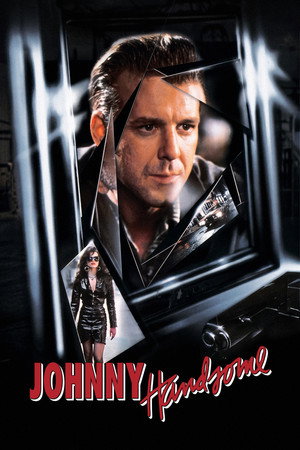
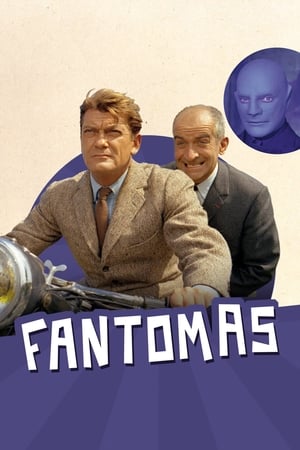
A career criminal who has been deformed since birth is given a new face by a kindly doctor and paroled from prison. It appears that he has gone straight, but he is really planning his revenge on the man who killed his mentor and sent him to prison.
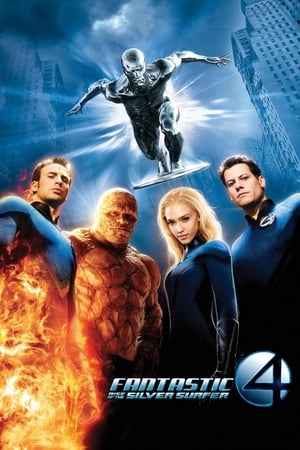
The Fantastic Four return to the big screen as a new and all powerful enemy threatens the Earth. The seemingly unstoppable 'Silver Surfer', but all is not what it seems and there are old and new enemies that pose a greater threat than the intrepid superheroes realize.
A mob's punishment of a lone man proves cruel and unusual.
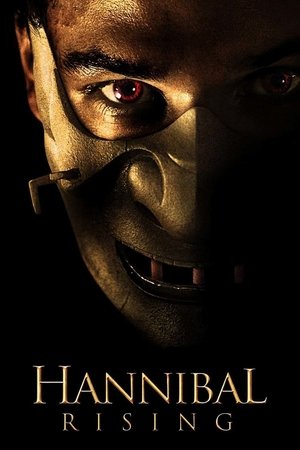
The story of the early, murderous roots of the cannibalistic killer, Hannibal Lecter – from his hard-scrabble Lithuanian childhood, where he witnesses the repulsive lengths to which hungry soldiers will go to satiate themselves, through his sojourn in France, where as a medical student he hones his appetite for the kill and learnt sword skills from his Japanese girlfriend, who happened to have similar fate
A man heading through the countryside is drawn to a strange castle, which is reputed by the locals to be haunted. There he meets a beguiling young woman who ensnares him in her world of secrets.
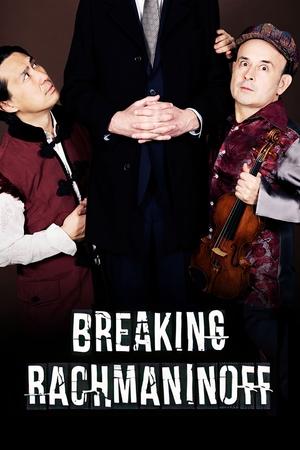
A humorous documentary about the search for a great composer who managed to overcome his depression by spelling his own name wrong.
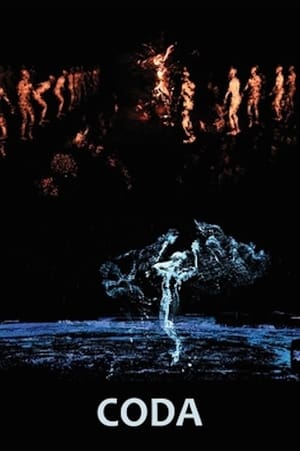
This short animation draws on advanced digital technologies to offer a new vision of dance in cinema. With motion capture (MoCap) and particle processing, designers Denis Poulin and Martine Époque create virtual dancers free of their morphological appearance. In this balletic and hypnotic film, dynamic traces carry the motion of the real dancers behind the on-screen movements. Addressing environmental themes by way of metaphor, CODA is a fused universe where space and time collide, deploy, and dissolve. In this technically and formally innovative film, luminous bodies in the infinite space of the cosmos transform and evolve to the rhythms of Stravinsky’s Rite of Spring.
The early years of young Michael Myers and the events leading up to his fateful Halloween night murder rampage in the quiet town of Haddonfield, Illinois.
We meet the young violinist Erik Smith in the lap of his family with his wife Lise and his little daughter Lone. Erik is a young, aspiring musician who dreams of one day making a career as an interpreter of the great masters of music. At a concert where a well-known solo violinist has to interrupt, Erik Smith suddenly jumps in and gets his big breakthrough.
At the Rheingau Festival, violinist Renaud Capuçon, cellist Julia Hagen and the Bamberg Symphony conducted by Jakub Hrusa perform Brahms's 'Double Concerto for Violin and Cello'.
In Anton Bruckner’s 7th Symphony, the listener encounters a music characterized by great spaciousness and profound solemnity, a music which speaks of grief and lamentation, but also of their transcendence. With its monumental architecture and intensity of sound, the symphony has moved listeners ever since its triumphal premiere in 1884. The Guardian calls Daniel Barenboim’s London interpretation “Tremendous … Barenboim and the Staatskapelle seem to have this work in their systems, and the overall impression was of music unfolding organically at its own pace rather than of a work being self-consciously interpreted or led.” Anton Bruckner Symphony No. 7 in E major (original version) Daniel Barenboim, conductor Staatskapelle Berlin Recorded live at the Philharmonie Berlin, 25 June 2010
Anton Bruckner’s 6th Symphony was written between 1879 and 1881: a very happy time in his life. Unlike most of Bruckner’s symphonies, the 6th was not revised. Of all his works, this one seems to come from a single source of inspiration. Bruckner himself called it his “boldest” symphony – probably due to its extreme degree of motivic, rhythmic and harmonic originality. This live recording of the seldom-performed 6th Symphony is the next instalment of the acclaimed Bruckner cycle by the Staatskapelle Berlin and Daniel Barenboim. Anton Bruckner Symphony No. 6 in A major (original version) Daniel Barenboim, Conductor Staatskapelle Berlin Recorded live at the Philharmonie Berlin, 22 June 2010
“Clarity was one thing that made this performance a marvel. Another was the flexibility of Barenboim’s speeds…. The flexibility of Barenboim’s tempi meant that Bruckner’s charm – an often overlooked aspect of his genius – shone through, especially in the genial Trio.” (The Telegraph) Bruckner’s 8th is the last symphony completed by the Austrian composer. Many of his contemporaries regarded the symphony as “the pinnacle of 19th century music”. Even today, this monumental work fascinates listeners with its virtuoso orchestral technique, its immensity of sound, and its inexhaustible richness of detail. Symphony No. 8 in C minor (second version 1887-90, Robert Haas Edition) Daniel Barenboim, Conductor Staatskapelle Berlin Recorded live at the Philharmonie Berlin, 26 June 2010
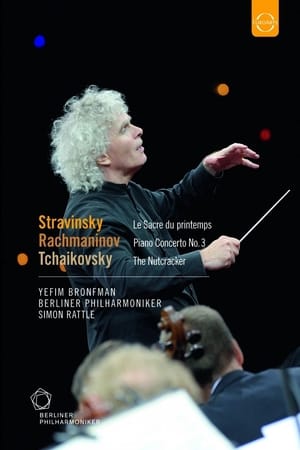
Every year, the Berliner Philharmoniker hold a kind of classical-music fête with a bright, cheerful concert to end the season. In 2009 about 22,000 people had come together at the Berlin Waldbühne to enjoy the traditional summer picnic concert. The theme of the evening was “Russian rhythms”, and star conductor Sir Simon Rattle, the Berliner Philharmoniker and Yefim Bronfman, one of the most famous pianists in the world today, presented a superb selection of Russian music. Repertoire Tchaikovsky: The Nutcracker, op. 71, Overture, The Christmas Tree, March, Pas de deux (Intrada) Rachmaninoff: Piano Concerto No.3 in D minor, op. 30 Stravinsky: Le Sacre du printemps Lincke: Berliner Luft
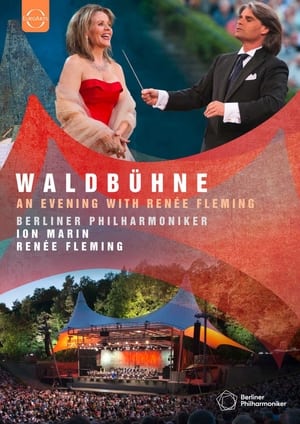
Repertoire Modest Mussorgsky: Night on Bald Mountain; Antonín Dvořák: Song to the Moon from “Rusalka”, Op. 114; Aram Chatschaturjan: Adagio from “Spartacus”; Richard Strauss: Final Scene from “Capriccio”, Op. 85; Richard Wagner: Overture to “Rienzi, der Letzte der Tribunen”; E. W. Korngold: Mariettas Lied from “Die tote Stadt”; Richard Strauss: Zueignung, Op. 10 No. 1; Sir Edward Elgar: Salut d’amour; Giacomo Puccini: Donde lieta uscì from “La bohème”; Tu che di gel sei cinta from “Turandot”; Ruggero Leoncavallo: Musette svaria sulla bocca viva from “La bohème”; Mimì Pinson, la biondinetta from “La bohème”; Piotr Tchaikovsky: “Romeo and Juliet” (Fantasy Overture)
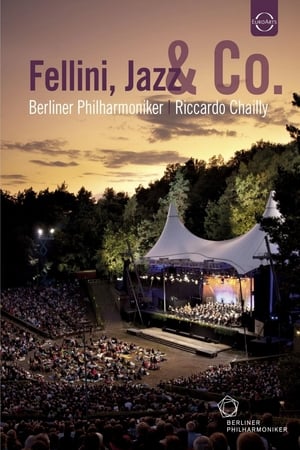
The Waldbühne in Berlin, one of the most appealing outdoor amphitheatres on the European continent, is the home of the Berliner Philharmoniker’s summer concerts. With audiences of more than 20,000, these are some of the most popular classical music concerts in the world. Riccardo Chailly is famous for having one of the broadest and most eclectic repertoires. Here, under his baton, the orchestra presents perennial favourites by Shostakovich, Rota and Respighi. Live recording from the Waldbühne, Berlin, 23 August 2011, directed by Kasten Henning, produced by Jan Bremme. TV Producer: Dorothea Diekmann, RBB. Repertoire Dmitry Shostakovich: Suite No. 2 for Jazz Orchestra (Suite for Variety Orchestra), Lady Macbeth of Mtsensk Suite – Allegretto; Nino Rota: ‘La Strada’ Ballet Suite; Ottorino Respighi: Fountains of Rome • Pines of Rome • Danza gueresca ‘Belkis’; Paul Lincke: Berliner Luft
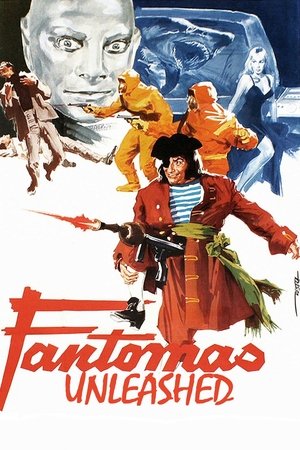
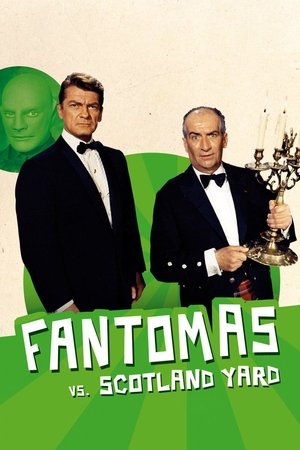
In the second episode of the trilogy Fantômas kidnaps distinguished scientist professor Marchand with the aim to develop a super weapon that will enable him to menace the world. Fantômas is also planning to abduct a second scientist, professor Lefebvre.
Fantômas is a man of many disguises. He uses maquillage as a weapon. He can impersonate anyone using an array of masks and can create endless confusion by constantly changing his appearance.
In the third and final episode of the trilogy, Fantômas imposes a head tax on the rich, threatening to kill those who do not comply.
Solange is seriously depressed, and her kindhearted husband, Raoul, makes it his mission to cure her doldrums. After many failed attempts to cheer her up, Raoul hits upon a possible solution: find his wife a lover. Unfortunately, his choice, Stéphane, proves to be just as ineffectual in restoring her flagging spirits. In the end, the gorgeous Solange finds her own, highly problematic tonic to her troubles in the form of a 13-year-old boy.