Irrécupérables ?
It's there, it's been Irène Schweizer's faithful companion for over 40 years, sharing her joys and sorrows, inspiring her and allowing her to live her dreams: her piano.
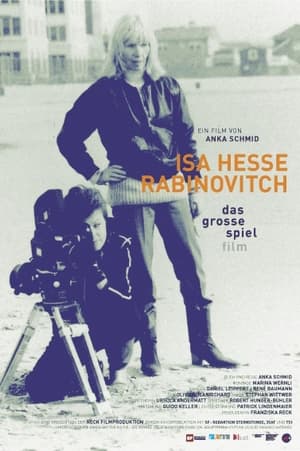
A true pioneer of Swiss cinema, Isa Hesse-Rabinovitch (1917-2003) followed an unusual path throughout her life. The daughter of Judeo-Russian immigrants, she grew up in Zurich. She married a son of Hermann Hesse, with whom she had three children. Influenced by the artistic work of her parents, she worked as an illustrator, then as a reporter and photographer, always mindful of her independence. At the age of fifty, she began making films. Her first experimental shorts immediately earned her invitations to various film festivals and a resounding response abroad.
Jean-Jacques Rousseau, tout dire
Josh's Trees
From August to October 1942, over 2250 Jews were deported from the internment camp of Rivesaltes to Auschwitz by way of Drancy. Among them were 110 children. Friedel Bohny-Reiter, a nurse with the Swiss Aid to Children, worked in this camp in the South of France. Like many others in the formerly unoccupied zone, it was run by the French. Once a military camp, it had been converted in 1941 into a transit camp regrouping Jewish, Gypsy and Spanish people living in the area or who had fled to the free zone as refugees. Thanks to the young nurse from Basel, many children were probably saved from certain death. The film follows the nurse on a visit to that still intact site as well as through the pages of the journal she wrote in those dark days, published by Editions Zoë, Geneva in 1993.
Pascal, Miranda, Jeremy and Franziska are real gypsies. They're between 17 and 25, love big powerful cars and have decided to live on the move. Like many other young Yenish people. They need freedom and fight for it. They show a world closed to the sedentary. A different but very Swiss life. Today's Romanis: disenchanted, close to reality.
Juntos, un retour en Argentine
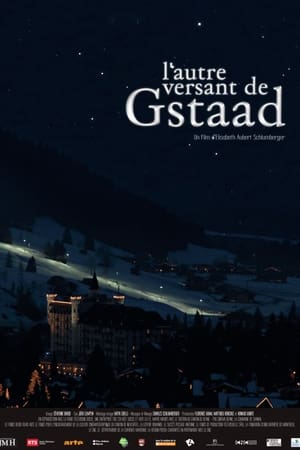
L'autre versant de Gstaad
“Namibia Crossings” takes a trip through a country of archaic beauty and bizarre contradictions. The film creates polyphonies of soulful landscapes made up of each individual's highs and lows.
The film interweaves the stories of two generations of Palestinians. It tells the story of Elias Jubran, a music teacher and oud maker from Al Jaleel (Galilee), and his children, who live in a totally different way in Israel... or who have left the country in search of a more open way of life. The film shows what it takes for a culture - mired in the threatening environment of the State of Israel - to continue to thrive.
In 1996, Kalashnikovs were publicly burnt in Timbuktu. At the time, the "Flame of Peace" symbolized the end of the Touareg rebellion, which had been suppressed in bloody massacres. That year, the rebels laid down their arms. That year, with the government having made promises, the families who had fled abroad left Mauritania, Algeria and Burkina Faso to return home. In the fight for rights and survival waged by this people, who for centuries had found their freedom in one of the world's most inhospitable regions, the Sahara, culture and arms have been in direct competition ever since.
Classe d'accueil
D'une rive à l'autre
Dancing with the Storms
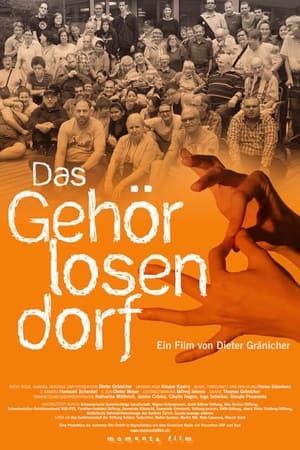
For a month, filmmaker Dieter Gränicher lives in an institution, in the village community of the deaf. As an attentive and increasingly familiar observer, he gets closer and closer to the village's inhabitants, who often suffer from a variety of handicaps, as they go about their daily lives. The film tells the story of the nuances and vivacity of sign language. It portrays human beings who, with great expressive power, overcome the limitations imposed on them by their disability, deeply touching the person opposite.
Ceci est mon royaume
Cher Monsieur, cher papa
Citizen Fred
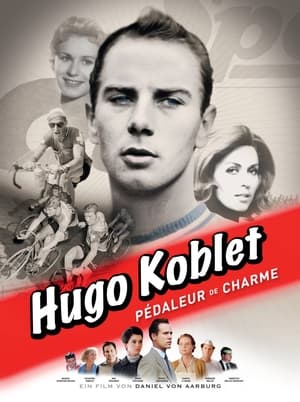
Zurich-born Hugo Koblet was the first international cycling star of the post-war period. He was a stylist on the bicycle and in life, and a huge heartthrob. Koblet had a meteoric rise and won the Giro d'Italia in 1950. Once he had reached the zenith of his career, Koblet was put under pressure by overly ambitious officials and ended up ruining his health with drugs. In 1954, he married a well-known model and they became a celebrity dream couple. After his athletic career ended, Koblet began to lose his footing. Threatened by bankruptcy, he crashed his Alfa into a tree.