Steven Russell leads a seemingly average life – an organ player in the local church, happily married to Debbie, and a member of the local police force. That is until he has a severe car accident that leads him to the ultimate epiphany: he’s gay and he’s going to live life to the fullest – even if he has to break the law to do it. Taking on an extravagant lifestyle, Steven turns to cons and fraud to make ends meet and is eventually sent to the State Penitentiary where he meets the love of his life, a sensitive, soft-spoken man named Phillip Morris. His devotion to freeing Phillip from jail and building the perfect life together prompts him to attempt (and often succeed at) one impossible con after another.
A teenage hustler and a young man obsessed with alien abductions cross paths, together discovering a horrible, liberating truth.
V.I.H.: El muro del silencio
Ninon is a spirited hotel-manager who teaches self-defense classes to her terrified eldery neighbors. Daiga, an aspiring Lithuanian actress newly arrived to Paris, becomes fascinated with the life of a mysteriously beautiful drag performer.
Walter is HIV positive and is leading a promiscuis life in Rome. He does this so that he won’t infect his wife. Walter’s wife is also cheating on him. In a decidedly dull subplot, Walter’s father is a senator who wants to use his son’s illness to promote his own political career by calling for more AIDS research.
This early HIV/AIDS film uses the popular and compelling narrative format of the telenovela to illuminate the effects of AIDS on a cross-section ofthe Latino community in Northern California. Different families and individual characters address complex issues such as sexual practice, sexual identity, and drug use in the family. Touches upon safer sex, male homosexuality and bisexuality, and does well representing several Spanish-language idioms. Allows for the development of an elaborate story encouraging honesty and cultural survival as well as self-criticism within the Latino community.
Se Met Ko is a model fictional analysis of attitudes and misconceptions about AIDS within a Haitian-American neighbourhood. The video uses indigenous cultural references and socially-specific occasions to demonstrate how communities, with individuals acting in enlightened co-operation, can responsibly respond to the AIDS crisis.
Please Adjust Your Sex is a DIY no-budget videotape by and for young people that encourages viewers to engage in safer sex and safer drug use practices while also encouraging them to embrace their desires and reject the patronizing and moralizing media cacophony bombarding them everyday.
It is 1984. Frank is a determined English teenager who runs away from high school to find an alternative gay lifestyle in Amsterdam. He finds a home and a job at the "House of Boys", a bar-cum-brothel run by a strict Madame who has an eye for what his punters crave. Frank works his way up from barman to on-stage dancer and falls in love with some of his housemates, Jake. The first intimations of what is described as 'the gay cancer', casts a long shadow over Frank's tight-knit group of friends. Yet despite the troubles that cloud the hopes and dreams of young Frank, his perseverance, along with support from a willing doctor, will carry him through.
With frank language and explicit imagery, this video addresses difficult issues such as sex and injection drug use in the age of AIDS. It is non-judgemental in its portrayal of young people acquiring, using, and sharing knowledge about safer sex and needle use. The video was produced by, for, and with "street youth" by the STD Prevention Project of Youthlink—Inner City in Toronto, Canada.
An experimental essay film reflecting on love, temporality, memory, absence, and living with HIV.
Told through the voice of former KGB agent Viktor Petrovich, whose life becomes inextricably linked with Ronald Reagan's when Reagan first caught the Soviets’ attention as an actor in Hollywood, Reagan overcomes the odds to become the 40th president of the United States.
When a young dancer moves to San Francisco in the early 1980s, signs of a sickness test his relationships, as well as his lifelong dream in this strikingly photographed and stirring portrait.
Two strangers meet at a train station on the day of an LGBT march. Their conversation drifts from topic to topic, as they flirt, argue, do small talk, and eventually share their secrets and loves.
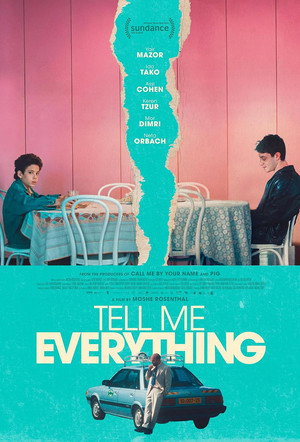
Amid the late ’80s pop craze and rising HIV epidemic, 12-year-old Boaz uncovers a devastating secret about the father he idolizes that threatens to tear his family apart. Across a yearslong journey, Boaz seeks to heal the wound and reclaim the father-son bond he never stopped yearning for.
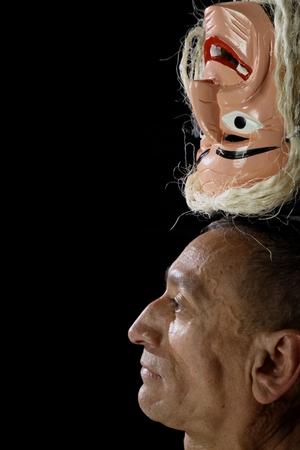
Ananias, a San Francisco Bay Area artist and immigrant, performs the folkloric Danza de los Viejitos (the Dance of the Old Men). Originally from Michoacán, Mexico, where the dance originates, Ananias interprets its movements through the lens of his spirituality, his long-term HIV-related disabilities, and his search for a place in the world.
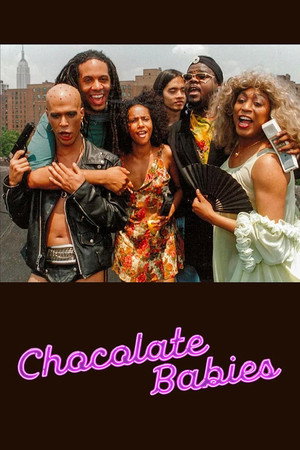
Through a campaign of fabulous surprise attacks, an underground band of radical queer HIV+ activists, addicts, and drag queens take to the streets of New York City to combat conservative politicians and government apathy towards the AIDS crisis.
Nick, a gay, HIV-positive architect, begins to display severe symptoms of AIDS and makes preparations to kill himself before he is unable to function normally. He arranges a party to reconnect and say goodbye to his closest friends and his confused parents. But when his ex-partner, Brandon, a television director who left Nick when he was diagnosed with HIV, shows up, what was supposed to be a celebratory event becomes much more difficult for everyone.
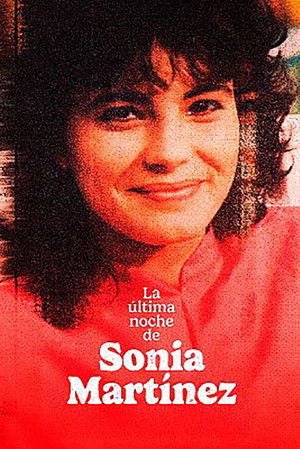
La ultima noche de Sonia Martinez
A trio of interweaved transgressive tales, telling a bizarre stories of suburban patricide and a miraculous flight from justice, a mad sex experiment which unleashes a disfiguring plague, and the obsessive sexual relationship between two prison inmates.