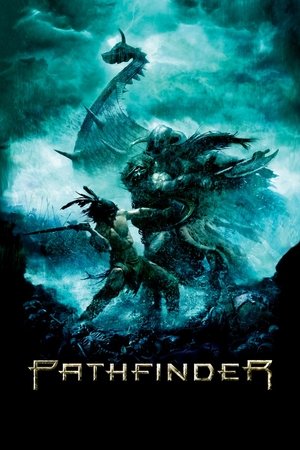
A Viking boy is left behind after his clan battles a Native American tribe. Raised within the tribe, he ultimately becomes their savior in a fight against the Norsemen.
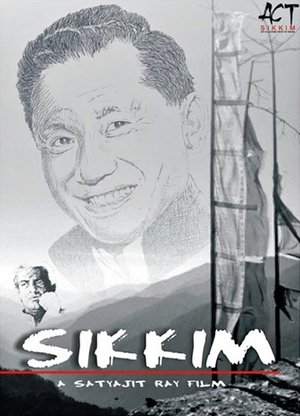
Satyajit Ray's poetic documentary was commissioned by the Chogyal (King) of Sikkim at a time when he felt the sovereignty of Sikkim was under threat from both China and India. Ray's documentary is about the sovereignty of Sikkim. The film was banned by the government of India when Sikkim merged with India in 1975. The ban was finally lifted by the Ministry of External Affairs in September 2010. Preserved by the Academy Film Archive in 2007.
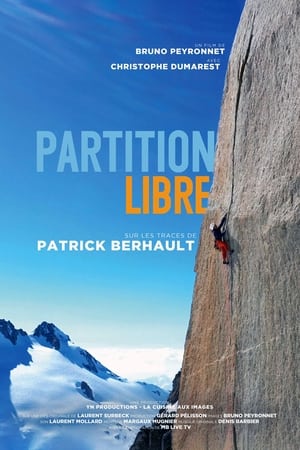
Partition Libre - Sur Les Traces De Patrick Berhault
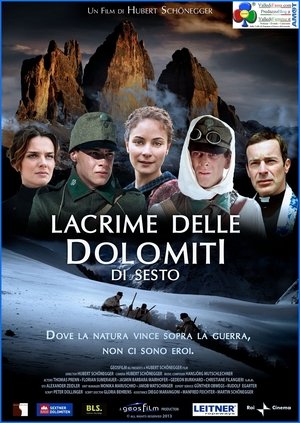
In 1915, the First World War is in full swing and young men are called to military service in rows - including Franz and Peter. Both are sent to the Dolomite front, in order to fend off a threatened Italian attack. Comradeship and loyalty are needed in the fight, but Franz and Peter are ever enemies. Since Peter's romance with Anna, the competition between the two flares up more. But the circumstances of the war and the harsh weather in the mountains soon end those hostilities.
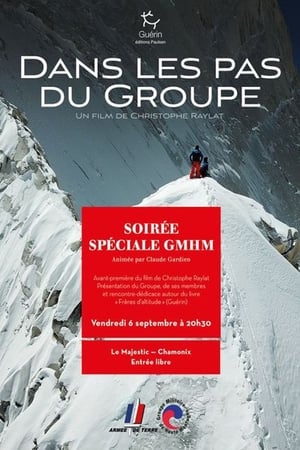
Dans les pas du Groupe
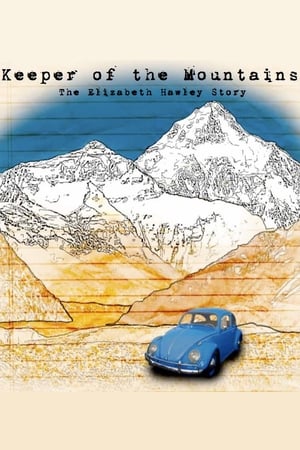
Keeper of the Mountains is a portrait of Elizabeth Hawley and her unlikely key role in the Golden Age of Himalayan mountaineering, her defiance of the traditional gender roles of her day and her decision to settle alone in Kathmandu in 1960, where she has famously lived life on her own terms ever since. Hawley, 91 and a former journalist, maintains the world's largest and most treasured archive of Himalayan mountaineering expeditions and her work is trusted by news organizations and publications around the globe. All this despite never having climbed a mountain herself.
The gang's vacation to Paris takes a wrong turn when Scooby and Shaggy miss their flight and end up on a skydiving expedition in the Himalayas. To make matters worse, upon arrival they must outrun the Abominable Snowmonster.
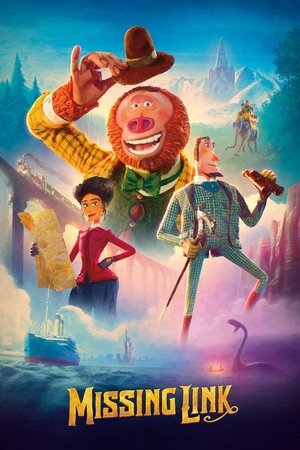
The charismatic Sir Lionel Frost considers himself to be the world's foremost investigator of myths and monsters. Trouble is, none of his small-minded, high-society peers seems to recognize this. Hoping to finally gain acceptance from these fellow adventurers, Sir Lionel travels to the Pacific Northwest to prove the existence of a legendary creature known as the missing link.
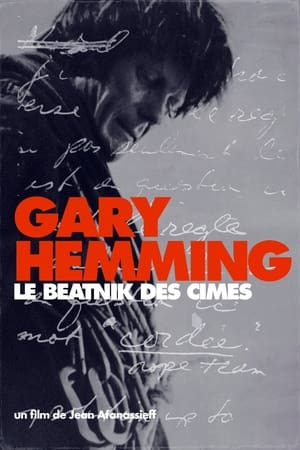
The American mountaineer Gary Hemming marked the era of the 1960s. The story of this "exceptional" character is intimately linked to that of the rescue of the two German mountaineers on the west face of the Drus, in 1966, a rescue which he had took the initiative. While the official emergency services of the EHM try to reach them from above, a pirate rope made up of Gary Hemming, René Desmaison, Lothar Mauch, Gil Bodin, Mike Brurke, François Guillot, the filmmaker Gérard Bauer organizes to join them from below and succeeded after a fierce struggle the rescue. The press seizes the event and elevates Gary Hemming to the rank of national hero. All the newspapers feature this big guy with a cool attitude, mismatched clothes, jovial smile and long blond hair on the front page. From then on, he was nicknamed: "the beatnik of the peaks".
Draw
Less than two years after his serious road accident, Eric Escoffier brought together the "Turbo" team (Frédéric Ancey, Michel Fauquet, Christine Janin and Stéphane Schaffter) with whom he will attempt to climb Everest without oxygen and without prior acclimatization in the Himalayas, the project being to complete the Paris-Everest-Paris loop in two weeks. It is also a medical experiment: the athletes spend a week at Mont Blanc, at the Vallot observatory between 4000 and 4800m, then a week in a hypobaric chamber in Grenoble. Doctors (Dr. Richalet, Herry and Bittel) perform tests throughout this training, which will learn about how the body acclimatizes to altitude and allow applications in the management of mountain-related illnesses . On September 2, 1989, they arrived at Everest base camp in China. They attempted the ascent via the North Col but could not carry out their project, prevented by bad weather.
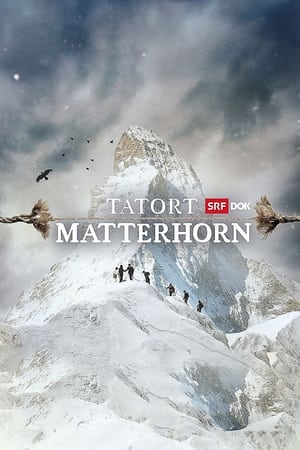
The first ascent of the Matterhorn was made on July 14, 1865 by Edward Whymper, Francis Douglas, Charles Hudson, Douglas Hadow, Michel Croz and two guides from Zermatt, Peter Taugwalder father and son. Douglas, Hudson, Hadow and Croz are killed on the descent after Hadow slips and drags the other three men down the north face. Whymper and the two Taugwalders, who survive, are later accused of having cut the rope that connected them to the rest of the group so as not to be dragged into the fall, but the ensuing investigation finds no evidence of their guilt and they are acquitted. The Matterhorn is the last great peak in the Alps to be conquered and its ascent marks the end of the golden age of mountaineering. One hundred and fifty years later, a team undertakes the same expedition in order to unravel the mystery.
Filmed chronicle by mountain filmmaker Mario Fantin, of the 1964-1965 expedition of the Italian mountaineer Guido Monzino to the summits of Hoggar in the Algerian Sahara with the ascents of Garet el Djenoun, Tizouyag Nord, Saouinan and Iharen. The mountain ranges of the Hoggar desert turn out to be more complex and interesting than most mountaineers suspected at the time.
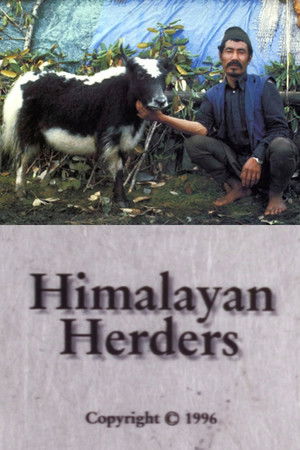
John Bishop and Naomi Bishop present a portrait a peculiar life style of the Himalayan indigenous Sherpa people in their documentary , the Himalayan Herders. The 76 minutes long film is about the diverse culture and life style of herders community near Mt. Everest region of Nepal.The film was made in 1997 as a part of Case Studies in Cultural Anthropology Series.
Every spring, tens of thousands of men, women and children leave their villages for a dangerous trek to the high Himalaya to collect Yarsagumbu, a mysterious transmutation between plant and insect. Used in Chinese medicine, it is worth up to 60 000 USD a kilo, more than gold.
Six blind Tibetan teenagers climb the Lhakpa-Ri peak of Mount Everest, led by seven-summit blind mountain-climber Erik Weihenmayer.
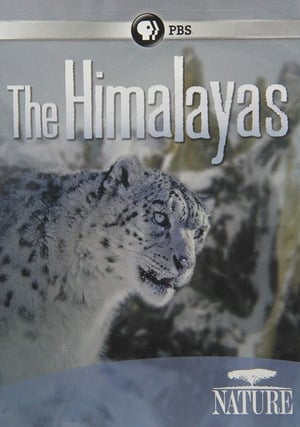
The highest mountain range in the world, the Himalayan range is far reaching, spanning thousands of miles, and holds within it an exceptionally diverse ecology. Coniferous and subtropical forests, wetlands, and montane grasslands are as much a part of this world as the inhospitable, frozen mountaintops that tower above. The word Himalaya is Sanskrit for abode of snow, fitting for a stretch of land that houses the world’s largest non polar ice masses. Extensive glacial networks feed Asia's major rivers including the Ganges, Indus, and Brahmaputra. More than a billion people rely on these glacier-fed water sources for drinking water and agriculture. The Himalayas are not only a remarkable expanse of natural beauty. They're also crucial for our survival.
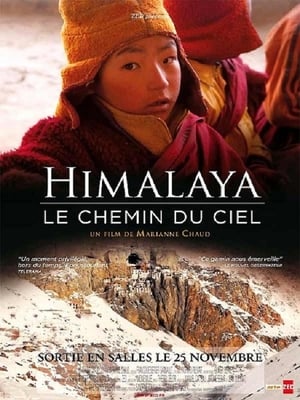
Directed by Marianne Chaud
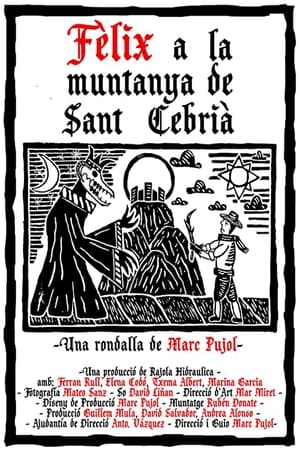
Fèlix is a farmer who lives in the quiet vineyards of the Catalan Penedès. One day, he receives a visit from his grandfather, an old wizard, who asks him for help. Fèlix's sister, Sara, has been kidnapped by the dark wizards who live in the castle of the Sant Cebrià’s mountain. She will be sacrificed to the evil Wizard King Morden, who thousands of years ago was imprisoned by Fèlix's grandfather in that castle. Being Fèlix the only one able to save Sara, he will arm himself with his grandfather's ancient stick; he will walk to the wizards' castle and will cope with Morden.
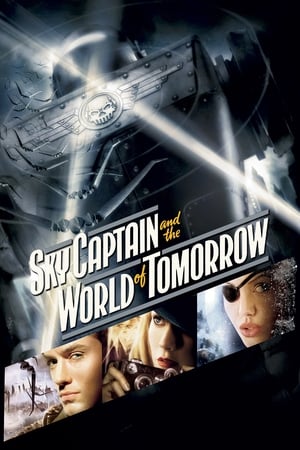
When gigantic robots attack New York City, "Sky Captain" uses his private air force to fight them off. His ex-girlfriend, reporter Polly Perkins, has been investigating the recent disappearance of prominent scientists. Suspecting a link between the global robot attacks and missing men, Sky Captain and Polly decide to work together. They fly to the Himalayas in pursuit of the mysterious Dr. Totenkopf, the mastermind behind the robots.