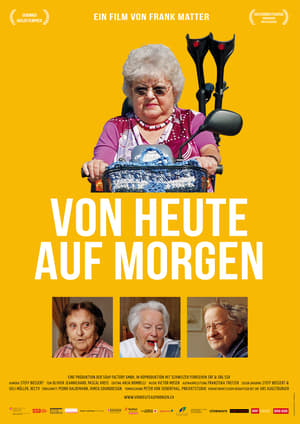
Thomas Haemmerli is about to celebrate his fortieth birthday when he learns of his mother's death. A further shock follows when he and his brother Erik discover her apartment, which is filthy and full to bursting with junk. It takes the brothers an entire month to clean out the place. Among the chaos, they find films going back to the 1930s, photos and other memorabilia.
Since the renewed Intifada began in 2000, there have been over 75 Palestinian suicide bombings. This is the story of 0ne-the bombing of bus 32 in Jerusalem in June 2002. The film connects the stories of a group of ordinary Israelis-Jews and Arabs. Each of them holds a clue to someone who died that day.
At the edge of the Yangtze River, not far from the Three Gorges Dam, young men and women take up employment on a cruise ship, where they confront rising waters and a radically changing China.
In 2001, Andrew Bagby, a medical resident, is murdered not long after breaking up with his girlfriend. Soon after, when she announces she's pregnant, one of Andrew's many close friends, Kurt Kuenne, begins this film, a gift to the child.
You might think that your memory is there to help you remember facts, such as birthdays or shopping lists. If so, you would be very wrong. The ability to travel back in time in your mind is, perhaps, your most remarkable ability, and develops over your lifespan. Horizon takes viewers on an extraordinary journey into the human memory. From the woman who is having her most traumatic memories wiped by a pill, to the man with no memory, this film reveals how these remarkable human stories are transforming our understanding of this unique human ability. The findings reveal the startling truth that everyone is little more than their own memory.
Of Maine’s more than 5000 commercial lobstermen only 4% are female. The Captain celebrates that fearless minority through the lens of Sadie Samuels. At 27 years old, she is the youngest and only female lobster boat captain in the Rockport, Maine harbor. Despite the long hours and manual labor of hauling traps, Samuels is in love — obsessed even — with what she calls the most beautiful, magical place on the planet. Her love for lobster fishing was imparted early in her childhood by her dad Matt, who has been her mentor and inspiration since she was a little girl in yellow fishing boots.
A community of cats lives in the Soledade Cemetery Park in Belém. "7 Vidas" follows these animals through a fictional letter written by one of them to his former owner. With real images of the cats among graves and trees, the film builds a sensitive narrative about abandonment, freedom and memory, revealing the poetry hidden in the coexistence between life and death.
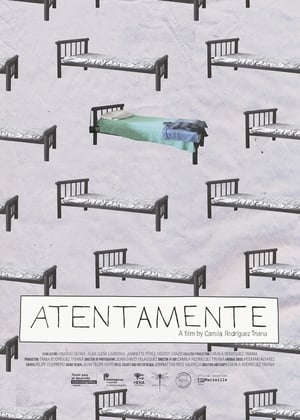
Roberto tries to interview his grandmother to find the story behind a family secret. There are two relatives whose faces are crossed out in all the pictures and nobody talks about them.
Arguing that advertising not only sells things, but also ideas about the world, media scholar Sut Jhally offers a blistering analysis of commercial culture's inability to let go of reactionary gender representations. Jhally's starting point is the breakthrough work of the late sociologist Erving Goffman, whose 1959 book The Presentation of the Self in Everyday Life prefigured the growing field of performance studies. Jhally applies Goffman's analysis of the body in print advertising to hundreds of print ads today, uncovering an astonishing pattern of regressive and destructive gender codes. By looking beyond advertising as a medium that simply sells products, and beyond analyses of gender that tend to focus on either biology or objectification, The Codes of Gender offers important insights into the social construction of masculinity and femininity, the relationship between gender and power, and the everyday performance of cultural norms.
Filmmaker Cam Archer examines and explores his ordinary, suburban neighborhood in search of hidden truths, new narratives and a better understanding of his fading, creative self. Combining heavily degraded video with personal photographs and real life neighbors, Archer re-imagines the concept of 'home video'. In an attempt to distance himself from his subjects, actress Jena Malone narrates the piece as Archer in the first person.
A thoughtful exploration of gypsy culture, an intimate portrait of flamenco guitar player Yerai Cortés and a healing family exorcism through music. Antón Álvarez (aka C. Tangana) makes his filmmaking debut with this documentary.
A short animated documentary featuring archival recordings of the filmmaker's Volga-German Great-Great-Grandmother, Mary Frank Lind, in which she recalls key memories of childhood—her father's windmill, warm rains, wolf sightings, bone trading, and her passion for carpentry, which broke gender norms but was supported by her father.
Documents the true story of the final weeks of rehearsal for the Young at Heart Chorus in Northampton, MA, and many of whom must overcome health adversities to participate. Their music goes against the stereotype of their age group. Although they have toured Europe and sang for royalty, this account focuses on preparing new songs for a concert in their hometown.
In California's Bay Area, a painful memory lingers of the Port Chicago disaster of WWII, when hundreds of the Navy's first Black Sailors perished, and the White officers in charge were protected by the chain of command.
70 years after a body is found floating in a Sydney river, middle aged Jewish doctor Jack learns his father, a Holocaust survivor, is responsible for the unsolved murder of an alleged Nazi and sets out on a quest to find the truth.
Documentary taking a look at the making of the controversial 1978 film I Spit on Your Grave.
RE:MEMBER is a documentary, split into three chapters, that provides insights into the topics of memory, media, and history, specifically through the lens of two millennial participants. Through their testimonies and introspections, we start to see the rift between the media they were nostalgic for and the reality we currently live in. They also consider how our current attitudes towards media have shaped our previous environments and how we can change society to better our future generations.
Both a visit to a very peculiar exhibition at the Bundeswehr Military History Museum in Dresden, Germany, as well as an unprejudiced look at the artistic depiction of violence throughout history and the ways in which that depiction has been gendered.
After the recent loss of his wife Angèle, grandpa René tries to stay positive, finding comfort in simple joys like his cacti and cat Musti—but the weight of impermanence lingers.
A young filmmaker accompanies his grandfather– a veteran of the Vietnam War– to Fairbanks, to dedicate his unit flag to a new generation of helicopter pilots.