On 25th December 2011 the Georgian Patriarch Ilia II described his 34 year-long leadership as head of the Georgian Orthodox Church as a ‘sunny night’. Beginning in 1989, and going up to the present, the film essay Sunny Night tells of political and social events since Georgian Independence. A variety of formats and sources, disparate images and voices report on protests, recommencements, uproars and wars, and religious identity that centres around the dominant religion of the nation. In the midst of the ongoing shifts and the various state of affairs, the patriarch stands out as the only constant figure. Meanwhile the sermonised religion begins to take on radical forms, going as far as priests forming front row human-chains, leading protests of several thousand orthodox believers chasing a handful of LGBT activist throughout the streets of Tbilisi in May 2013.
A dying man in his forties recalls his childhood, his mother, the war and personal moments that tell of and juxtapose pivotal moments in Soviet history with daily life.
In 1960s China, French diplomat Rene Gallimard falls in love with an opera singer, Song Liling – but Song is not at all who Gallimard thinks.
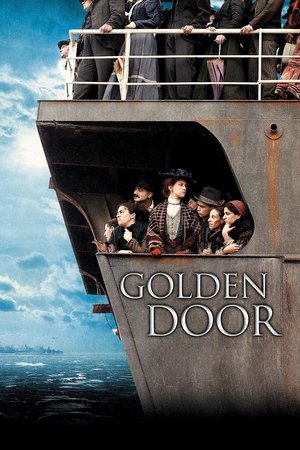
The story is set at the beginning of the 20th century in Sicily. Salvatore, a very poor farmer, and a widower, decides to emigrate to the US with all his family, including his old mother. Before they embark, they meet Lucy. She is supposed to be a British lady and wants to come back to the States. Lucy, or Luce as Salvatore calls her, for unknown reasons wants to marry someone before to arrive to Ellis Island in New York. Salvatore accepts the proposal. Once they arrive in Ellis Island they spend the quarantine period trying to pass the examinations to be admitted to the States. Tests are not so simple for poor farmers coming from Sicily. Their destiny is in the hands of the custom officers.
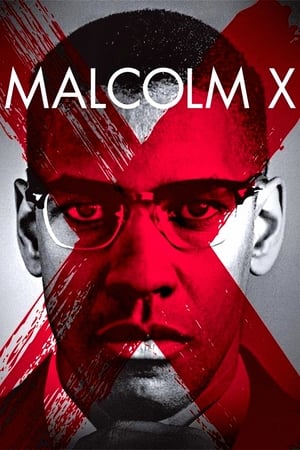
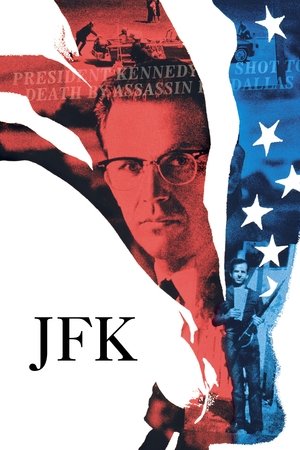
Follows the investigation into the assassination of President John F. Kennedy led by New Orleans district attorney Jim Garrison.
In 1971, two young entrepeneurs decide to organize a race car with lots of indie rock bands livening up the event in Avandaro, Mexico. When only 25 thousand tickets are sold but more than 200 thousand people arrive, things start to get out of control.
Disciplined Italian composer Antonio Salieri becomes consumed by jealousy and resentment towards the hedonistic and remarkably talented young Salzburger composer Wolfgang Amadeus Mozart.
A Place of Our Own
Within the video, two screens coexist. On the primary screen, a repetitive action takes place - the photo in the hands is periodically blurred. The focus of the viewer's attention is shifted to the secondary screen, which is more dynamic. The face in front of the camera, resembling clay, tries to take on images from archival photographs and video recordings.
Evan, a filmmaker from Mississippi, catches feelings for a gal he meets at a found footage film festival in San Francisco. They decide to make a movie together, exploring the haunted landscapes of Evan’s family history in the swamplands of Florida. Old wounds are reopened and generational trauma reveals itself to be perhaps the scariest part of this attempted mockumentary that ends up being a little too real.
Dual timelines explore a Japanese widow's memories spanning post-war Nagasaki in 1950s and England during 1980s Cold War era, unraveling secrets that intertwine her past and present experiences across borders.
The true story of Trish Weir who in 1963 was kidnapped and brutally raped by Ernesto Miranda. Committed to putting her assailant in prison, Trish’s life is destroyed by America’s legal system as she triggers a law that transforms the nation.
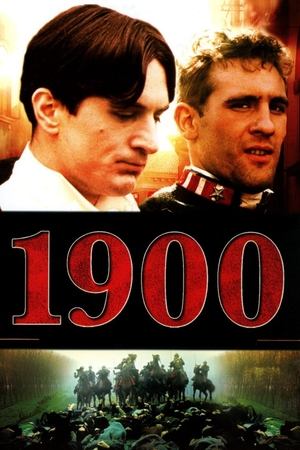
The epic tale of a class struggle in twentieth century Italy, as seen through the eyes of two childhood friends on opposing sides.
Israel, 1961. Nazi war criminal Adolf Eichmann, responsible for organizing the extermination of European Jews, is sentenced to death.
An atypical portrait of singer, songwriter, poet Georges Brassens.
A roller-coaster ride through the history of American exploitation films, ranging from Roger Corman's sci-fi and horror monster movies, 1960s beach movies, H.G. Lewis' gore-fests, William Castle's schlocky theatrical gimmicks, to 1970s blaxploitation, pre-"Deep Throat" sex tease films, Russ Meyer's bosom-heavy masterpieces, etc, etc. Over 25 interviews of the greatest purveyors of weird films of all kind from 1940 to 1975. Illustrated with dozens of films clips, trailers, extra footage, etc. This documentary as a shorter companion piece focusing on exploitation king David F. Friedman.
Narrated by Sir Derek Jacobi - star of the landmark television series "I, Claudius" - this documentary explores art and culture around the Bay of Naples before Mount Vesuvius erupted in AD 79. The bay was then the most fashionable destination for vacationing Romans. Julius Caesar, emperors, and senators were among those who owned sumptuous villas along its shores. Artists flocked to the region to create frescoes, sculpture, and luxurious objects in gold, silver, and glass for villa owners as well as residents of Pompeii and other towns in the shadow of Vesuvius. The film concludes with the story of the discovery of Pompeii and Herculaneum from the 18th century onward.
A documentary about Edie Sedgwick featuring photos of her and clips from Factory Girl, narrated by her real-life friends and loved ones, including her brother Jonathan, cousin John Sedgwick, roommate Danny Fields, artists Richie Berlin and Gerard Malanga, photographer Nat Finkelstein, designer Betsey Johnson, and others.
Triana and Cata's night of devilish plotting and chaos is narrated by Junior Healy's ingenious commentary. Fits of outrage, hysteria and constant ups and downs haunt the streets of Barcelona wherever these two figures go.
Fame driven Ken Dean becomes the subject of a documentary when he attempts to start a pornography company. Following the failure of the company, Ken uses his father's religious music to start a Christian rock band but finds himself trapped in a gay conversion cult.