Movie about David Lama climbing the Patagonian mountain Cerro Torre for the first time free, a mountain that has been dubbed the most difficult to climb in the world.
History of the first ascent of Aconcagua by the south face in February 1954 by the French shock team led by René Ferlet and composed of Lucien Bérardini, Adrien Dagory, Edmond Denis, Pierre Lesueur, Robert Paragot and Guy Poulet. In seven days of combat, they extricate themselves from the mountain in a pitiful state; all except Robert Paragot will be victims of severe frostbite which earned them amputations, some important as for “Lulu” Bérardini who lost part of his left hand.
L'Appel Des Cimes, directed by Alain Pol, is a documentary commissioned by the CAF and the various French ministries on the practice of post-war mountaineering. In 1946, climbers trained at the Fontainebleau Climbing School. Guy Poulet and Jacques Poincenot try to climb the Aiguilles de Chamonix but fail during the climbing phase. After a night in a refuge with Denise Rouzeau and the guide Pierre Allain, the mountaineers make a new attempt. Successful demonstration for those who continued the approach walk then the passage of the seracs of the glacier. On the rock, the roped party crosses a chimney and a crack to reach the summit and abseil down. Led by high mountain scouts, Guy and Jacques rediscover the glaciers and needles of the Mont-Blanc massif during the next lesson.
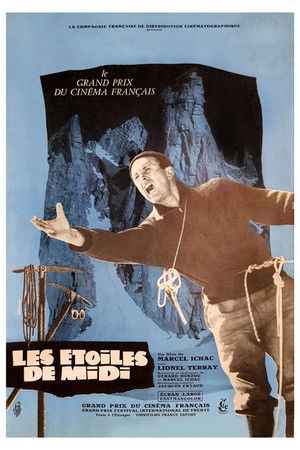
History, advice and demonstrations of mountaineering in the Mont Blanc massif by the renowned guides of the National School of Ski and Mountaineering from Chamonix. The film starts with an historical summary illustrating the aspirations and methods that lead man to conquer the mountains. Armand Charlet teaches mountaineering techniques and takes his students to the field for glacier or rock exercises. Gaston Rebuffat makes demonstrations of particularly dangerous climbs. At altitude, people move in solitude, cold and silence, like circus acrobats without spectators, but nothing stops the modern mountaineer.
"The ascent of the Aiguilles Ravanel and Mummery", climbed by young guides in cycling pants: The brothers Armand Charlet and Georges Charlet, Arthur Ravanel, Henri Couttet and Charles Balmat. The film was shot by Georges Tairraz II, Chamoniard mountain photographer, representative of the third generation of a family line of mountain photographers and filmmakers. George Tairraz II's film will lay the groundwork for a French vision of mountain film; In the 1930s, a French school of mountain cinema emerged, less expressionist, more stripped down and realistic than the German school. These are the films of Marcel Ichac, Roger Frison-Roche, Samivel, Georges Tairraz II, etc. It develops according to the principles set by Marcel Ichac, in opposition to the German school. It is both about getting out of the dramatic vision of the mountain and placing the mountain and the climbers at the heart of the plot.
A Nepali mountaineer risks everything on a record-breaking Mount Everest climb to secure a brighter future for her daughters.
What compels a man to push the limits of what is attainable ever higher? After thirty years of relentless struggle with the highest peaks on earth, Marc Batard has finally found the answers to these questions. He had to reach the summit of Everest twice, once shattering the record for fastest time in 24 hours without oxygen, and climb the most difficult faces of the Alps to glimpse the path to inner healing. It was through physical suffering that he was able to confront the pain of his soul. He was finally able to talk about the violence of his childhood, the shock he carried like a ball and chain for decades. Having completed his summit therapy, Marc Batard tells his story in this documentary by Gilles Perret.
Alex Honnold is the most accomplished free climber in the world. Angola is a southwest African country that recently emerged from 27 years of bloody civil war. What brings together these strange bedfellows you ask? Some of the most epic unclimbed rocks in the world, and a community needing help to diffuse the hidden land mines leftover from the conflict. (Plus a shadowy local hotel magnate, but we'll get into that later). This is Alex Honnold in Angola, for one of the most unique adventures of his storied climbing career this far.
Twelve talented young mountaineers, five geologists from the University of Lausanne and four mountain guides take an unprecedented risk in Patagonia. Trained by the great climbers Ralf Weber, Ueli Steck, Denis Burdet and David Fasel, the young people are collecting rock samples from the granite walls of the Paine Towers, which are up to 1000 meters high, on behalf of science. The challenges are enormous: Climbing a big wall at the highest level of difficulty, cloudy weather, relentless wind that tears at material and nerves - and an urgency that also pushes the group to their emotional limits. "Flying High" not only documents an extraordinary undertaking, but also shows up close what happens when something happens that can happen after every meter of altitude climbed: a fall.
This film, three years in the making, The remote forests of Kalkalpen National Park in Austria, the largest area of wilderness in the European Alps, have been left untouched by humans for nearly a quarter of a century in order to return to their natural, primeval state. The landscape regenerates itself in dramatic cycles of growth and decay, and this bold hands-off method of conservation yields salient results: the lynx, absent from the area for 115 years, has returned.
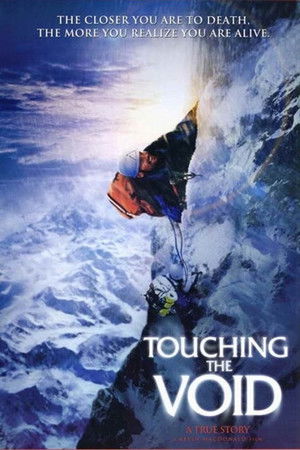
The true story of Joe Simpson and Simon Yates' disastrous and nearly-fatal mountain climb of 6,344m Siula Grande in the Cordillera Huayhuash in the Peruvian Andes in 1985.
2006 was one of the deadliest Everest seasons on record. Experienced mountaineer Lincoln Hall was invited to join an expedition as a high altitude cameraman. It was his second attempt to summit the mountain, having turned back just short 22 years earlier. Shortly after reaching the summit, Hall began to behave irrationally, suffering from lack of oxygen. Aided by his loyal Sherpas for over 9 hours, he eventually collapsed and they declared him dead. His family were informed and the news hit headlines. But something happened that night that science cannot explain. The next morning Lincoln Hall was found alive by approaching climbers and his dramatic rescue began. Never before has a man been declared dead so high on Everest and survived. This is the remarkable true story of Lincoln Hall’s extraordinary journey back from beyond.
The "Lyon Premier 8000-Gasherbrum II 8035m" expedition, organized and led by Jean-Pierre Frésafond in 1975, was sponsored by the Lyon section of the Club Alpin Français and by Louis Pradel, Mayor of Lyon. The film traces the departure from Lyon of Berliet heavy trucks loaded with equipment, daily life in Pakistan, preparation for the expedition and the approach march with the porters, daily life at the base camp and in the camps. altitude of the members of the expedition: L. Audoubert, Marc Batard, F. Bourbousson, A. Chariglione, J. Dupraz, J.J. Forrat, H. and JP. Frésafond, B. Macho, Doctor A. Raymond, Y. Seigneur, J. Soubis, F. Valençot, B. Villaret de Chauvignypuis. Finally On June 18, 1975, Yannick Seigneur and Marc Batard reached the summit by opening a route along the south ridge. Bernard Villaret de Chauvigny, who was killed during the second assault, was the first victim of the Gasherbrum.
Director Damien Roz was twelve years old when he attended a conference by mountaineer Jean-Marie Choffat who told of his passion for the mountains and his fight against cancer. Shocked, the young boy said to himself that one day he would tell the story of this extraordinary man. 29 years ago Jean-Marie Choffat, a seasoned mountaineer, suffered from liver cancer. It was then announced to his parents that he only had a few months left to live. But Jean-Marie, who had just had a son, promised himself that he would see his son grow up until he was at least 20… His son Marcelin is almost thirty today and Jean Marie is still there. Jean-Marie lived through the golden age of mountaineering with some 1,200 ascents around the world and many firsts... If he remembers an ascent of the north face of the Grandes Jorasses between two chemotherapy sessions, he evokes his strong friendships with Yannick Seigneur, René Desmaison or Gaston Rébuffat...
Record of the first ascent of Everest made without the use of oxygen equipment, made in May 1978 by Reinhold Messner and Peter Habeler. Could it be done? Would their blood vessels burst? Would they suffer brain damage leading to madness? Nobody was sure. Messner: 'I would never come here for trying Everest with oxygen. That is not a challenge for me.' A fascinating piece of history, well filmed by Leo Dickinson and Eric Jones (above the South Col Messner used a cine camera to continue the filming), featuring Messner and Habeler's thoughts. The film follows the usual sequence from Namche to Base Camp, through the Icefall, to Camps I, II and III. It also shows historical footage of the pioneering Mallory and Shipton expeditions.
May 25, 1996 - Bruce Herrod, a South African mountaineer reached the summit of Everest at 5 p.m. On the radio, we urge him to come down as soon as possible because the descent is dangerous in the middle of the night. A few hours later, no news from him. From this South African expedition which turned into a fiasco and another expedition carried out in parallel, the testimonies of the members of these expeditions show to what extent the thirst for climbing to the top of certain mountaineers, combined with the lack of oxygen , can alter the lucidity of climbers to the point of changing their relationship to death and thus lead them to neglect other expedition members in order to ensure their victory or save their own life.
The dramatic stories of Fritz Wiessner’s 1939 K2 expedition and Charlie Houston’s return in 1953. K2 is one of the hardest mountains in the world to climb. This film focuses on the expeditions of Fritz Wiessner and Charlie Houston in 1953. An award winner at the Banff, Telluride, Trento and Prague film festivals.
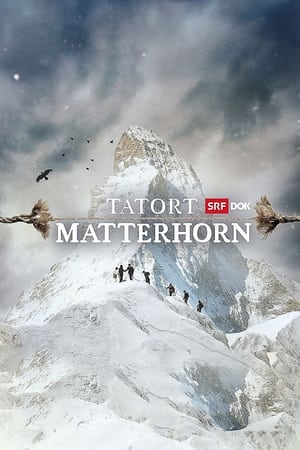
The first filmed winter ascent of the north face of the Matterhorn. To set the scene, the tragic story of Edward Whymper's first ascent is skillfully pieced together. The modern expedition, a team of three British climbers, is also plagued with epics: Eric Jones is hit by an avalanche and can only come to a dangerous stop at the edge of a 1000 foot drop. Then the worst storm ever recorded in Zermatt hits the Matterhorn. With time and weather against them, the team is forced to climb in the dark as thunderstorms rumble around them. This adventure captures the skill and courage of the climbers, their agony and tension, and the beauty of the assault on this spectacular mountain. Grand Prize at the Les Diablerets festival (Switzerland) in 1976.
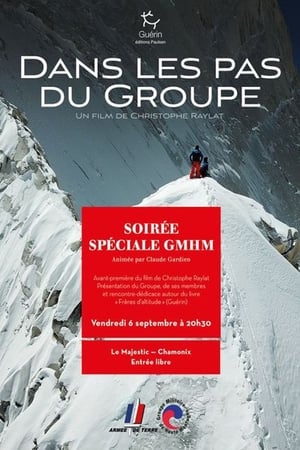
The French High Mountain Military Group (G.M.H.M.) expedition to Everest in 1981, led by General Pierre Astorg, took place on the north face of the mountain. Fifteen military climbers participated in this expedition, which lasted approximately ninety days. Their goal was to reach the summit by following a siege approach, but despite their efforts, the expedition failed to reach the summit. The French military, engaged since the beginning of March on the north face of Everest (8,848 meters), gave up less than 300 meters from the summit. The climbers, Jean-Claude Mosca, Hervé Sachetat, and Hubert Giot, gave up on setting up Camp 7, the last planned intermediate camp, at 8,600 meters. Poor weather conditions and the physical condition of the expedition members were the reasons for the failure of this meticulously prepared expedition...
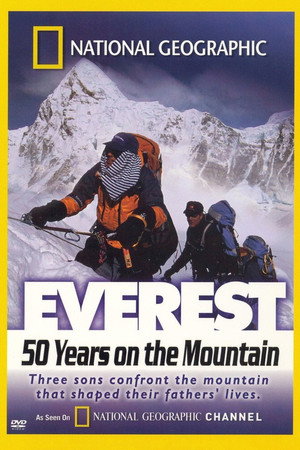
An international team of climbers ascends Mt. Everest in the spring of 1996. The film depicts their lengthy preparations for the climb, their trek to the summit, and their successful return to Base Camp. It also shows many of the challenges the group faced, including avalanches, lack of oxygen, treacherous ice walls, and a deadly blizzard.