A group of teenagers living in a housing project in the outskirts of Paris rehearse a scene from Marivaux's play of the same name. Krimo is determined not to take part, but after developing feelings for Lydia, he quickly assumes the main role and love interest in the play.
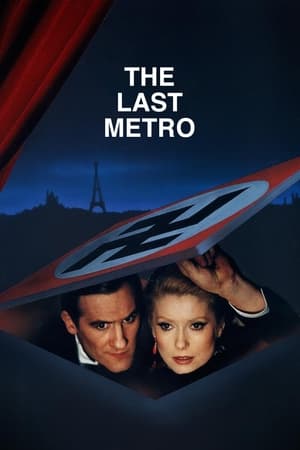
In occupied Paris, an actress wed to a Jewish theater owner must keep him hidden from the Nazis while doing both of their jobs.
Each is dependent on the other. He breaks into the passport office to get a passport. He is surprised and ends up back in prison, where he is trained in military drill. After his release, he once again lodges with relatives, his sister and brother-in-law. Wearing a second-hand captain's uniform, he first takes over a guard unit and uses it to occupy Köpenick town hall, where all the employees of the town council submit to the supposed captain. The mayor is promoted to Berlin and Voigt presents himself to the authorities a few days later. At first, everyone present laughs at the prank, but then Voigt is made aware of the legal consequences. He is sent back to prison, but shortly afterwards he is pardoned by the Emperor.
Les parents terribles
"Vanity of vanities, everything is vanity" says the bible. The word flows from the tongue naming the pleasure of earthly life and judging it as beautiful, but shallow and useless; vanity is a deadly sin. A female sin. The man painted the woman, put a mirror in his hands and called it vanity. The woman in representation admires herself, but the one who really admires her body is the artist. Whose vanity? In VANITAS, we re-divide the woman in our bodies, showing the depth of what is palpable. If the Father's temple hides after death, clean and perfect, we reject them. We welcome Mother Nature in us, life-death in a perpetual sacred cycle, also honoring her dark face. You may wish to reach heaven, but it is on earth that your knees fall.
Kristian Smeds's sensational debut at the National Theater. Smeds's adaptation of Väinö Linna's The Unknown Soldier had a powerful impact even on those who had not seen the play. In the National Theater's interpretation, modernity and intensity are strongly present throughout the play. The cast includes Antti Luusuaniemi, Kristo Salminen, and Jaakko Kytömaa.
The National Theatre's live theatrical production of Tony Kushner's two-part play 'Angels In America' about New Yorkers grappling with the AIDS crisis during the mid-1980s.
America in the mid-1980s. In the midst of the AIDS crisis and a conservative Reagan administration, New Yorkers grapple with life and death, love and sex, heaven and hell. This new staging of Tony Kushner's multi-award winning two-part play, Angels In America: A Gay Fantasia On National Themes, is directed by Olivier and Tony award winning director Marianne Elliott.
In 1415, in the midst of the Hundred Years' War, the young King Henry V of England embarks on the conquest of France.
Unpolished and ultra-pragmatic industrialist Jean-Jacques Castella reluctantly attends Racine's tragedy "Berenice" in order to see his niece play a bit part. He is taken with the play's strangely familiar-looking leading lady Clara Devaux. During the course of the show, Castella soon remembers that he once hired and then promptly fired the actress as an English language tutor. He immediately goes out and signs up for language lessons. Thinking that he is nothing but an ill-tempered philistine with bad taste, Clara rejects him until Castella charms her off her feet.
On the shores of Aulis, the Greeks prepare to attack Troy. But their ships are unable to set sail because the gods are holding back the winds necessary for departure. Agamemnon consults the oracle. The solution is tragic. To appease the goddess Artemis, whom he had offended, he must sacrifice his own daughter.
The Empty King created a mythical figure and a whole world from grotesque, archetypal images. The drama was originally conceived as a student tirade against a teacher at Jarry's school, the Lyceum of Rennes. This teacher, Hébert, was the target of public ridicule. In 1888, at the age of 15, Jarry wrote a puppet play about the exploits of the Woolly Tartar and staged it to the amusement of his friends. The figure of Übü is a crude, cruel caricature of the foolish, selfish bourgeoisie as seen through the unrelenting gaze of a schoolboy; but this Rabelaisian figure, in all his falstaffian greed and cowardice, is more than a mere social satire. It is a terrifying picture of man's animal nature, his evil and cruelty. The Katona József Theatre in Budapest premiered Jarry's play in 1984, and it ran continuously for more than 10 years.
David Ireland's award-winning dark comedy about sectarian hatred in Northern Ireland. Eric Miller, a Belfast loyalist, mistakes his five-week-old granddaughter for Gerry Adams.
Orgon and his mother swear by Tartuffe, the self-styled devout who lives off them. The other members of the family, scandalized by the clergyman's hold over them, will do anything to expose his hypocrisy. Michel Bouquet plays an almost monstrous Tartuffe, whose only weakness lies in his feelings for Elmire.
Marcelline is an actress. Forty, single and childless, she begins rehearsals for Turgenev’s A Month in the Country. Denis, the director, admires her greatly and promises he’ll make her happy on stage — she will shine. But things don’t go to plan.
A struggling actress becomes entangled in an abusive relationship with her idol at a cult-like New York theatre company.
As Blanche’s fragile world crumbles, she turns to her sister Stella for solace – but her downward spiral brings her face to face with the brutal, unforgiving Stanley Kowalski.
Les étés souterrains
"Drawing from Goethe's classic text, Punchdrunk transformed the legend of Faust into a sensory, choreographed drama...this DVD has been produced to reference some of the magic of the live performance, the fragments of which exist only in the memories of those who saw, and helped make into, 'the hottest ticket in town.'"
Only one month left until the premiere of The Golden Time, the long-awaited solo show by acclaimed actress Robertina. Far from focused on the preparations for this new production, Robertina lives in a state of continuous anxiety that turns her privileged life into an absurd and tumultuous landscape.