In a small Southern town, a plantation owner is duped into thinking a thief is a kind stranger. To repay the stranger for stopping a robbery, the plantation owner invites him to his home to meet his daughter.
Hanča, Janko a Lucia
For the 'Are'are people of the Solomon Islands, the most valued music is that of the four types of panpipe ensembles. With the exception of slit drums, all musical instruments are made of bamboo; therefore the general word for instruments and the music performed with them is "bamboo" ('au). This film shows the making of panpipes, from the cutting the bamboo in the forest to the making of the final bindings. The most important part of the work consists in shaping each tube to its necessary length. Most 'Are'are panpipe makers measure the length of old instruments before they shape new tubes. Master musician 'Irisipau, surprisingly, takes the measure using his body, and adjusts the final tuning by ear. For the first time we can see here how the instruments and their artificial equiheptatonic scale-seven equidistant degrees in an octave-are practically tuned.
Lovely overview of traditional Slovak Christmas.
Slovenské ľudové tance
Children parade through the streets of Hinton St George in Somerset on the last Thursday of October. Children have hollowed out pumpkins or mangelwurzels, a type of animal fodder turnip to make lanterns following a tradition in this part of West Somerset that coincides with Halloween. Punky or Punkie Night is thought to date from the turn of the 20th century or perhaps medieval times chanting rhymes and following a Punkie King and Queen.
Two Chinese tourists swap their megacity for the Dutch village of Giethoorn where the hosts work hard to provide for them the authentic Dutch experience.
The film presents a parade of customs, music, songs and dances of the Slovak people in four seasons, based on a theatre play by I. Teren and K.L. Zachar from the first years after the liberation.
To mark the 150th anniversary of Leoš Janáček's birth, a new version of Janáček's famous opus inspired by folk songs was performed at the Concentus Moraviae festival of South Moravian towns in 2004. The new version is the work of Iva Bittová, Vlado Godár, and the Škampa Quartet and is one of the most interesting creations in Czech music in recent times. Leoš Janáček's famous opus in a new version by Iva Bittová, Vlado Godár, and the Škampa Quartet from the Concentus Moraviae 2004 festival in Kyjov.
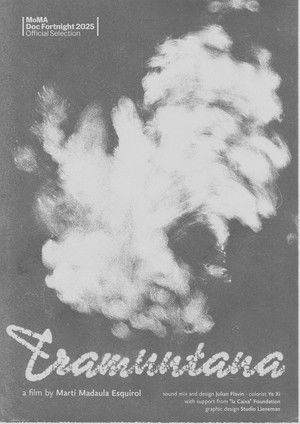
In a remote area of northern Spain, the wind has a name: Tramuntana. Tramuntana takes what it wants—clothes, trees, boats, and the people of the landscape who live with the endless threat of being carried away by its force. This film is a lyrical portrait of this furious wind, woven from the stories passed down by local villagers.
Chan Kwai-sheung visits the brothel with So Tung-bo while his wife, Lau Yuk-ngo, is sleeping. As this is the first time Sheung did this, Ngo wants him to suffer and so makes him wear a lamp on his head. During the Lantern Festival, the Emperor has fun with his officials. After a few drinks, Bo says that Ngo has lost the virtues of a woman. Ngo immediately appeals to the Emperor. All the women there, including the Empress, say that Bo should be punished. Bo is unhappy and invites his cousin, Kam Cho, seduce Sheung to make Ngo unhappy. Sheung, a philanderer, schemes to take Cho as his concubine. Ngo finds out and beats him. Bo urges Sheung to divorce Ngo. Ngo is furious and lodges a complaint with the imperial court. The Emperor allows Sheung to have a concubine. Ngo pleads that she would rather drink poison than let Sheung take a concubine. Feeling remorseful, Sheung drinks the poison after his wife. Fortunately, the queen has switched the poison with vinegar. The couple reconciles.
This exhaustive documentary attempts to tell the history of Bram Stoker's influential novel Dracula, explaining both the historical antecedents to the story, as well as offering look at Stoker's life in order to help illuminate this enduring horror tale, and exposing some of the myths surrounding vampires that have long been accepted as fact.
A magic realist fable about invisible elves, financial collapse and the surprising power of belief, told through the story of an Icelandic woman - a real life Lorax who speaks on behalf of nature under threat.
A lighthouse keeper prepares his earthly funeral while trying to reconnect with his inner elf. Hulda and Trausti have shared a roof on the Icelandic coast for over seventy years. Her love of books is matched by his love of stones. When he tells her he wants to change his name to Elf she warns him that the family will reject him. Now, as his one hundredth birthday nears and Trausti senses the hand of death upon him, he is searching for an elf’s coffin…
In the frigid waters off of Russia’s Bering Strait, Inuit and Chukchi hunters today still seek out the giant sea mammals that have provided their people with food since time immemorial. It is known, that the whale hunting today is controversial and subject to international criticism and regulations. But the Inuit and Chukchi hunt is permitted by international law because of the whaling is the foundation of their culture and their life. The contemporary story of elders Aleksandr and Aleksei blends seamlessly with that of “the woman who gave birth to a whale” and other ancient myths, told here in vivid animation, in this ongoing struggle for survival and preservation of a traditional lifestyle in one of the most remote places on earth.
A roaming hillbilly, on a quest to defy the Devil, encounters several supernatural characters and does battle with his silver-stringed guitar.
Stephen Fry embarks on a journey to discover the stories behind some of the world's most fantastic beasts that have inspired myths and legends in history, story-telling and film.
"21 Days" illustrates a love triangle starring Bete, her boyfriend, Jonas and Agatha, a childhood friend of Jonas. Told from three different points of view, the narrative was inspired by the songs "cardigan", "august" and "betty", from the album "folklore" by singer Taylor Swift.
The story of Nisar Ahmed Khan, told through his children and the people he served, a spiritual guide whose followers still visit his tomb on his birth and death anniversaries. And alongside how his family spends a few days at the village keeping his traditions alive.
Hudba Svetozár Stračina