From the 1st projection to the newest technology IMAX and 4DX, we will travel trough the history of french theaters, asking questions about technological developments throughout history, and finally, the hoped-for future of movie theaters and how they envision themselves in 20 years.
Mulheres de Barba Rija
The Black Contribution – Literature and Theater 1978 is a rare documentary highlighting the voices and cultural impact of African American writers and performers during the civil rights era. Introduced by NAACP leader Benjamin Hooks and narrated by Roscoe Lee Brown, the film weaves together dramatic readings, theatrical excerpts, and candid urban street footage. Margaret Walker’s poem For My People is performed alongside scenes of daily Black life in New York City — children playing, families on stoops, open fire hydrants, and the realities of poverty in 1970s neighborhoods. James Baldwin appears in interview footage, while signs for his play The Amen Corner and stage excerpts from Lorraine Hansberry’s A Raisin in the Sun underscore the powerful presence of Black voices in American theater. With rare shots of Harlem life, literature, and performance, this film documents the enduring contributions of African American artists to U.S. culture and history.
This is the story of my grandfather, Tiago Florit, who for 50 years was a film operator at the Teatre Principal de Maó, in Menorca. It is a review of his life, from his birth to his death, in a cinematographic key. A true love story to cinema.
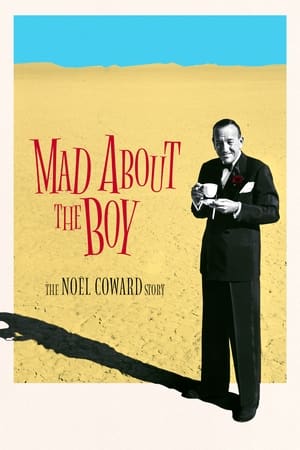
The extraordinary life of playwright, singer, actor, composer, and director Noël Coward, who rose from poverty to stardom while keeping his sexuality a secret. Featuring Laurence Olivier, Maggie Smith, Frank Sinatra, Michael Caine and Lucille Ball. Narrated by Alan Cumming. With Rupert Everett as the voice of Noël Coward. Directed by Academy Award Nominee Barnaby Thompson.
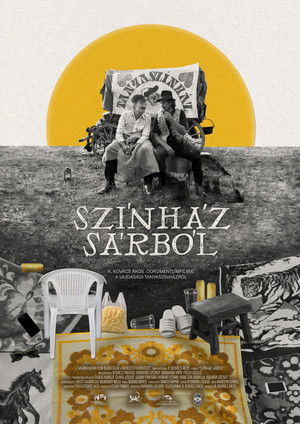
On the 45th anniversary of the Grange Theatre in Vojvodina, its two legendary founders - director György Hernyák and actor Frigyes Kovács - have reunited. It was a unique occasion seeing these two masters create art under the open sky once again. Through this rehearsal process, the documentary draws a vivid portrait of the Grange Theatre’s past and present, the community built around it, and the unique energy that binds Vojvodina Hungarian identity with the troupe’s history. The film is not merely a retrospective; it reveals how liberating and life-affirming theater-making can be, and how the joy of free creation remains indispensable today.
One night, nine children from the same Tunisian village attempt the deadly crossing. Like a poem or a prayer, this film welcomes the words of bereaved mothers and gives dignity to their grief.
The Blu-ray Experience II: Opera, Ballet & theatre
Karol Medvecký a Vojvodina
The first part of the film shows an actuality street scene of traffic in the Strand. Behind the traffic we can see the entrance to the Gaiety Theatre on the Strand, advertising its latest show 'My Girl'. The second part is a different film altogether, spliced onto the first and is R W Paul’s Turn Out of a Fire Brigade filmed in November 1896 in Newcastle at the Westgate Road fire station. The film date is 1896.
From PBS - With unprecedented access, The Shaw Festival: Behind the Curtain captures the unique creative process of one of North America's longest running, most distinctive and exciting theatre experiences. Each year between April and October, the Shaw Festival--which began in 1962 with the mandate on works by George Bernard Shaw--presents around 10 plays on four stages that attract patrons from all over the world. Located in Niagara-on-the-Lake, Ontario, Canada--the Shaw's one-of-a-kind schedule has actors and directors working on several plays at once. Over eight months, crews design and build sets on a finely honed schedule that is both frenetic, creative, and amazingly well planned and executed. Follow the process of getting the play from the page to the stage as The Shaw Festival: Behind the Curtain provides insight into every aspect of production at a summer theatre festival.
Sigrid Koetse, award-winning actor and grande dame of Dutch theater, lived most of her life in the public eye and was always surrounded by a crowd of admirers. With this short documentary, filmmaker Wytse Koetse shows how his aunt spends her days nowadays, lonely in her Amsterdam home.
Noi siamo gli errori che permettono la vostra intelligenza
Documentary about the production of Bunk #7.
Taipei's Bohemians: The Life of Theatre
A look at why Hamlet, a play that’s over 400 years old, holds a mirror up to society today. Filmed across four days of workshops with youth theatre groups across London: The Big House, Bush Theatre Young Companies, Centre 59, and Open Door.
Člověk si sám se sebou vystačí, respektive nevystačí
We are taken behind the scenes of a play in-the-making: The play is Samuel Beckett’s WAITING FOR GODOT—starring a group of young 48-Palestinians. One by one, we are introduced to a variety of characters: the play’s director, actors, and other ordinary people. As we delve further into each of their lives, the film reveals the startling parallels between the themes of the play and their own. Everyone is waiting for something: a permit to build a house, better work conditions, a starring role in a film. Much like Waiting for Godot, our heroes are awaiting Faraj Allah… something that may or may not come.
José Corbacho and Catalina Solivellas met thirty years ago sharing stages, dressing rooms, laughter and also some sadness. They they began to be aware of how therapeutic theater can be in difficult times. Years later, and inspired by Don Quixote, they decided to put together a free version of the chivalric novel, together with Mallorcan amateur actors and actresses with a mental health diagnosis. The documentary proposes a journey in which José, Catalina and the wonderful company created for the occasion, share stages, dressing rooms, laughter and also some tears.
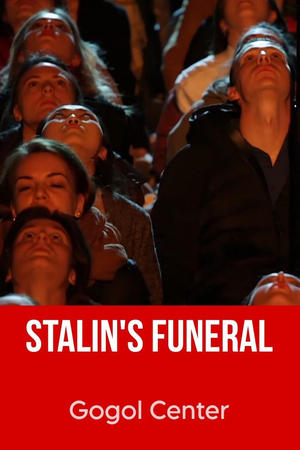
On the same day that Stalin was buried, Sergei Prokofiev's funeral took place completely unnoticed. And if the farewell to the composer quietly went against the backdrop of the farewell to the dictator that swept the whole country, then in the play everything is the opposite - Prokofiev's music is in the center, and it is interrupted by the stories of those people who would probably ignore Stalin's funeral and went to say goodbye to the great composer.