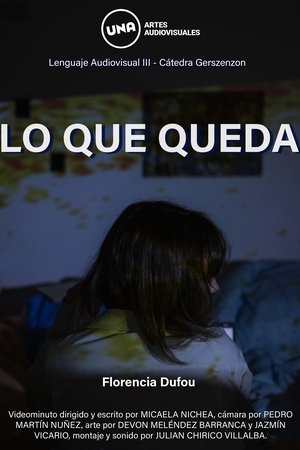
A young man pretends to sleep while he watches his lover go through her morning routine.
History as immersion and dispersion in the fragments of the past, a visionary journey accompanied by the voice of Patty Pravo. Presented at the Taormina Festival '97.
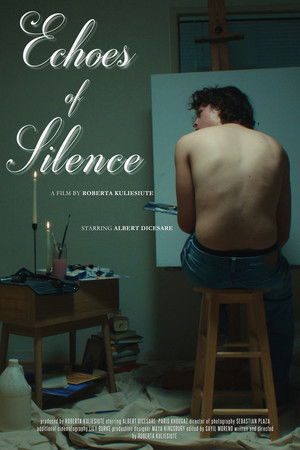
In his Miami studio, built as a solar observatory, a famous painter lives alone, without a wife or children. His only obsession is to paint at dawn. But for some unknown reason, as he prepares to finish his last canvas, that morning the sun does not rise.
2 flatmates unfold the layers of their relationship on a random Sunday afternoon after they encounter a power cut.
As the day ends for a worn-out office worker, he encounters the mysterious gaze of a chimpanzee, sparking a silent exchange that prompts him to make an irreversible decision.
Robert Estragon has worked his way to the top of the food chain as a doctor in the city, but it has driven him to self-imposed delusion. Here, we listen as he sits and projects himself onto the mad world he observes. It all comes to a head when Willie Krapp, a young colleague, invades this world, hoping to teach Robert that it was wrong to let his own daughter die in the operating room.
After his wife Amelia suffers an aneurysm that leaves her bedridden and slowly dying, police officer Carter Summerland searches for a way to revive her. He's approached by Wesley Enterprises pioneering a new program to extend life through robotics, they get caught in a public debate over human’s relationship with technology and her right to exist.
Nadveren
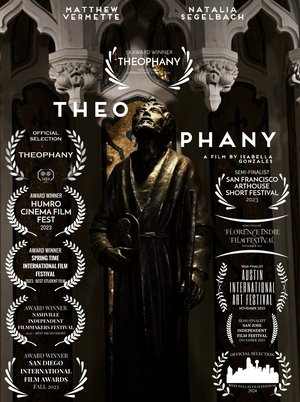
The wind carries an aspiring healer into a chaotic, virulent parallel world. Paralyzed by a familiar universe that is gradually becoming distorted, she discovers she has the power to stop time.
As she keeps watching old home movies isolated in her hotel room, the screen becomes a mirror from which she tries to see herself. Levels of subjectivity, narrative, and reality entwine into a surrealist fever dream of scopophilic cinéma pur. The final layer of meaning is all of us watching the film on the screen-mirror in the theatre.
Creating a universe between two small pieces of Cardboard. When Jack and Jill of Cardboard City are separated by Jill's torrid illness, Jack must think outside the box to assure they will be together again.
This short film, built around a randomly chosen name and composed of scenes shot within a single room over the course of three hours, features an introspective monologue that was shaped and adapted during the editing process. The narrative aligns closely with the emotional tone and visual rhythm of the piece, particularly in harmony with the non-original music selection, Maggot Brain by Funkadelic.
A nuclear family sits in front of the television. The phone rings.
Born from steel and glass Kino Kopf is created by two inventors. They are assembled by their mother, a nurturing artist, and their Father a greedy entrepreneur. Kino Kopf is the first of its kind a sentient humanoid VHS camera. They are given a life by their mother but presented to the world by their father. Kino Kopf is the next big sensation and spurs a technological revolution. They are soon forgotten and alone as new models surpass them. Kino Kopf is left alone to contemplate if they ever had a soul, as visions of an electric cowboy dance through their dreams.
A young couple with conflicting desires for intimacy attempt to navigate the emotional complexities of what should be a joyful one-year anniversary.
A 16mm experimental film that analogizes the discourse of racialized criminality and the carceral apparatus, which surveils and delimits the movements of Black people’s bodies, with the conventions and mechanics of the cinematic apparatus which regulates and standardizes the movement of the filmstrip through the motion picture camera and projector. Equal parts essay and visual art, Speaking in Tongues embodies the cinematic Black ecstatic that simultaneously re-envisions resistance defiance in the face of anti-Black state violence and subverts the conventions of cinematic realism through a manually and optically altered collage of original documentary and archival film sourced from Hollywood movies, television commercials, educational films, cartoons, European art cinema and miscellaneous ephemera.
X-ray images were invented in 1895, the same year in which the Lumière brothers presented their respective invention in what today is considered to be the first cinema screening. Thus, both cinema and radiography fall within the scopic regime inaugurated by modernity. The use of X-rays on two sculptures from the Bilbao Fine Arts Museum generates images that reveal certain elements of them that would otherwise be invisible to our eyes. These images, despite being generally created for technical or scientific purposes, seem to produce a certain form of 'photogénie': they lend the radiographed objects a new appearance that lies somewhere between the material and the ethereal, endowing them with a vaporous and spectral quality. It is not by chance that physics and phantasmagoria share the term 'spectrum' in their vocabulary.
A girl approaches a divine entity that comes to the world in the form of a yellow umbrella, and ends up discovering her true self.
A spate of robberies in Southern California schools had an oddly specific target: tubas. In this work of creative nonfiction, d/Deaf first-time feature director Alison O’Daniel presents the impact of these crimes from an unexpected angle. The film unfolds mimicking a game of telephone, where sound’s feeble transmissibility is proven as the story bends and weaves to human interpretation and miscommunication. The result is a stunning contribution to cinematic language. O’Daniel has developed a syntax of deafness that offers a complex, overlaid, surprising new texture, which offers a dimensional experience of deafness and reorients the audience auditorily in an unfamiliar and exhilarating way.