2017 Oscar Nominated Short Films: Documentary
A conversation between Idrees Khan and his mother on how the celebrate their Trini culture in Orlando
A documentary about the corrupt health care system in The United States whose main goal is to make profit even if it means losing people’s lives. "The more people you deny health insurance, the more money we make" is the business model for health care providers in America.
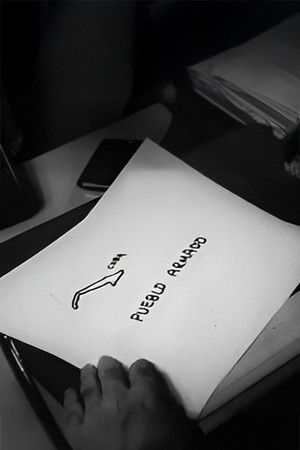
Half blind and half deaf, ostraziced Cuban writer Rafael Alcides tries to finish his unpublished novels to discover that after several decades, the home made ink from the typewriter he used to write them has faded. The Cuban revolution as a love story and eventual deception is seen through the eyes of a man who is living an inner exile.
A group of children living on the streets of Athens. Among them is Sayid, a twelve-year-old boy, who works all day selling sunflower seeds in the city’s parks and squares. His existence borders on absolute poverty, as he goes looking for food at soup kitchens. His daily routine in the chaotic capital of Greece is a continuous struggle for survival. At the same time, however, he manages to find and enjoy the freedom the city streets can offer. Sayid, along with his friends who are all immigrants from Afghanistan, escape their desperation by clinging onto their hopes. With them, he plays innocent childhood games and dreams of a better future: He wants to leave for Northern Europe, to go to school, and to get a decent job when he grows up. Sayid is trapped in Greece, a country plagued by a financial crisis, increasing unemployment, rampant xenophobia, and racist violence. Sayid doesn’t mince his words: “I’ve been here for about two years, and it feels like twenty.”
Born to Korean immigrant parents freed from indentured servitude in early twentieth century Mexico, Jerónimo Lim Kim joins the Cuban Revolution with his law school classmate Fidel Castro and becomes an accomplished government official in the Castro regime, until he rediscovers his ethnic roots and dedicates his later life to reconstructing his Korean Cuban identity. After Jerónimo's death, younger Korean Cubans recognize his legacy, but it is not until they are presented with the opportunity to visit South Korea that questions about their mixed identity resurface.
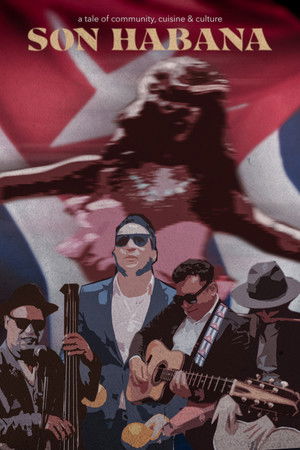
The Oscar-winning filmmakers Rob Epstein and Jeffrey Friedman have become treasured musicologists, first with their loving biography LINDA RONSTADT: THE SOUND OF MY VOICE (2019) and then with TAYLOR MAC’S 24-DECADE HISTORY OF POPULAR MUSIC (2022). Now, they turn their cameras towards Cuba, profiling four students at the Amadeo Roldan Conservatory. Though it has long been the nation’s most prestigious music school in a music-crazy nation, the conservatory struggles to maintain instruments for their students.
In Fairy Creek, director Jen Muranetz documents the largest act of civil disobedience in Canadian history, creating a searing portrait of contemporary environmental activism, bearing witness to the lengths activists are willing to take to protect British Columbia’s last old growth forests.
In the 1980s, a drummer is abandoned by his band just before they become rock superstars. Twenty years later, the drummer sees his second chance at stardom arise when he is asked to perform with his teenage nephew's high school rock band.
Four years after Pour la suite du monde (1963), director Pierre Perrault asks Alexis Tremblay if he'll agree to travel with his wife Marie to the country of their ancestors, France. In a montage parallel, we follow them in France and listen to them talking to their friends about it.
For seven years, award-winning Chinese-American filmmaker Nanfu Wang follows Rosa María Payá, daughter of the five time Nobel Peace Prize nominated activist, Oswaldo Payá, in Rosa's fight for democratic change in Cuba. Rosa's narrative is interwoven with Wang's poignant reflections on her Chinese upbringing and her observations of eroding democratic norms in the U.S., revealing unsettling similarities to the authoritarian system she left behind.
This black-and-white film is a loving portrait of Santiago de Cuba and its people. It provides a view of Cuba as a picturesque country, the product of an earthy mix of black and criollo cultures. The film uses historical images which portray the end of the eighteenth century when Haitian slave owners fled with their slaves to Cuba after the Haitian Revolution.
A young man decides to join the army. He becomes the drummer in the military band, and his everyday life is now a combination of military training and music. What does the Argentine Army do these days, more than thirty years after the dictatorship? What does it mean to be a soldier in a country without wars?
The Fall of the I-Hotel brings to life the battle for housing in San Francisco. The brutal eviction of the International Hotel's tenants culminated a decade of spirited resistance to the razing of Manilatown. The Fall of the I-Hotel works on several levels. It not only documents the struggle to save the I-Hotel, but also gives an overview of Filipino American history.
The encounter with a growing, and mostly undocumented, brazilian community allows us to bear witness to its energy, its vivacity, and its diversity. This film attempts to work for a larger acceptance of foreigners in their land of exile.
The struggles of a group of outcasts living in "Yentown", in an alternate-future Japan.
El octubre de todos
In this wildly entertaining vision of one of the twentieth century’s greatest artists, Bob Dylan is surrounded by teen fans, gets into heated philosophical jousts with journalists, and kicks back with fellow musicians Joan Baez, Donovan, and Alan Price.
Why wouldn't you? Is there any reason not to? We've got so much at our disposal, so, why don't you? Won't you tell me? Won't you please tell me? To have you down is simply unacceptable. Just look at this; or this; at all these hallmarks to guide you and convey to you the prime ways to feel lovely. Just follow them and you'll be set. So, I ask you again... Don't you feel lovely today?
Somewhere between documentary and fiction, this is an essay on questions of territory and human displacements made during an excursion from southern Spain to northern Morocco. Travelling on the Mediterranean rim, we hear immigrants tell their stories.