The documentary is titled after Arkadaş Z. Özger’s poem “Hello My Dear” which had caused much controversy in the period it was first published. Considered to be in defiance of heteronormativity, the said poem includes references to the poet’s personality, his family, his relationship to the society, and his “unexpected” death, which came three years after its publication. Today, 50 years after it was written, the documentary follows these same lines in the poem utilising cinematic elements. The documentary also rediscovers the poetics; reaches out to the family, the comrades, the friendships, departing from the official historical accounts, cognizant of his experience of otherness, in pursuit of the “lost” portrait of Arkadaş Z. Özger.
Twenty years ago, novelist Salman Rushdie was a wanted man with a million pound bounty on his head. His novel, The Satanic Verses, had sparked riots across the Muslim world. The ailing religious leader of Iran, the Ayatollah Khomeini, had invoked a little-known religious opinion - a fatwa - and effectively sentenced Rushdie to death. This film looks back on the extraordinary events which followed the publication of the book and the ten year campaign to get the fatwa lifted. Interviews with Rushdie's friends and family and testimony from leaders of Britain's Muslim community and the Government reveal the inside story of the affair.
Part documentary, part drama, this film presents the life and work of Jack Kerouac, an American writer with Québec roots who became one of the most important spokesmen for his generation. Intercut with archival footage, photographs and interviews, this film takes apart the heroic myth and even returns to the childhood of the author whose life and work contributed greatly to the cultural, sexual and social revolution of the 1960s.
Documentary tracing the extreme life of outlaw writer, performance artist and punk icon, Kathy Acker. Through animation, archival footage, interviews and dramatic reenactments, director Barbara Caspar explores Acker's colorful history, from her well-heeled upbringing to her role as the scribe of society's fringe.
Jorge Semprún, la plume au poing
In 1847, British writer Emily Brontë (1818-48), perhaps the most enigmatic of the three Brontë sisters, published her novel Wuthering Heights, a dark romance set in the desolation of the moors, a unique work of early Victorian literature that stunned contemporary critics.
The views and thoughts of Canadian writer Margaret Atwood have never been more relevant than today. Readers turn to her work for answers as they confront the rise of authoritarian leaders, deal with increasingly intrusive technologies, and discuss climate change. Her books are useful as survival tools for hard times. But few know her private life. Who is the woman behind the stories? How does she always seem to know what is coming?
A portrait of the British writer Thomas Hardy (1840-1928), who, although he had radical instincts, hated hypocrisy, was of great poetic brilliance, had a tragic perception of life and a calm outward appearance, was at heart a man of seething and somber darkness.
THE PERFUMED GARDEN is an exploration of the myths and realities of sensuality and sexuality in Arab society, a world of taboos and of erotic literature. Through interviews with men and women of all ages, classes, and sexual orientation, the film lifts a corner of the veil that usually shrouds discussion of this subject in the Arab world. Made by an Algerian-French woman director, the film begins by looking at the record of a more permissive history, and ends with the experiences of contemporary lovers from mixed backgrounds. It examines the personal issues raised by the desire for pleasure, amidst societal pressures for chastity and virginity. The film discusses pre-marital sex, courtship and marriage, familial pressures, private vs. public spaces, social taboos (and the desire to break them), and issues of language.
In an industry that is becoming increasingly competitive, what drives indie filmmakers to keep creating their art, even when there is no promise of money or fame? CREATE OR DIE explores the insatiable passion to create despite the overwhelming odds through the lens of South Carolina writer and filmmaker David Axe, as he and his band of cast and crew head out into the backwoods of Georgia to shoot his low budget passion project ACORN. But when tragedy strikes on set, doubt and tension threaten to bring an end to their production and their dreams.
Raised in the small all-Black Florida town of Eatonville, Zora Neale Hurston studied at Howard University before arriving in New York in 1925. She would soon become a key figure of the Harlem Renaissance, best remembered for her novel, Their Eyes Were Watching God. But even as she gained renown in the Harlem literary circles, Hurston was also discovering anthropology at Barnard College with the renowned Franz Boas. She would make several trips to the American South and the Caribbean, documenting the lives of rural Black people and collecting their stories. She studied her own people, an unusual practice at the time, and during her lifetime became known as the foremost authority on Black folklore.
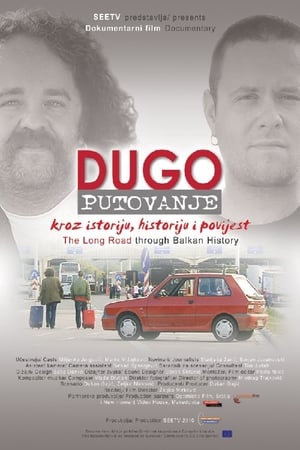
Bosnian Croat writer Miljenko Jergović and Serbian writer Marko Vidojković replace one another by the steering wheel of Yugo, a symbol of their common past while driving on the Brotherhood and Unity Highway that stretched across five of six republics of Yugoslavia.
How the inventor of the detective story became his own greatest mystery.
Documentary about Moa Martinson.
In his lifetime, Thomas Merton was hailed as a prophet and censured for his outspoken social criticism. For nearly 27 years he was a monk of the austere Trappist order, where he became an eloquent spiritual writer and mystic as well as an anti-war advocate and witness to peace. Merton: A Film Biography provides the first comprehensive look at this remarkable 20th century religious philosopher who wrote, in addition to his immensely popular autobiography The Seven Storey Mountain, over 60 books on some of the most pressing social issues of our time, some of which are excerpted here. Merton offers an engaging profile of a man whose presence in the world touched millions of people and whose words and thoughts continue to have a profound impact and relevance today.
Well-known Croatian author Pero Kvesić, who has been struggling with a severe lung disease, documents his death from his own point of view. Recording his everyday struggle, the picture resembles a peculiar blog filled with self-irony and witty comments about life and death. Although the world around continues to shrink, the hero and the director in one does not cease to fill it with sense.
It's a sensitive, moving doc chronicling the life of Tétrault's brother Philip , a Montreal poet, musician and diagnosed paranoid schizophrenic. A promising athlete as a child, Philip began experiencing mood swings in his early 20s. His extended family, including his daughter, share their conflicted feelings love, guilt, shame, anger with the camera. They want to make sure he's safe, but how much can they take?
After Portnoy's Complaint launched him as a new literary voice, not to mention a scandalous one, Philip Roth went on to be hailed by many as America's greatest living writer. Never afraid to look hard at the extremes of human experience, he has been both consistently controversial and intensely private. But now, having celebrated his 80th birthday in his home town of Newark, New Jersey, Roth, in conversation with Alan Yentob, is ready to tell the whole story in this special two-part film for imagine... Philip Roth Unleashed.
This film is an attempt to disclose if Raul Brandão has left any trace, in Nespereira, Gumarães.
Gerais da Pedra