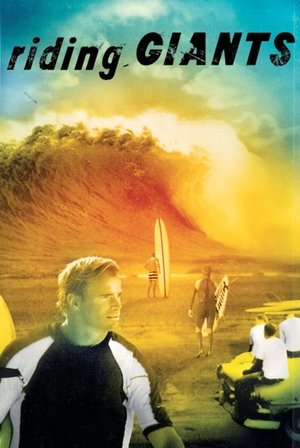
Riding Giants is story about big wave surfers who have become heroes and legends in their sport. Directed by the skateboard guru Stacy Peralta.
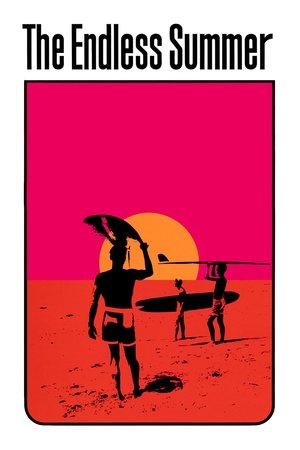
Bruce Brown's The Endless Summer is one of the first and most influential surf movies of all time. The film documents American surfers Mike Hynson and Robert August as they travel the world during California’s winter (which, back in 1965 was off-season for surfing) in search of the perfect wave and ultimately, an endless summer.
A woman narrates the thoughts of a world traveler, meditations on time and memory expressed in words and images from places as far-flung as Japan, Guinea-Bissau, Iceland, and San Francisco.
To popularize the idea of automobile travel, Ford Motor Company produced Ford Educational Weekly, a film magazine distributed free to theaters. One 1916 series featured "Visits to American Cities." In this episode, Los Angeles is featured at the very beginning of the boom created by oil, movies and aircraft. On the occasion of its centennial in 1953, Ford donated its film to the National Archives and Records Service; this copy derives from a fine grain master printed from the Archive's preservation negative. Music by Frederick Hodges.
One of the highest achievements of the new wave of Kirghiz cinema, which emerged in the mid-1960s. This story of a boy building sandcastles on the shores of the Issyk-Kul Lake becomes a documentary parable on the tensions between an artist and society.
Pure tranquillity in rural Somerset, a world away from the war raging on the continent.
Whistlestop tour of Dartmouth in Devon, taking in the 17th century Butterwalk arcade and medieval castle.
With their gramophone perched on the back of their launch, the family set off for a day of rest and relaxation on the Broads and Suffolk coast.
The world seen through the eyes of children. The action takes place in Karosta, the former military port of Liepaja city – however, it is not that important, as the film could take place anywhere. We observe children playing on the beach, revealing the core of Pakalnina’s work: perceiving and transmitting emotions.
Private Diary documents photographer Pedro Usabiaga working with a variety of amateur models. The audience sees how the relationships between the photographer and the subjects changes during their time together, as well as how the individual photographs begin to take shape. Pedro Usabiaga is a well-established Basque photographer whose chief concerns are figurative photography and whose passion in photographing the Spanish male. In this hour long conversation with the artist we are given entry into that process of selecting models (none of the models he uses for this book to be titled 'Private Diary' are professional, but instead are randomly chosen as Usabiaga observes athletes in action) and then allowed to follow Usabiaga and his crew as they photograph these men in natural settings and natural light.
Every summer on Palermo's Mondello beach, over 1,000 cabins are built in preparation of the Ferragosto holiday. Centered around a family who goes into debt, three women holding onto the feeling of youth, and a politician seeking votes -- a vanity fair of beachgoers hiding behind the memory of a social status that the economic crisis of recent years has compromised.
Bournemouth offers a variety of sports, pastimes, steamer trips, and fine dining for holidaymakers, competing with cheaper foreign holidays and offering a variety of transportation options.
An exploration of Rodez Cathedral and its stained glass windows: praying figures and scientific imagery. A study on color, repetition and flickering consisting of 292 photographs.
Spalding Gray sits behind a desk throughout the entire film and recounts his exploits and chance encounters while playing a minor role in the film 'The Killing Fields'. At the same time, he gives a background to the events occurring in Cambodia at the time the film was set.
The film is a travelogue of sorts. Ostrovsky’s personal family footage meets the archives of Soviet propaganda footage. The result is a kind of Khruschev-era mix with a collage of Soviet music and a voice-over of my reminiscences of the Cold War era.
In the dazzling incandescence of an unknown desert, three donkeys discover an abandoned astronomical observatory and the universe. A sensorial, cinematic exploration of what a story can be.
Bruce Lee expert John Little tracks down the actual locations of some of Bruce Lee's most iconic action scenes. Many of these sites remain largely unchanged nearly half a century later. At monasteries, ice factories, and on urban streets, Little explores the real life settings of Lee's legendary career. This film builds on Little's earlier film, Pursuit of the Dragon, to present a comprehensive view of Lee's work that will change the way you see the films.
A 40-day, 40-night road trip to the Trinity Site—where the first atomic bomb was detonated in the summer of 1945—covering many other atomic destinations and driving deep into the natural and social history of the American southwest.
In 1962 Joris Ivens was invited to Chile for teaching and filmmaking. Together with students he made …A Valparaíso, one of his most poetic films. Contrasting the prestigious history of the seaport with the present the film sketches a portrait of the city, built on 42 hills, with its wealth and poverty, its daily life on the streets, the stairs, the rack railways and in the bars. Although the port has lost its importance, the rich past is still present in the impoverished city. The film echoes this ambiguous situation in its dialectical poetic style, interweaving the daily life reality (of 1963) with the history of the city and changing from black and white to colour, finally leaving us with hopeful perspective for the children who are playing on the stairs and hills of this beautiful town.
Mondo