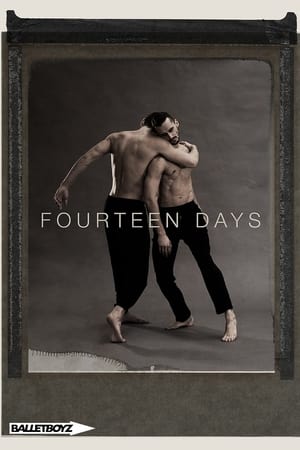
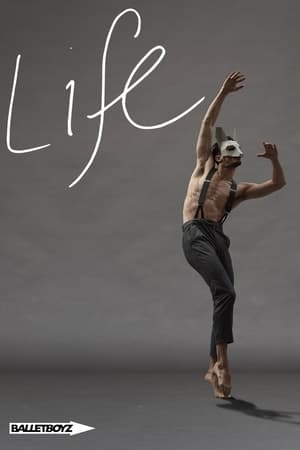
Brett and Jake meet in a bar and decide to drown their sorrows in whiskey, forgetting the past, ignoring the future, and exploring life, love, and tragedy together for one fateful night.
A fictionalised exploration of Beethoven's life in his final days working on his Ninth Symphony. It is 1824. Beethoven is racing to finish his new symphony. However, it has been years since his last success and he is plagued by deafness, loneliness and personal trauma. A copyist is urgently needed to help the composer. A fictional character is introduced in the form of a young conservatory student and aspiring composer named Anna Holtz. The mercurial Beethoven is skeptical that a woman might become involved in his masterpiece but slowly comes to trust in Anna's assistance and in the end becomes quite fond of her. By the time the piece is performed, her presence in his life is an absolute necessity. Her deep understanding of his work is such that she even corrects mistakes he has made, while her passionate personality opens a door into his private world.
In the spring of 1913, Parisian businessman Gabriel Astruc opens a new theater on the Champs Elysées. The first performance is the premiere of Igor Stravinsky's 'The Rite of Spring', danced by the Ballet Russes. The rehearsal process is extremely fraught: the orchestra dislike Stravinsky's harsh, atonal music; the dancers dislike the 'ugly' choreography of Vaslav Nijinsky. The volatile, bisexual Nijinsky is in a strained relationship with the much older Sergei Diaghilev, the Ballet Russes' charismatic but manipulative impresario. Public expectation is extremely high after Nijinsky's success in 'L'apres-midi d'un faune'. Finally, 'The Rite of Spring' premieres to a gossip-loving, febrile, fashion-conscious Parisian audience sharply divided as to its merits.
Ludwig van Beethoven headed for Symphony No. 9 literally his entire life. As early as the 1790s, he had an eye on Ode to Joy, perhaps the most well-known poem by Friedrich Schiller, written on the threshold of the French Revolution (1786). In his mature and, in particular, later years, the deaf composer with an acute ‘hearing vision’ increasingly distanced himself from conventional forms and genres and wrote parts beyond the possibilities of instruments of his day. He nurtured the idea of a symphony with a choir for at least several years. The history of the Ninth’s interpretations includes 200 years of staggering revelations and lingering stagnation. Performed by the musicAeterna orchestra, choir, and guest soloists under the baton of Teodor Currentzis, Beethoven’s opus magnum acquires the original poignancy and energy of a recent discovery.
Anton Bruckner’s 6th Symphony was written between 1879 and 1881: a very happy time in his life. Unlike most of Bruckner’s symphonies, the 6th was not revised. Of all his works, this one seems to come from a single source of inspiration. Bruckner himself called it his “boldest” symphony – probably due to its extreme degree of motivic, rhythmic and harmonic originality. This live recording of the seldom-performed 6th Symphony is the next instalment of the acclaimed Bruckner cycle by the Staatskapelle Berlin and Daniel Barenboim. Anton Bruckner Symphony No. 6 in A major (original version) Daniel Barenboim, Conductor Staatskapelle Berlin Recorded live at the Philharmonie Berlin, 22 June 2010
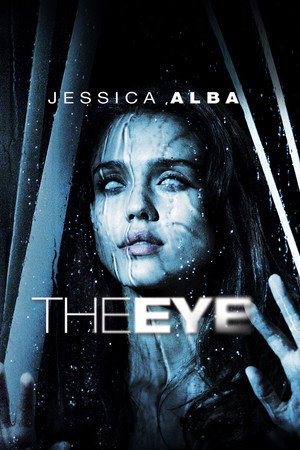
Violinist Sydney Wells was accidentally blinded by her sister Helen when she was five years old. She submits to a cornea transplantation, and while recovering from the operation, she realizes that she is seeing dead people.
A synthesis of sound and movement; colourful characters dance and move in repetitive patterns to percussive and melodic elements. A combination of motion and music that is hypnotic and beautiful. At first it feels structured and orderly but as more elements are added becomes quixotically expressive.
Jenny is young. Her life is over. She killed someone. And she would do it again. When an 80-year-old piano teacher discovers the girl’s secret, her brutality and her dreams, she decides to transform her pupil into the musical wunderkind she once was.
The Bolshoi with Alexei Ratmansky, revive Shostakovich’s ballet
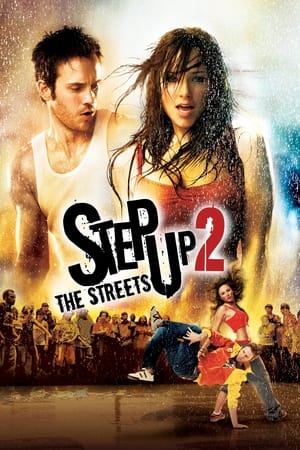
After the death of her mother, Sara moves to the South Side of Chicago to live with her father and gets transferred to a majority-black school. Her life takes a turn for the better when befriends Chenille and her brother Derek, who helps her with her dancing skills.
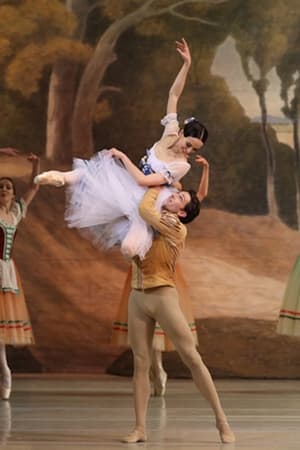
Sara joins Julliard in New York to fulfill her and her mother's dream of becoming the Prima ballerina of the school. She befriends her roommates, Zoe and Miles, who teach hip-hop classes. She has ballet classes with the rigid and famous Monique Delacroix that she idolizes - Monique requires full commitment, discipline and hard work from her students. When Miles, who is a composer, invites Sara to help him compose the music for the dance choreography Sara's passion for hip-hop is sparked and she also falls in love with Miles. When she is assigned to perform Giselle in an important event, she feels divided between the technique of the ballet and the creative work offered by Miles.
When Gabriel and Emilie meet by chance, he offers her a ride, and they spend the evening talking, laughing and getting along famously. At the end of the night, Emilie declines Gabriel's offer of "a kiss without consequences". Emilie admonishes him that the kiss could have unexpected consequences, and tells him a story, unfolding in flashbacks, about the impossibility of indulging your desires without affecting someone else's life.
A group of 12 teenagers from various backgrounds enroll at the American Ballet Academy in New York to make it as ballet dancers and each one deals with the problems and stress of training and getting ahead in the world of dance.
Based on the famous Gustav Holst musical suite, this musical film takes watchers on a magnificent journey of the planets of the Solar System.
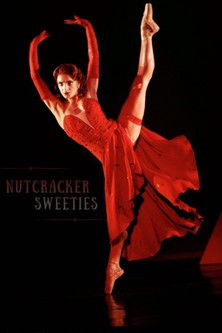
The moving love story of a dancer on the rollercoaster ride of her life, a drama about the rise and fall of a modern woman as she summons the courage to face her greatest trial.
The Christmas I Love’ is a very special Christmas gift – a collection of some of the most tender carols personally chosen by Andre for this album and performed with the full forces of the Johann Strauss Orchestra and Choir. All the popular carols are there Ave Maria, White Christmas, Silent Night, Jingle Bells but also included are Baroque Christmas Classics Corelli's Christmas Concerto and “Winter” from Vivaldi's Four Seasons. The DVD offers a delightful Christmas experience featuring timeless yuletide favorites filmed in many of Europe's most beautiful locations.
A small-town shoemaker with a knack for spinning yarns, Hans encounters happiness and heartbreak on his road to becoming a full-fledged writer.
Relationships, rehearsals, performances, hobbies, and family life of the members of the Guarneri String Quartet.
The story of Don Quixote tells of the old knight who dreams of chivalry and his comic squire, Sancho Panza. This performance by the Kirov has been hailed as one of the greatest large cast ballet productions ever recorded on film. The tremendous resources of the Kirov Ballet flash and dash through the four acts of joyous Petipa and Gorsky choreography making Don Quixote a thrilling visual treat. This delightful spectacle features the great Soviet dancers Tatyana Terekhova and Farouk Ruzimatov as the lovers Kitri and Basilio. Don Quixote is performed by Kirov star Vladimir Ponomaryov. Filmed live at the Kirov Theatre in Leningrad.
Juliet awakens from a fever dream. The lines between hallucination and memory blur as cinema and dance collide in a kaleidoscopic journey of belonging, defiance, and self-discovery. A vivid retelling of Shakespeare’s Romeo and Juliet brought to life by Scottish Ballet.