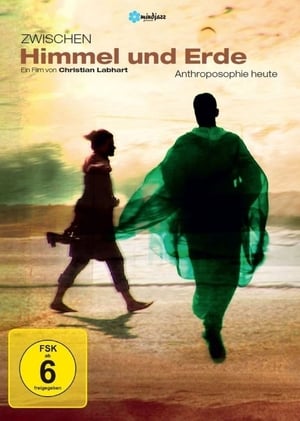
What is behind the myth surrounding the founder of anthroposophy, Rudolf Steiner? The documentary shows Steiner's life from the beginnings in Vienna, the crises in Weimar, the wild times in the Berlin bohemian scene to the esoteric leader and busy founder whose reform movement was followed by thousands. Around one hundred years after his death, the question remains: Who was Rudolf Steiner?
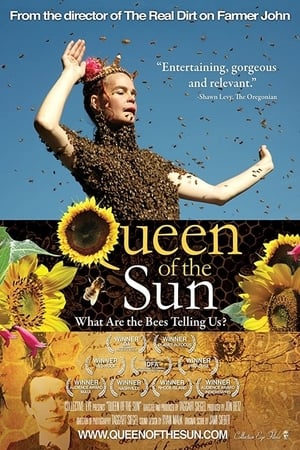
In 1923, Rudolf Steiner, an Austrian scientist, philosopher & social innovator, predicted that in 80 to 100 years honeybees would collapse. Now, beekeepers around the United States and around the world are reporting an incredible loss of honeybees, a phenomenon deemed "Colony Collapse Disorder." This "pandemic" is indicated by bees disappearing in mass numbers from their hives with no clear single explanation. The queen is there, honey is there, but the bees are gone. For the first time, in an alarming inquiry into the insights behind Steiner's prediction QUEEN OF THE SUN: What Are the Bees Telling Us? investigates the long-term causes behind the dire global bee crisis through the eyes of biodynamic beekeepers, commercial beekeepers, scientists and philosophers.
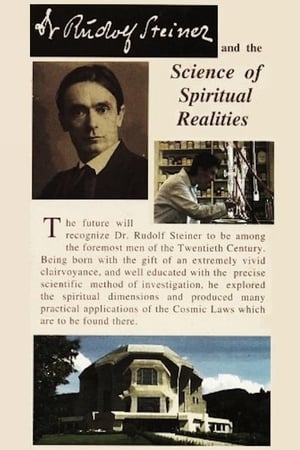
This television documentary takes us on a fascinating journey into the realms just beyond our five senses, where thoughts are things and creation begins. Rudolf Steiner not only found how to experience these areas directly, in a very safe and methodical manner, but he also developed specific techniques which, if utilized in the right way and with the proper intention, enable the individual to have insight into the spiritual realities. In addition to learning of this extraordinary individuality, we meet some of the men and women who are utilizing the impulses brought by Dr. Steiner to expand and enhance their specific vocations in very practical ways, e.g. education, agriculture, medicine, astronomy, mathematics, architecture, the arts, and working with retarded children and adults.
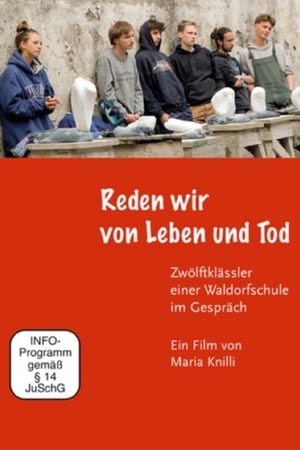
Reden wir von Leben und Tod
Finding Rudolf Steiner is a visually entrancing journey into the occult philosophy of clairvoyant Rudolf Steiner set against a background of modern moral and social decay. This film has been selected for the 2006 Calgary International Film Festival. The film presents fragments of interviews with leading international experts on Steiner's spiritual vision in counterpoint to archival footage and riveting visuals from the streets of Rio de Janeiro, Buenos Aires, and Detroit. Steiner died in 1925 and was one of the most profound and original thinkers of the twentieth century, known as much for his clairvoyant explorations into the true nature of man as he was for the creation of Waldorf Education and biodynamic farming. In a world increasingly dominated by technology, materialism, and the threat of a growing international [...]
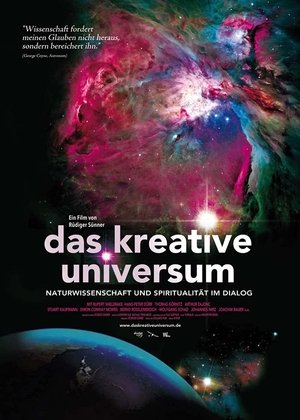
Das kreative Universum
Zwischen Himmel und Erde - Anthroposophie heute
Die Kunst des Heilens
Experimental dramadoc about high-functioning alcoholics and problem drinking in the workplace. Based on the testimony of real people, with actors playing out their stories and the whole film mimicking the texture of a witty and gritty observational documentary.
The “Journal Annales” consists of almost 2.000 hours of video footage collected by filmmaker Lionel Soukaz since 1991. For “Carottage”, the idea was to take a random sample from this vast volume, like a geological core sample. The result is a condensed history of political struggles and radical cultural experimentation spanning two decades.
Following Professor Lee White, the Environment Minister of Gabon, and President Ali Bongo as they act to save one of Earth's most vital natural habitats in the face of cartels and corruption.
Six runners face the Superior 100, a 30-hour, 100-mile trail race. How do they prepare and how will it change them?
Documentary commemorating the 40th anniversary of the 'Carry On' comedy film series. Archive clips and out-takes are mixed with interviews with the cast.
Le Pen, l’éternel combat
Churchill, a name typically associated with braveness and altruism. Recently found evidence from Soviet and British sources however brings up questions about Churchill's doings in the conferences of Tehran, Yalta and Potsdam. Why did he agree to give Stalin large parts of Poland? The story of two world leaders in times of war - it is also the story of Poland.
Morning After the Deluge is a large-scale, single-projection video installation, preferably presented in a dedicated room where the projected image is directed onto a free-standing screen. The work features two pieces of real-time footage that the artist filmed in Cape Cod, Massachusetts – one a sunset over the Atlantic Ocean and the other a sunrise on Cape Cod Bay – that are merged together and presented on a continual loop. As the sun slowly disappears into the ocean on one side, it rises out of the water on the other. In this new arrangement, the usual figure-ground relationship is upended: the sun becomes a fixed point at the centre of the image while the horizon line becomes unfixed, slowly wandering across the frame from top to bottom.
Manolito Espinberg: une vie de cinéma
A heady, energised mash-up of animation, unseen archive footage and interviews, Rebel Dykes provides an intimate insight into the politically charged, artistically radical anarchist subculture in 1980s London, and the individuals who helped shape and change their world. Bringing together BDSM nightclubs, inclusive, sex-positive feminism, DIY zine culture, post-punk musicians and artists, squatters, activists and sex workers, these rebel dykes went out onto the streets to make their voices heard. [Feature length version of 2016 short of the same name.]
When Kennedy announced in 1961 that he wanted to take humans to the moon within a decade, Charles M. Duke was skeptical. Almost 11 years later, however, Charles M. Duke was standing on the moon himself. He gave Neil Armstrong the go-ahead for the landing on Apollo 11. Because he contracted rubella, the Apollo 13 crew had to be changed. In 1972, he landed with Apollo 16 and looked down on Earth from the moon himself.
Women are the protagonists of this documentary. Girls and women of varied ages tell us the difficulties of living their whole lives in refuge and their desires for the future.