Ring Cycle, pt 4. Siegfried is drugged and tricked into kidnapping his wife, since she has the Ring now. More double-crossings, Siegfried ends up dead. Brunnhilde has had enough of this, tosses the Ring into the river and torches the place.
Adaptation of John Gay's 18th century opera, featuring Laurence Olivier as MacHeath and Hugh Griffith as the Beggar.
Robert Lepage’s remarkable Met Opera production of Wagner’s Der Ring des Nibelungen, the 2013 Grammy Award Winner for Best Opera Recording, is now available as individual DVDs. Siegfried features Bryn Terfel, Jay Hunter Morris, and Deborah Voigt, with Fabio Luisi conducting.
Disciplined Italian composer Antonio Salieri becomes consumed by jealousy and resentment towards the hedonistic and remarkably talented young Salzburger composer Wolfgang Amadeus Mozart.
The gorgeous and evocative Otto Schenk/Günther Schneider-Siemssen production continues with this second opera in Wagner’s Ring cycle. Hildegard Behrens brings deep empathy to Brünnhilde, the favorite daughter of the god Wotan (James Morris) who nevertheless defies him. Morris’s portrayal of Wotan is deservedly legendary, as is Christa Ludwig, as Fricka. Jessye Norman and Gary Lakes are Sieglinde and Siegmund, and Kurt Moll is the threatening Hunding. James Levine and the Met orchestra provide astonishing color and drama. (Performed April 8, 1989)
Siegfried is the third of the four operas that constitute Der Ring des Nibelungen (The Ring of the Nibelung), by Richard Wagner.
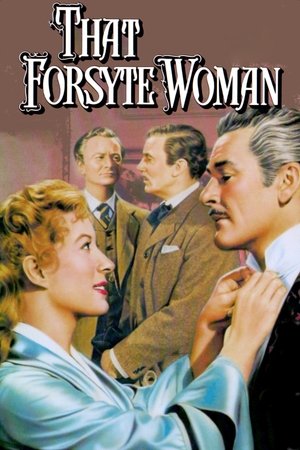
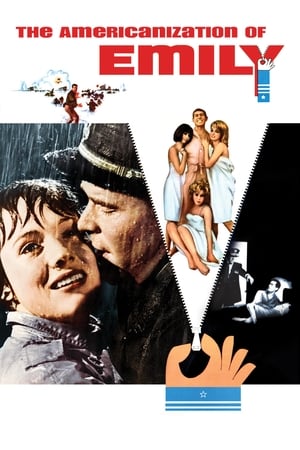
In order to save her extravagant mother from bankruptcy, shame and scandal, young society girl Mildred Gower is forced to accept the proposal of Lemuel Siddall, a wealthy man she loathes.
The film narrates a tormented love story between one of the most famous poets of Serbian literature, Laza Kostic, renowned for his sublime poetic puns and word coining and an enchanting young girl by the name of Lenka Dundjerski, an educated and refined daughter of a landowner Lazar Dundjerski. Standing in the way of their love is the insurmountable age gap between the two, as Kostic is 29 years older than his beloved one. The affair inspired one of the most sophisticated and tender love poems of the time, an utmost expression of yearning, in which the poet's unflinching devotion is linked to his admiration for a Venice basilisk by the name of Santa Maria della Salute.
In February 1972, the American president Richard Nixon went to China to meet Mao Zedong. In the context of the war in Vietnam and the cold war, this encounter marked a turning point in Chinese‑American relations. John Adams, a major musical figure of the last forty years, made this event of contemporary history the subject of his first opera. Nixon in China tackles the political thaw instigated by ping-pong diplomacy, begun by the invitation of the American table tennis players by their Chinese counterparts, one year before the presidential visit. A mesmerising work in which the pulsations and repetitions typical of minimalism are combined with melodic lines of great lyricism. For its entry into the Paris Opera repertoire, this work has been entrusted to the director Valentina Carrasco, who underlines the importance and the mediating power of Chinese national sport in history.
A collectively made filmic opera in 35 parts. The Black and predominantly queer art collective, an evolving line up of poets and artists from across the world, abstracts and reimagines opera in any traditional conception. Set to hip-hop, blues, noise, R&B and electronica, the piece uses the voice (chanting, singing, screaming; written by poet and activist Dawn Lundy Martin) as its primary tool, verbalising centuries of alienation, vulnerability and protest in the global African diaspora through its disruptive libretto.
Car Men is a collaboration between the renowned choreographer Jíri Kylían and filmmaker Boris Paval Conen. Based on the opera 'CARMEN' by Georges Bizet they shot a hilarious and poetic short film in the destroyed landscape of a Czech brown coal mine. The actors in this film are older dancers from Kylían's troupe (around 50 years old) and the main prop is a 'TATRA 87', a famous car from 1937.
This is a good video of "Figaro", but there are a couple of better ones available. The Bohm and the Pappano are better still due to the female members of the casts. The reason for buying this one is the "Figaro", Bryn Terfel. No one can top him today in that role. John Eliot Gardiner also stands out. Many of us have voiced their opinion that If the Metropolitan Opera would release it's 1998 version, that would be the one to get.
All the throbbing eroticism—and ultimate heartbreak—of Puccini’s youthful score is unleashed by James Levine and his top-flight cast. Plácido Domingo is Des Grieux, the handsome, headstrong young aristocrat who falls head over heels for the enticing, impetuous Manon Lescaut (Renata Scotto). Manon returns his love, but her obsession with luxury ruins them both. Gian Carlo Menotti’s opulent production, with sets and costumes by Desmond Heeley, superbly captures the colorful world of 18th century France.
A musician is offered a job in Vienna as stage director, but his disagreements with the aristocratic opera manager end in abrupt firing in spite of a mutual attraction. He's quickly engaged by another theatre and becomes famous for his lavish stage productions and fine acting, which begins their golden age with Suppé and Strauss.
This telecast offers a rare opportunity to see the legendary Joan Sutherland in the role that first catapulted her to international stardom. She drove audiences wild by the way her opulent voice caressed the music’s long phrases and sprinted effortlessly through the fiendish runs, trills, embellishments and stratospheric high notes. One of the glories of the operatic world, her portrayal of Donizetti’s hapless heroine is a multifaceted and moving characterization. The incomparable tenor Alfredo Kraus is Edgardo, the man Lucia loves but cannot have. (Performance taped November 13, 1982. Broadcasted September 28, 1983.)
Two years prior to the opening scene, the nobleman Florestan has exposed or attempted to expose certain crimes of the nobleman Pizarro. In revenge, Pizarro has secretly imprisoned Florestan in the prison over which Pizarro is governor. The jailer of the prison, Rocco, has a daughter, Marzelline, and a servant (or assistant), Jaquino. Florestan’s wife, Leonore, came to Rocco’s door dressed as a boy seeking employment, and Rocco hired her. On orders, Rocco has been giving Florestan diminishing rations until he is nearly starved to death. Place: A Spanish state prison, a few miles from Seville; Time: Late 18th century.
David Rendall, John Tomlinson, Janet Baker, Peter Butler, Rosalind Plowright, Angela Bostock, Glenn McKeown, Giuseppe Bardari, Tom Hammond, Alan Opie, Leigh Maurice
Set in Paris, the story concentrates on the romantic triangle involving cabaret singer Liane, bon vivant Tony and petty crook Jean.
A Taiwanese-American man is happily settled in New York with his American boyfriend. He plans a marriage of convenience to a Chinese woman in order to keep his parents off his back and to get the woman a green card. Chaos follows when his parents arrive in New York for the wedding.
Summoned by his dying father, Miyagi returns to his homeland of Okinawa, with Daniel, after a 40-year exile. There he must confront Yukie, the love of his youth, and Sato, his former best friend turned vengeful rival. Sato is bent on a fight to the death, even if it means the destruction of their village. Daniel finds his own love in Yukia's niece, Kumiko, and his own enemy in Sato's nephew, the vicious Chozen. Now, far away from the tournaments, cheering crowds and safety of home, Daniel will face his greatest challenge ever when the cost of honor is life itself.