The Shipibo-Konibo people of Peruvian Amazon decorate their pottery, jewelry, textiles, and body art with complex geometric patterns called kené. These patterns also have corresponding songs, called icaros, which are integral to the Shipibo way of life. This documentary explores these unique art forms, and one Shipibo family's efforts to safeguard the tradition.
A new documentary that follows master Haida weaver Delores Churchill on a journey to replicate a spruce root hat discovered with the Long Ago Person Found. The 300-year-old traveler was discovered in British Columbia and DNA testing discovered living descendants in Canada and Alaska. Her search crosses cultures and borders, and involves artists, scholars and scientists. The project raises questions about understanding and interpreting ownership, knowledge and connection.
Uses high magnification photography to demonstrate the processes of converting raw fibers into woven cloth.
The people, the scenery and the industrial traditions of the Stroud valley and the growth of the woollen industry.
Set in Varanasi, an ancient city of India, Tana Bana offers a rare look at the hidden world of Moslem weavers and Hindu traders and how their lives are interwoven through the production of the silk and the beauty it creates. However, as the technology advances, the trade is threatened by computerization and globalization.
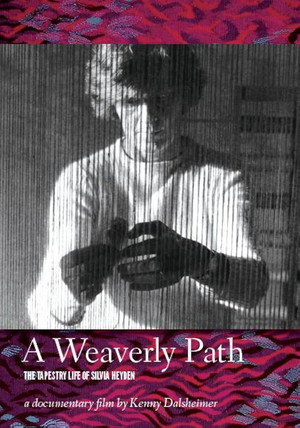
A Weaverly Path offers an intimate portrait of Swiss-born tapestry weaver Silvia Heyden. The film captures the inner dialogue and meditations of an extraordinary artist in the moments of creation. Heyden works for over a year to create works inspired by the Eno River in Durham, North Carolina. And she shares how nature, music, her Bauhaus inspired education at the School of the Arts in Zurich and her life experiences anchor and inform her art. Heyden was a 20th century modernist whose body of work redefines the art of modern tapestry.
A group of Macedonian women are shown hard at work.
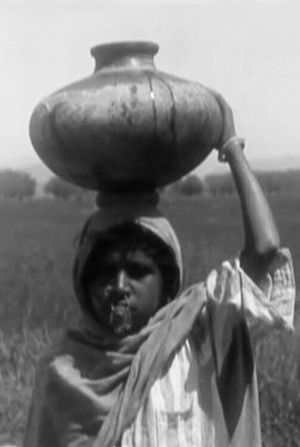
Richly detailed amateur ethnographic film on the agrarian economy and society in rural Punjab.
This film explores the traditional crafts of Native American tribes, specifically the Hopi, Navajo, and Iroquois. It highlights the craftsmanship of Hopi basket weaving and pottery, showcasing their techniques and cultural significance. The Navajo's weaving of wool blankets and rugs, as well as their silver jewelry making process, is also detailed. Additionally, the film discusses the Iroquois tradition of carving ceremonial masks from basswood trees. Each craft reflects the unique heritage and artistic expressions of these tribes.
Set in a Burkina Faso organic cotton weaving cooperative, a cacophonous cotton-spinning apparatus eats, digests, and takes a breath. Threads become the organs of a whirling, burping, guzzling machine animated by hands, looms, vats, cogs, and feet. Where does the machine end and the body begin? The weaving cooperative promises equitable remuneration for workers in an industry beholden to its colonial predecessor: today, Burkinabè cotton farmers live in permanent debt to cotton companies financed by European capital. By focusing on the repetitive labor unfolding within a cooperative that claims to serve its workers, Everything Here Holds Its Inverse examines the tension between empowerment and evolving oppressions. Can the ties that bind and define also set free?
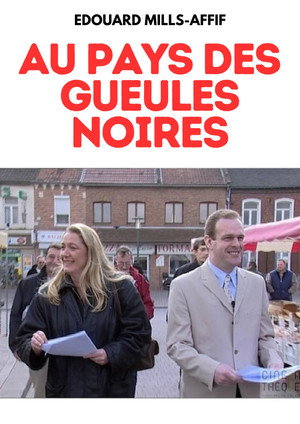
German national election campaign 2002: Henryk Wichmann from the conservative party is fighting a lost battle in the Uckermark.
In this film, we follow footballer George Best over a 90-minute match against Coventry City, which took place on 12th September 1970. There is no soundtrack and no interview overlaid, just Best doing what he did best - playing football.
The award-winning filmmaker Peter Lilienthal is dedicated to this extremely poignant documentary of U.S. military policy and the living conditions of former resistance fighters in Latin America.
Schaub and Schindelm’s documentary follows two Swiss star architects, Jacques Herzog and Pierre de Meuron, on two very different projects: the national stadium for the Olympic summer games in Peking 2008 and a city area in the provincial town of Jinhua, China.
Novak Djokovic, one of the greatest tennis players of all time. With 86 ATP singles titles, 37 Masters events and 20 Grand Slam's, few tennis players have achieved what Djokovic has. Currently ranked world number one and a record total of 365 weeks on top, Djokovic has dominated the sport for the last 10 years. Things have not always been easy for the world number one. Born in war-torn Belgrade, Serbia, Djokovic developed his skills in some of the harshest conditions imaginable. Despite this he rose to the top of the professional tennis rankings, becoming a national icon and a symbol of unity for the Serbian people.
60 years since his directorial debut, Martin Scorsese's life has been dedicated to the past, present and future of cinema. 26 feature films later, the aptly named Caretaker of Cinema continues to push the boundaries of moviemaking.
This documentary explores the history, geography and folklore of Mount Katahdin, the tallest and most treacherous mountain in the state of Maine.
Gerd Conradt's experimental documentary "Ein-Blick" from 1987 captures the rhythms of daily life along Elsenstraße's border in a time-lapse. Over the course of a day, a camera focuses on a house and watchtower within the border zone, snapping one image per second for twelve hours. What unfolds is a surreal ballet of reality, transforming into a slapstick grotesque, all set to the backdrop of evocative piano melodies.
¿Adiós a la Izquierda?
The Crypto Files investigates claims of paranormal activity at Portal 31 in Lynch Kentucky. The Third film in the Crypto Files Series.