"Shaman" was filmed on July the 16th, 1977 in the northernmost corner of Eurasia, on the Taymyr Peninsula, at the Avam river, concurrently with the shooting of the documentary "The Winds of the Milky Way". The Nganasan Shaman Demnime (1913-1980) was 64 years old at the time. The documentary about Demnime's incarnation ritual was completed 20 years later. The fifth and final documentary in Lennart Meri's "Encyclopaedia Cinematographica Gentium Fenno - Uricarum" series.
In the remote Russian Arctic, an aging scientist and his son are trying to recreate the Ice Age. They call their experiment Pleistocene Park – a perfect home for woolly mammoths, resurrected by modern genetics. But the mammoths are only a means to a bigger end: defusing a carbon timebomb frozen in the permafrost to slow the effects of global warming.
Could our mounting modern problems have ancient solutions? Travel to the depths of China to find out.
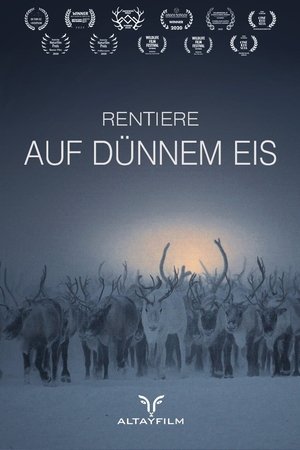
Climate change has reached the indigenous Nenets people in the north of Siberia. The nomads' herds of reindeer move on thin ice. The warming in the Russian Arctic is becoming dramatically visible. Huge craters open in the thawing permafrost and expose dangerous viruses and bacteria. Forest floors dry out and the taiga catches on fire. The pack ice off the coast is melting and depriving polar bears of their habitat so that they approach human settlements in their desperation. The changes in the nature of the Arctic Circle combine with the measurements of researchers and observations of the indigenous people to form a disturbing overall picture: In the Russian Arctic, Pandora's box has been opened! The film team had the chance to shoot in regions that were been restricted areas for decades. The documentary shows in impressive and depressing images already existing effects, phenomena and ominous interlinkages of global warming.
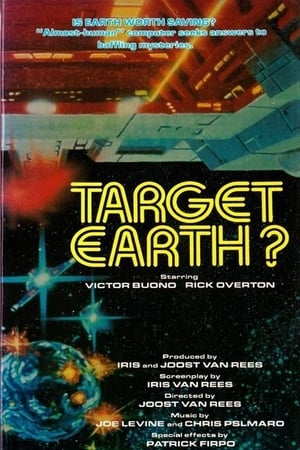
Really strange documentary of Wheeler Dixon production quality on the Tunguska Event and the possibility of it happening again causing an apocalypse (basically a meteor scare film) sprinkled with UFO conspiracy kooks, and other 'professionals', riddled with stock footage of all kinds, freaky moog music and sound fx, a Dr. Who rip-off end theme, Victor Buono as Homer the Archivist, a philosophical history recorder in a space ship with a HAL 9000 type talking computer named Ino, there's also another space ship with Egyptian looking aliens girls with pasties and see-thru blouses.
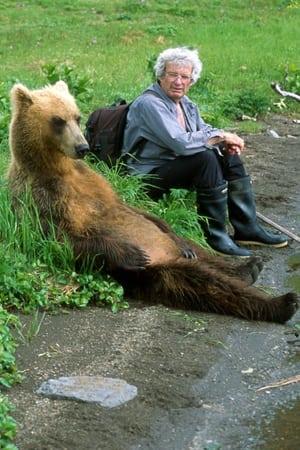
Naturalists Charlie Russell and Maureen Enns film recently discovered grizzlies on Siberia's Kamchatka peninsula.
The film details the early years of the legendary Siberian Punk/Rock group 'Гражданская Оборона' (Grazhdanskaya Oborona), and its frontman, Egor Letov.
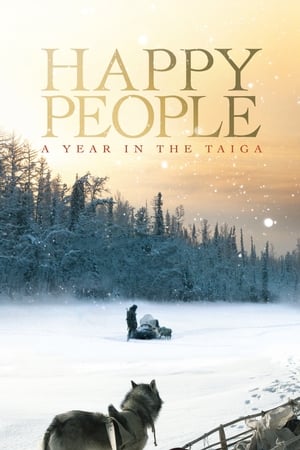
In the center of the story is the life of the indigenous people of the village Bakhtia at the river Yenisei in the Siberian Taiga. The camera follows the protagonists in the village over a period of a year. The natives, whose daily routines have barely changed over the last centuries, keep living their lives according to their own cultural traditions.
In 2021, an extreme heatwave gave rise to huge wildfires in the vast subarctic forests of Sakha, a northeastern republic in Siberia. The village of Shologon lies in this taiga landscape, shrouded in orange smoke and black ash. The forest is burning and the flames are approaching fast.
A unique story on the discovery of a 40-thousand-year-old, perfectly preserved baby woolly mammoth. Cutting edge science and Arctic adventure come alive in this story of a unique discovery: a perfectly preserved baby woolly mammoth that suddenly appears on a Siberian riverbank, triggering an extraordinary investigation into her life and death at the end of the Ice Age. Solving the mystery of her origins unites men whose lives are worlds apart except for their link to the woolly mammoth.
A window into Russia, unknown to Western man, and even to many Russians. "Russia - the largest country in the world. In many of its parts, it remains unknown world full of wonders. Let the world and will continue for the generations that come after us".
In the Darhat valley in northern Mongolia, the horses of nomadic tribes are stolen by bandits who then sell them to Russian slaughterhouses. Shukhert, a brave horseman, relentlessly pursues them through the Mongolian taiga, bordering Siberia.
This story began in the seventies. Then the American ornithologist George Archibald turned to Soviet scientists led by Vladimir Flint with a proposal to cooperate in the protection of the white Siberian crane. This species was little studied and was considered endangered. Since then, we know much more about white cranes. Now on Earth there are two disparate populations of Siberian Cranes. One is East Siberian. These birds nest in the north of Yakutia and migrate to China. There are more than three thousand of them, and in the near future they are not threatened with extinction. A few thousand kilometers away, another population of Siberian Cranes lives. They nest in the lower reaches of the Ob, and fly to India or Iran for the winter. There are only twenty of them left. This film is about how people are trying to save this West Siberian branch of white cranes.
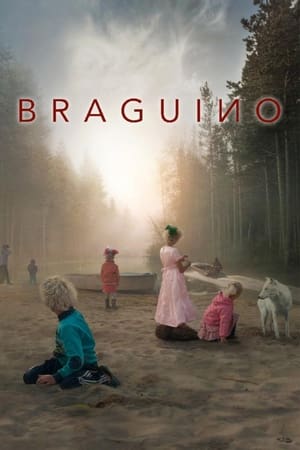
In the middle of the Siberian taiga, 450 miles from the nearest village, live two families : the Braguines and the Kilines. Not a single road leads there. A long trip on the Ienissei River, first by boat, then by helicopter, is the only way to reach Braguino. Self-sufficient, both families live there according to their own rules and principles. In the middle of the village: a barrier. The two families refuse to speak. In the river sits an island, where another community is being built : that of the children. Free, unpredictable, wild. Stemming from the fear of the other, that of wild beasts, and the joy procured by the immensity of the forest, unravels a cruel tale in which tensions and fear give shape to the geography of an ancestral conflict.
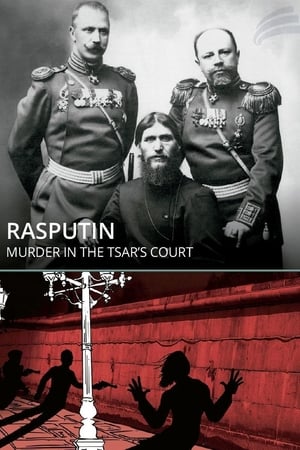
St. Petersburg, Russia, December 30th, 1916. Grigori Rasputin is assassinated. The story of the humble peasant who became the most influential adviser to czarina Alexandra Feodorovna, wife of the last czar, Nicholas II Romanov.
Imagine one of the most remote wildernesses in the world. Granddaughter Masha and Vladimir, the protagonists of this story from Central Siberia try the impossible to keep their nomadic traditions alive.
In 1829 the naturalist Alexander von Humboldt attempted a russian-siberian expedition. Humboldt travelled to obtain a clear view of nature, people and life in this immense country. 2019 naturalists and humanists attempted a transdisciplinary expedition on the trails of Humboldt. To capture the events various cameras were taken along. A non-chronological narration.
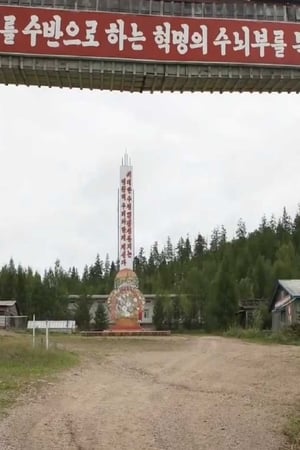
Founder of VICE Shane Smith spends an eternity on a train and hops out at the end of the line in Siberia to investigate logging camps that use North Korean slave labor.
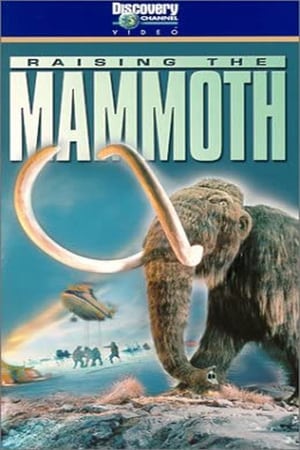
A scientist wants to recover some mammoth DNA to clone a live mammoth. So he finds a buried mammoth in the vast, rock hard permafrost of Siberia, digs it out in the middle of a blizzard and flies it home. Of course he needed a little help. So he befriended an arctic nomad who knows ever rill, rock, pond and stream in the entire region. As background to the quest, National Geographic relates the migratory history of the mammoth family.
Records the battle for the survival of the big cats and reveals intimate details of their lives. The animals they prey on are also in the film: tigers couldn’t survive without sika deer, Altai wapiti, wild boars and Asian black bears. Guiding the viewer through the film, an elder tiger tells the story of his cub, born in a conservation area, the year after he leaves his mother.