David Attenborough investigates the remarkable life and death of Jumbo the elephant - a celebrity animal superstar whose story is said to have inspired the movie Dumbo. Attenborough joins a team of scientists and conservationists to unravel the complex and mysterious story of this large African elephant - an elephant many believed to be the biggest in the world. With unique access to Jumbo's skeleton at the American Museum of Natural History, the team work together to separate myth from reality. How big was Jumbo really? How was he treated in captivity? And how did he die? Jumbo's bones may offer vital clues.
Eddy L. Harris is the author of the lauded travel book “Mississippi Solo” (1988), which chronicled his canoe trip down the length of the Mississippi River, from its headwaters in Minnesota to its terminus in the Gulf of Mexico. In “River to the Heart,” Harris retraces that journey as a 60-year-old, and the film explores what he discovered about both the country that was and the country that is.
The Siberian discovery of the best-preserved woolly mammoth on record has teams of experts working around the globe, and around the clock, on some of the most ambitious projects in science. In Russia, paleontologists are conducting a historic autopsy on the 40,000-year-old beast to find out how it lived, and how it died. Meanwhile labs in South Korea and at Harvard University are using the latest advances in DNA manipulation in hopes of cloning the furry giant and introducing it to the modern world.
The second IMAX film made, commissioned by the Ontario Government, and produced by MultiScreen Corporation, later to become IMAX corporation. North of Superior is a Northern Ontario travelogue, and was the first short feature to be shown at the newly created Ontario government theme park, Ontario Place, in it's state of the art cinema, Cinesphere, the first permanent IMAX installation.
We all know the big bad wolf of fairy-tale fame—over hundreds of years the wolf has become a culturally imprinted symbol of fear that’s completely detached from reality. In fact there weren’t even any wolves in western Europe for a long time. But they’re back—for example in Germany, where these social animals now occupy a few scattered areas around the country that people have left to them.
A cinematic journey through the world. Non-verbal.
Each year, far from human eyes, a remote expanse of Botswana's Makgadikgadi salt pans hosts one of Africa's last great spectacles when thousands of striped nomads wander the breathtakingly beautiful but barren landscape. It is only by the grace of isolated summer rains that the zebras can survive here at all. Family groups gather together to follow the rains, driven by a constant search for better grazing on islands of grass that dot the pans. Meerkat families watch the zebras come and go, and families of lions wait for them along their grueling trek, hoping for a chance to bring one down. Their journey is one that is sometimes limited by the fragility of new life, but always made possible by the strong family ties that help animals survive in one of Africa's most surreal landscapes. It's a tale of loyalty and sacrifice, of home and exile, of death and new life, in southern Africa's largest zebra population.
In the frigid valleys of Japan's Shiga Highlands, a troop of snow monkeys make their way and raise their families in a complex society of rank and privilege where each knows their place. Their leader is still new to the job and something of a solitary grouch. But one little monkey, innocently unaware of his own lowly social rank, reaches out to this lonely leader, forming a bond with him that manages over time to warm his less than sunny disposition. It is a rare and remarkable gesture that alters both their lives. Changing seasons bring new babies to care for, a profusion of insects and blossoms to eat, family disagreements to squabble over and tragedies to overcome. Mating season brings competition for females, as the days grow shorter and colder in a rush toward winter. But with their now confident leader to guide them and their families to shelter and care for them, this troop of snow monkeys is ready to face the world.
Is it human conceit to attribute emotions to animal actions, or are emotions basic to life on earth? Wildlife filmmakers and scientists make a convincing argument for the latter in this gripping film.
Twenty years ago, a young American hiker named Chris McCandless, the accomplished son of successful middle class parents, was found dead in an abandoned bus in the Alaskan wilderness and became the subject of the best-selling book and movie “Into the Wild.” Now, PBS retraces Chris McCandless’ steps to try to piece together why he severed all ties with his past, burnt or gave away all his money, changed his name and headed into the Denali Wilderness. McCandless' own letters, released for the first time, as well as new and surprising interviews, probe the mystery that still lies at the heart of a story that has become part of the American literary canon and compels so many to this day.
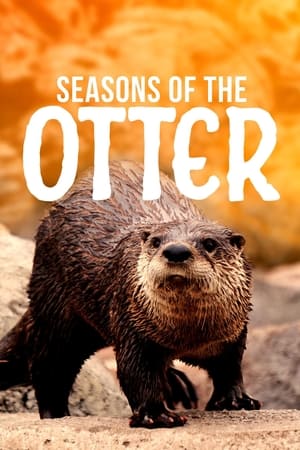
The Southern Sea Otter was historically abundant along the California coastline until intense hunting pressures reduced their numbers to near-extinction levels. But now the otters are coming back, and with them they bring the potential for drastic change to the modern-day economics and ecology of the Santa Barbara Channel.
Sea otters are once again in peril after being brought back from the brink of extinction. An unprecedented number of sea otter deaths have occurred along the California coast in the last three years. Meanwhile, the Fish & Wildlife Services decision to eliminate their No Otter Zone from Southern California waters remains controversial. This fragile species threatened by pollution, infectious diseases, starvation, and competition with fishermen struggles for survival.
Seal Island is a 1948 American documentary film directed by James Algar. It won an Academy Award in 1949 for Best Short Subject (Two-Reel).
He’s our favorite veterinarian, and now we reveal what makes him so incredible. In this special program, Dr. Jan Pol shares his most intimate and life-changing moments – from his childhood in the Netherlands when the world was at war, to his move to the American midwest, and a love story fit for the movies – this is the story of his incredible life. (Disney+)
Animals and plants play an important role in the Christian festival. This documentary answers questions about the natural history of Christmas: How are the descendants of the biblical donkey doing? How do Santa's reindeer survive the winter? And what does the robin have to do with all this? Adventurous stories set in dreamlike landscapes around the world.
David Attenborough takes viewers on a breathtaking journey showing there is nowhere more vital for our survival, more full of life, wonder, or surprise, than the ocean. Through spectacular sequences featuring coral reefs, kelp forests and the open ocean, Attenborough shares why a healthy ocean keeps the entire planet stable and flourishing.
Documentary about the work of Claude Lorius, who began studying Antarctic ice in 1957, and, in 1965, was the first scientist to be concerned about global warming.
“Let’s think of nature as a big room. Nature is a room you know you’ll have to leave some day, most likely not by choice”. Heather Phillipson’s hallucinatory video put the goat in the goat boat explores endless declinations of nature—natural, naturing, finding a better nature, the nature construction, nature on loan, nature’s lack of nudity...—while revealing humanity’s ambiguous relationship to it.
Nel silenzio del parco
Nature documentary about a young wildebeest in the wilderness of Africa. The gnu calf strays from the herd and comes upon a lioness that kidnaps it. Instinctively, it treats the lion like its mother. And miraculously enough, the lioness does not see the calf as its prey. Like a true Survivor, the calf manages to escape from the lion's den and find its way back to its real mother.