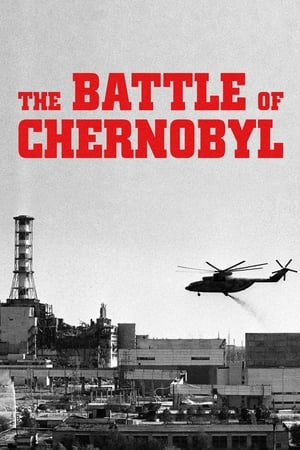
On April 26, 1986, a 1,000 feet high flame rises into the sky of the Ukraine. The fourth reactor of the Chernobyl nuclear power plant just exploded. A battle begins in which 500,000 men are engaged throughout the Soviet Union to "liquidate" the radioactivity, build the "sarcophagus" of the damaged reactor and save the world from a second explosion that would have destroyed half of Europe. Become a reference film, this documentary combines testimonials and unseen footage, tells for the first time the Battle of Chernobyl.
Staatsgewalt in Georgien - Wenn Wasser zur Waffe wird
This documentary by director Claire Billet and historian Christophe Lafaye details the massive and systematic use of chemical weapons during the Algerian War. Algerian fighters and civilians, sheltering in caves, were gassed by "special weapons sections" of the French army. The gas identified on military documents is CN2D, whose widespread use forced insurgents to flee "treated" sites, at the risk of dying there. The method is reminiscent of the "enfumades" used by the French expeditionary force during the conquest of Algeria in the 19th century. Between 8,000 and 10,000 such operations are believed to have taken place on Algerian soil between 1956 and 1962. This historical aspect is little known due to the difficulty of accessing archives, many of which are still classified, raising questions about memory, historical truth, and justice.
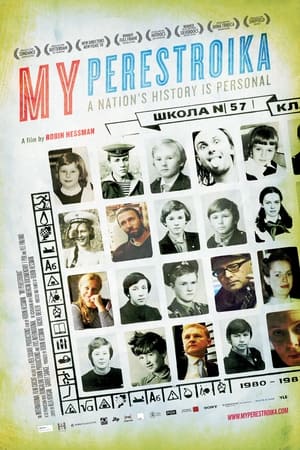
Tells the story of five people from the last generation of Soviet children who were brought up behind the Iron Curtain. Just coming of age when the USSR collapsed, they witnessed the world of their childhood crumble and change beyond recognition. Through the lives of these former schoolmates, this intimate film reveals how they have adjusted to their post-Soviet reality in today's Moscow.
The film is set to bring forward once again the well-worn images of the summit talks between Reagan and Gorbachev in Geneva. It is a reproduction of the days during the summit. On the one hand, pictures are gathered from the perspective as an onlooker in Geneva, on the other hand, the old television footage is processed.
Mikhail Gorbachev, former president of the Soviet Union, sits down with filmmaker Werner Herzog to discuss his many achievements. Topics include the talks to reduce nuclear weapons, the reunification of Germany and the dissolution of his country.
From 1989 to 1991 a string of unpredictable events happened that brought to light the rivalry between two men: Gorbachev, hindered by the economic results of his perestroika, and Yeltsin, embodying the hopes of the Russian people. Illustrated with interviews of top protagonists such as Mikhail Gobachev himself, the documentary recounts the critical last two years of the former USSR.
Four hard-hitting stores, from the deadliest period in U.S. Army Aviation, since Vietnam. Actual footage from the events, and interviews from the Soldiers, who were there - bring these intense and touching stories of courage and sacrifice to life.
When vengeful General Francis X. Hummel seizes control of Alcatraz Island and threatens to launch missiles loaded with deadly chemical weapons into San Francisco, only a young FBI chemical weapons expert and notorious Federal prisoner have the skills to penetrate the impregnable island fortress and take him down.
Qader, a bricklayer from Sardasht in Kurdistan Iran whose wife is pregnant with her 4th child, suddenly found himself amid a war crime perpetrated by the Saddam regime. On June 28th, 1987 Iraqi air fighters dropped mustard gas bombs on the city...
A teenage soldier in World War I—a simple village boy with a naive youthful dream of fame and medals—throws himself into the unknown and goes blind in the first battle, thus taking on a new job: intercepting enemy planes by listening to the air through huge metal funnels.
A group of expat criminals are coerced into a suicide mission behind enemy lines to destroy a game-changing chemical weapon developed by the Nazis and Japanese during World War II.
President Ronald Reagan races against time to salvage a deal with Soviet leader Mikhail Gorbachev that could dismantle nuclear arsenals—or ignite disaster. With pressure mounting on all sides, every word spoken brings the world closer to peace... or destruction.
Kevin Jerome Everson's single-take film of a street hustler's sleight-of-hand game takes its place in a rowdy crowd of onlookers. The camera stays focused on the man's fleet fingers while the audio is glued to his gift of gab: "Keep your eyes on that little red dot if you want to win cold cash money on the spot." Every bit the performer, the hustler makes us wonder whether the film itself might be a kind of shell game (with the seemingly raw immediacy of the shot concealing its artistic intentionality). - Max Goldberg
One of several Kevin Jerome Everson pieces regarding African-American rodeo riders, SECOND PLACE brings us inside the big show. The jerkily pixilated view of a bucking bull offers an aesthetic equivalent of the cowboy's wild ride while the film's silence lends an unexpected repose to the contest. Whether anticipating a bull's blasting out of the gate or watching an old hand stretch out his back, Everson's camera is ever-attentive to the action at the edge of the frame. - Max Goldberg
Radiating the radical simplicity of a Lumière actuality, THE MAYBERRY PRACTICE CALF shows an African-American cowboy roping a hunk of tire again and again. "Calf roping is a discipline," Kevin Jerome Everson told an interviewer. "People practice it, they know the language of it and they know how to do it." Everson's camera evinces a comparable degree of discipline, with a single long take functioning as a montage through the serial repetition of the cowboy's action. We may wonder if we're watching a loop but gradually our eyes are drawn to small variations. Practice makes perfect. - Max Goldberg
In a 2014 artist statement, Kevin Jerome Everson wrote, "The main thing I like doing is filming people of African descent, black folks, who are really good at what they do... engaged in something that is an internal language." Indeed, blink and you might miss this cowboy's lightning-quick way with a lasso. He shows his stuff in an impressionistic montage, flashing a winning grin. - Max Goldberg
A film about a young woman's future plans in Munich, Germany. MUNCHEN, RAPHAELA (also known as RAPHAELA RING MUNCHEN) is part of Mike Plante's Lunchfilm series of commissioned shorts (made for the cost of a lunch between Plante and filmmaker Kevin Jerome Everson).
Set to readings of Thomas Mann's 'The Magic Mountain', a collage of medical, art and found footage, exploring various medical cases, including reconstructing the damaged human body, the separation of Siamese twins, and Cold War era attempts to create superhumans.
'Tasting Freedom' documents the struggles of asylum seekers in Britain for recognition of their basic human rights and investigates abuses on asylum seekers in detention centres and prisons. The documentary gives a startling account of how people who have come to Britain to find freedom are instead persecuted.