THE ARYANS is Mo Asumang's personal journey into the madness of racism during which she meets German neo-Nazis, the US leading racist, the notorious Tom Metzger and Ku Klux Klan members in the alarming twilight of the Midwest. In The ARYANS Mo questions the completely wrong interpretation of "Aryanism" - a phenomenon of the tall, blond and blue-eyed master race.
A New Yorker journeys to the jungle in the Darien Gap of Panama to reconnect with an indigenous tribe he met and photographed 20 years ago. Their reunion highlights the profound power of photos and the human connection that transcends cultural barriers.
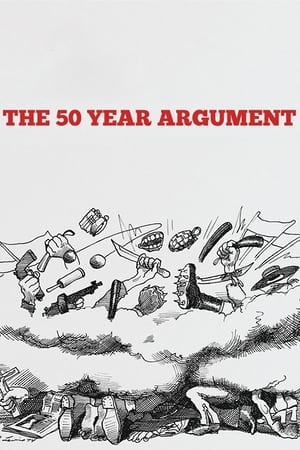
Follows the waves of literary, political, and cultural history as charted by the The New York Review of Books, America’s leading journal of ideas for over 50 years. Provocative, idiosyncratic and incendiary, the film weaves rarely seen archival material, contributor interviews, excerpts from writings by such icons as James Baldwin, Gore Vidal, and Joan Didion along with original verité footage filmed in the Review’s West Village offices.
Based on a poem and archive images, the military aggression of the US army stationed in the Canal Zone against the Panamanian people who demand to raise their flag in the territory occupied since the beginning of the 20th century is reconstructed and denounced. The aggression that occurred between January 9 and 11, 1964 left a balance of 21 patriots.
The Europeans want to be forgiven for the tragic colonial period. The aborigines try to preserve their ancient roots from the present and the future. In the North Territory.
Rap de Saia is a documentary that reports, through the voices and rhymes of the protagonists themselves, part of the historical trajectory of Female Rap in the State of Rio de Janeiro. In addition to its historical trajectory, Rap de Saia brings a collection of themes that leads us to reflect on women in today's society.
When Thomas Jefferson died in 1826, he left behind a mountain of personal debt, which forced his heirs to sell his beloved Monticello home and all of its possessions. The Levys of Monticello is a documentary film that tells the little-known story of the Levy family, which owned and carefully preserved Monticello for nearly a century – far longer than Jefferson or his descendants. The remarkable story of the Levy family also intersects with the rise of antisemitism that runs throughout the course of American history.
In the summer of 1975, the young director Steven Spielberg set new standards for cinema worldwide with an oversized shark bite, a plastic shark fin and an unmistakable two-note main theme composed by John Williams. With the horror from the deep, a man-eating, gigantic great white shark, the film of the same name became a similarly traumatic reference as Alfred Hitchcock's "Psycho": it triggered lasting primal fears across generations. On the beaches of the world, there was clearly a "before" and an "after". Steven Spielberg, who was only 28 at the time, not only set new standards for the thriller genre, but also hid his biting criticism of US capitalism in the 1970s behind it.
Revealing the flaws of Japanese society, the 1995 sarin gas attack in the Tokyo subway prompted Murakami to return to his homeland, whose conformism he rejected, to examine it closely. This led to the creation of two works: Underground and 1Q84.
In 150 years, twice marked by total destruction —a terrible earthquake in 1923 and incendiary bombings in 1945— followed by a spectacular rebirth, Tokyo, the old city of Edo, has become the largest and most futuristic capital in the world in a transformation process fueled by the exceptional resilience of its inhabitants, and nourished by a unique phenomenon of cultural hybridization.
Ils étaient tirailleurs, voix oubliées de la Grande Guerre
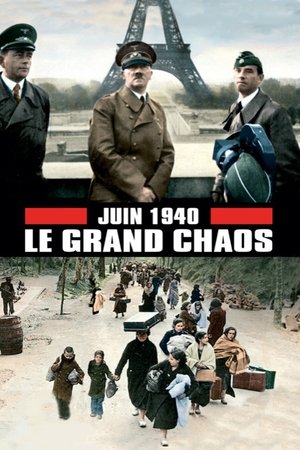
From May 10, 1940, France is living one of the worst tragedies of it history. In a few weeks, the country folds, and then collapsed in facing the attack of the Nazi Germany. On June 1940, each day is a tragedy. For the first time, thanks to historic revelations, and to numerous never seen before images and documents and reenacted situations of the time, this film recounts the incredible stories of those men and women trapped in the torment of this great chaos.
WINHANGANHA (Wiradjuri language: Remember, know, think) - is a lyrical journey of archival footage and sound, poetry and original composition. It is an examination of how archives and the legacies of collection affect First Nations people and wider Australia, told through the lens of acclaimed Wiradjuri artist, Jazz Money.
Masao Adachi, the author and director of experimental works and pinku-eiga in the 1960s, was a member of the Japanese New Left that shifted from being a filmmaker to a guerrilla fighter. In 1974, he joined the Japanese Red Army in Lebanon, which worked closely with the Popular Front for the Liberation of Palestine. Filmmaker Lutz Dammbeck met Adachi in Tokyo in 2018 and talked with him about a wide range of topics, including art, revolution, the influence of western avant-garde art and American underground; the Japanese Red Army; collaboration with secret services; the role of the Left after 1968; and the reasons for failures of leftist ideas and strategies.
A docu-film about the city Lucknow where the creators ask their family members important questions they have always wanted answers to, while indulging in tomfoolery around town. The film showcases the differences in the way three different generations perceive Lucknow. An ode to the city, and an attempt to provide solace to the social misfits of the creators' hometown.
A paralysingly beautiful documentary with a global vision—an odyssey through landscape and time—that attempts to capture the essence of life.
The Soul of Bossales is an immersion in the heart of popular Haitian culture whose spirituality and creativity have been forged by a surge of freedom and identity affirmation. Foukifoura, Édris, Charlotte or Ramoncite, “Bossales” characters with committed artistic and political acts, give us the gripping story of a very harsh reality: material and health precariousness, political violence, neo-colonialism.
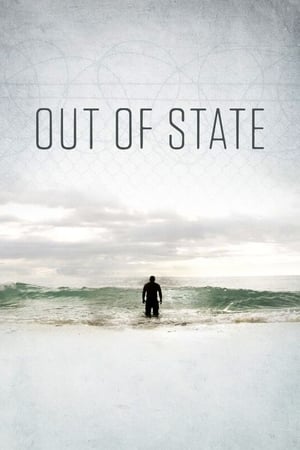
Out of State is the unlikely story of native Hawaiians men discovering their native culture as prisoners in the desert of Arizona, 3,000 miles, and across the ocean, from their island home.
This short documentary depicts the search, discovery and authentication of the only known Norse settlement in North America - Vinland the Good. Mentioned in Icelandic manuscripts and speculated about for over two centuries, Vinland is known as "the place where the wild grapes grow" and was thought to be on the eastern coast between Virginia and Newfoundland. In 1960 a curious group of house mounds was uncovered at l'Anse aux Meadows in northern Newfoundland by Drs. Helge Ingstad and Anne Stine Ingstad of Norway. Added to the United Nations World Heritage List, l'Anse aux Meadows is considered one of the most important archaeological sites in the world.
The Shipibo-Konibo people of Peruvian Amazon decorate their pottery, jewelry, textiles, and body art with complex geometric patterns called kené. These patterns also have corresponding songs, called icaros, which are integral to the Shipibo way of life. This documentary explores these unique art forms, and one Shipibo family's efforts to safeguard the tradition.