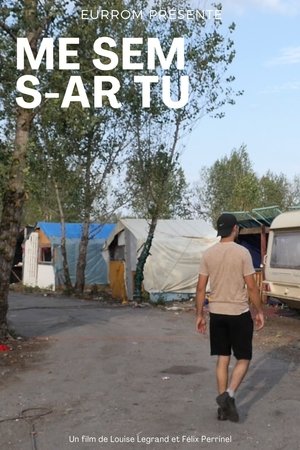
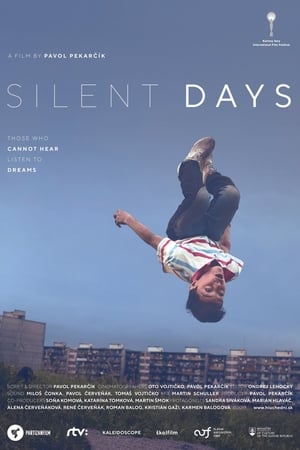
The film is separated into four chapters, each tracking a different group of protagonists who all have one thing in common – they were born deaf. Little Sandra likes to play football and admires Ronaldinho. Marián worships trains and wants to be an engine driver. Teenagers Alena and René are expecting a baby and long for it to be born healthy. The trio of Roman, Kristián and Karmen help their parents by collecting junk to be sold and dream of one day having a house with a flush toilet.
Documentary short film on the city of Évora, Portugal. Usually regarded as the first film of the Portuguese New Wave.
A hundred letters written by Portuguese women during the Salazar dictatorship were found by chance in a second-hand bookshop. By confronting today the women who wrote these letters with the ghosts of the past, and revealing important archive material, Letters to a Dictatorship takes us on an in-depth journey through the obscurantism that dominated Portugal for more than 50 years.
Three juxtaposing stories taking place in Portugal, Austria and Cuba create an intimate and poetic portrait of the daily lives and struggles of the elderly in an unstable world, seen through the eyes of their grandchildren.
After the Carnation Revolution, Portugal became a democracy and opened itself to the world. One of its consequences was the spread of erotic and pornographic films. This documentary tells the story of how these films arrived at Theatro Gil Vicente, an emblematic cultural venue of Barcelos.
"O Regresso" is a documentary featuring renowned Portuguese actor Ruy de Carvalho as he returns to Macau after a 10-year absence. Directed to mark the 10th anniversary of his visit, the film captures Ruy de Carvalho revisiting key locations across the city, reflecting on the cultural and social transformations that Macau underwent in the lead-up to its handover from Portuguese to Chinese administration in 1999. Blending personal memories with the evolving landscape, the documentary offers a nostalgic look at Macau's unique blend of Portuguese and Chinese heritage, seen through the eyes of one of Portugal’s most beloved actors.
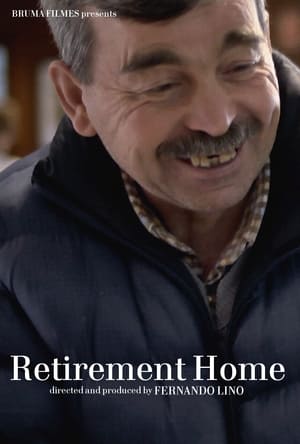
A group of elders spends their weekdays in a retirement home in Sandim, in the north of Portugal, where they talk, do arts and crafts, practice yoga and pray. We follow them between October 2012 and March 2013, when an economic crisis overshadowed Portuguese society and unemployment rates reached record levels. Meanwhile, arrangements are made for the Carnival ball. Will they bring the first place home this time?
Documentary about the life and work of Mário Eloy, one of the greatest painters of the second generation of modernism in Portugal.
Documentary about the photo session for the photobook "Castella", filmed in Portugal.
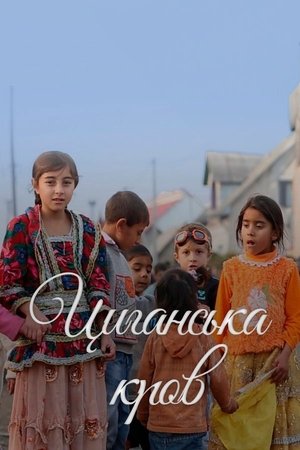
A look at what happened after Borat: Cultural Learnings of America for Make Benefit Glorious Nation of Kazakhstan was filmed in the Romanian village of Glod. It follows the life of one girl who longs to escape the poverty as foreign lawyers arrive with the promise of suing 20th Century Fox for millions of dollars.
A documentary about the world of portuguese cinema, with interviews with some critics and directors.
Film directors with hand-held cameras went to the streets of Lisbon from April 25 to May 1, 1974, registering interviews and political events of the Portuguese "Carnation Revolution", as that period would be later known.
A study on the uninhabited area of the old railway workers’ district of the village of Setil. The limits in the construction of their history lead us on this journey through the geography of Setil, leaving language behind and plunging into the primary elements. We seek an image of evocation, but also the very construction of the image of the space.
To understand firsthand what the United States of America can learn from other nations, Michael Moore playfully “invades” some to see what they have to offer.
This Screenliner short looks at the dress and customs of Nazaré, a fishing village on Portugal's Atlantic coast.
All the stories told, all the memories, dreams and lost moments were left in a tank from other generations.
In 1975, Ryszard Kapuściński, a veteran Polish journalist, embarked on a seemingly suicidal road trip into the heart of the Angola's civil war. There, he witnessed once again the dirty reality of war and discovered a sense of helplessness previously unknown to him. Angola changed him forever: it was a reporter who left Poland, but it was a writer who returned…
Images and sounds expose the duality of Portugal during the days of WW2: a peaceful, god-loving, rural country, providing an escape route for over one hundred thousand European refugees to the Americas; and a political and cultural elite that disguised their Nazi inclinations just enough to play its neutral role in international politics.
On a Summer afternoon, Pedro packs the last few boxes before having to leave his apartment in New York. 12 years ago, Pedro and Ana had arrived in America from Portugal, in search of a dream. Now, Ana's voice describes, from the other side of the ocean, that same country to which they are returning. As the rooms are emptied, Pedro bids farewell to one life, welcoming another. But the dream that brought him will remain forever in the city that never sleeps, awaiting his return.
Poet, agricultural engineer and revolutionary Amílcar Cabral was born in Guinea-Bissau to Cape Verdean parents. After studying in Portugal, he emerged as the charismatic leader of the anti-colonial struggle against Portuguese rule. With his utopian ideas, he sparked a cultural and an armed uprising that went on to inspire other African liberation movements.