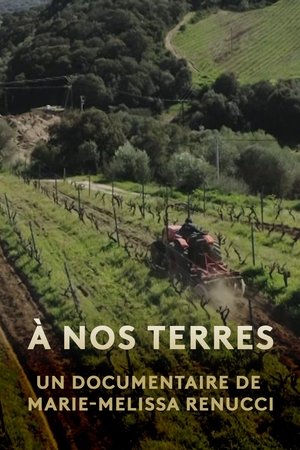
The first of a documentary serie about rural France.
1972 in Haute-Savoie (France) : the Bertrand's farm, with a hundred dairy cows owned by three bachelor brothers, is filmed for the first time. In 1997, they were the subject of Gilles Perret's first movie, as they let their farm to their nephew Patrick and his wife Hélène. Nowadays, 25 years later, Gilles Perret take another look at this farm, managed by Hélène who will step down. Through their words, an intimate, social and economic history of the rural world.
In 1979, Louis Malle films the thriving lives of a Minnesota farming community, but returns six years later to document its drastic economic decline, offering a poignant look at the impact of political changes.
Les influenceurs sont dans le pré
Tenei village is located in Fukushima prefecture's beautiful surrounds. It is 70 kilometers away from the Fukushima Daiichi Nuclear Power Plant. When the Fukushima Nuclear Power Plant failed in March 2011, radioactive particles fell and contaminated the rice fields. But the farmers couldn't just abandon their land as they live on the land and wanted to protect it for future generations. The farmers decided to pursue scientific methods to secure food safety. They were on their own without Government assistance. This film documents their determination and efforts in overcoming an environmental crisis that had never been experienced before.
La Théorie du Boxeur
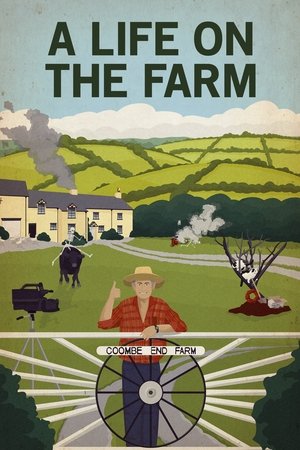
A strange story from Somerset, England about a filmmaking farmer and the inspiring legacy of his long-lost home movies.
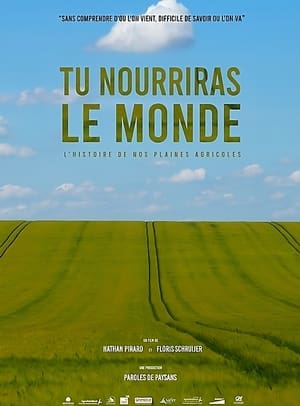
Tu nourriras le monde
During the Cultural Revolution in China in the late 20th century, ethnic Manchu people were persecuted and forced to give up such cultural traditions as the shaman dance (tiao tchin, meaning "spirit-jumping" or "god's dance"). However, on Changbai Mountain in Northeast China, a farmer named Guan Yunde decided to start designing and building traditional Manchu shaman drums. At age 70, he is one of a minority of ethnic Manchu people in China's Jilin province, and one of the few people keeping the Manchu shamanic tradition alive.
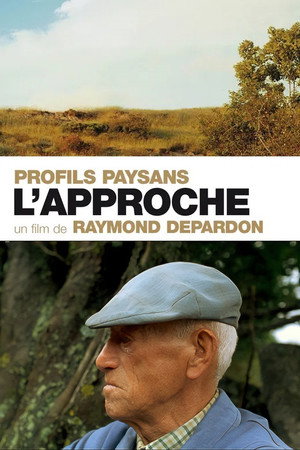
For ten years, Raymond Depardon has followed the lives of farmer living in the mountain ranges. He allows us to enter their farms with astounding naturalness. This moving film speaks, with great serenity, of our roots and of the future of the people who work on the land. This the last part of Depardon's triptych "Profils paysans" about what it is like to be a farmer today in an isolated highland area in France. "La vie moderne" examines what has become of the persons he has followed for ten years, while featuring younger people who try to farm or raise cattle or poultry, come hell or high water.
A documentary centered on the union formed by Bolivian farmers in response to their government's (which was urged by the U.S.) effort eradicate coca crops, and the man who would come to represent them, Evo Morales.
In a secluded village surrounded by forests and a river, an elderly beekeeper and a livestock farmer live alone, their lives shaped by tireless work and quiet harmony. Through one day in their hidden world, this documentary reveals the beauty and mystery of their bond with nature, far from the reach of modern life.
Amina, Sami and Jennyfer are high school students in the Paris suburbs, in 93. At the initiative of 3 of their teachers, they embark on an unexpected investigation into a gigantic leisure park project which involves concreting agricultural land near their homes. But can we have the power to act on a territory when we are 17 years old? Funny and intrepid, these new citizens take us to meet residents of their neighborhood, property developers, farmers and even elected officials of the National Assembly. A joyful quest that challenges conventional wisdom and revives our connection to the land!
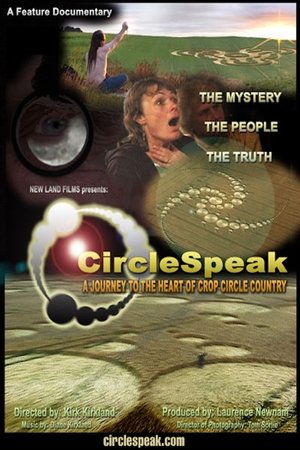
Shot in Southern England over the course of six weeks by a crew of three American filmmakers, CircleSpeak offers a nuanced look at the passions and beliefs of the people immersed in the crop circle phenomenon during the season of 2001. This feature-length documentary presents interviews with serious “researchers”, self-proclaimed “hoaxers”, local farmers and villagers who are all, in one way or another, involved in this strange and compelling summer spectacle taking place year after year.
Is there a mental health crisis in agriculture in Colorado? Farming and ranching has become increasingly difficult over the years. An industry that is typically viewed as romantic, hardworking, and "salt-of-the earth" is actually a job full of tremendous stress outside of anyone's control. Combine that with the enormous generational pressure to continue the family farm, and you have a large group of people that are suffering silently. How do we take care of those that are taking care of us?
Peter Dunning is a rugged individualist in the extreme, a hard-drinking loner and former artist who has burned bridges with his wives and children and whose only company, even on harsh winter nights, are the sheep, cows, and pigs he tends on his Vermont farm. Peter is also one of the most complicated, sympathetic documentary subjects to come along in some time, a product of the 1960s counterculture whose poetic idealism has since soured. For all his candor, he slips into drunken self-destructive habits, cursing the splendors of a pastoral landscape that he has spent decades nurturing.
A forgotten history of Northern Ireland is unveiled through a journey into Ulster Television’s archives, and the rediscovery of the first locally-produced network drama, Boatman Do Not Tarry.
American Meat is a solutions-oriented documentary chronicling the current state of the U.S. meat industry. Featuring Joel Salatin, Chuck Wirtz, Fred Kirschenmann, Steve Ells, Paul Willis, and farmers across America, it takes an even-handed look at animal husbandry. First explaining how America arrived at our current industrial system, the story shifts to the present day, showing the feedlots and confinement houses, not through hidden cameras but through the eyes of the farmers who live and work there. From there, the documentary introduces the revolution taking root in animal husbandry, led by the charismatic and passionate Joel Salatin. Stories are shared of farmers across the country who have changed their life to start grass-based farms, and everyday solutions highlight actions people can make to support America's agriculture.
Meat is the modern story of the animals we eat, as told by the people who never get to say their piece - from the solitary hunter who believes everyone needs to be educated about their food, to an industrial pig farmer who argues that money isn't his primary driver.
An exploration of a new paradigm of health, science, and medicine, based on the interconnections between us and nature.