From far up, humans look like ants. Or like a virus, driven by consumption and mass production, attacking the earth's resources.
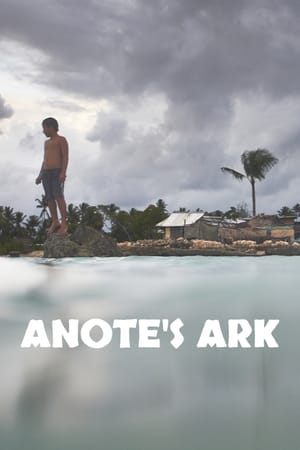
Land is supposed to be the embodiment of permanence, but what happens when it's not? What is life like when the nation you live in has an expiration date?
Five times, Earth has faced apocalyptic events that swept nearly all life from the face of the planet. What did these prehistoric creatures look like? What catastrophes caused their disappearance? And how did our distant ancestors survive and give rise to the world we know today?
In partnership with the MasterCard Foundation and local partner Mwanza Youth and Children Network, the young reporters produce and broadcast radio shows that illustrate how farming can lead to individual prosperity and country-wide economic growth and teach the business and finance skills necessary to manage these small agricultural enterprises.
It's death on an unimaginable scale, when a majority of Earth's species quickly die out. It's called "mass extinction," and it's happened at least five times before. Cataclysms, such as supervolcanoes or asteroids, are thought to cause these events, but some experts believe a manmade mass extinction could be next. Is our planet in trouble? And if so, is there anything we can do to stop the next catastrophic annihilation? Experts are traveling the world, performing groundbreaking scientific detective work to answer these very questions.
As the Dead Sea shrinks, engineers prepare a daring solution: connect it with the Red Sea by way of a massive desalination plant. If it works, it could stabilise the lake and ease regional tensions.
OUR ARK is an essay film on our efforts to create a virtual replica of the real world.
Their destiny was well mapped out: brilliant studies, the promise of a good job and a big salary. However, nothing happened as planned. Aurélie, Maxime, Hélène, Emma, or Romain are graduates of Polytechnique, Sciences Po, Centrale or business schools. They have made a radical choice: to give up the future they were promised for a life they consider more compatible with the environmental and societal issues of our time. This film tells their story. For a year, the young director Arthur Gosset, himself a student at Centrale Nantes, followed the journey of six young people, their sometimes difficult decisions, their often painful breaks and their courageous choice to live in accordance with their convictions, whatever the cost. Discover the documentary that tells their story.
L'appel du glacier
A record in 35mm film of the first drenching rain on Los Angeles after the devastation of the wildfires.
Through the eyes of eight filmmakers "Nahui Ollin, Sun Of Motion" explores several sites in Mexico to reveal how climate change has been advancing in one of the countries with the highest biodiversity globally. Corals, glaciers, seas, mangroves, rivers, mountains, fields and cities have witnessed the advancement of what may represent the greatest threat to human kind in this age. Through the voices of the inhabitants in different parts of the country, we will witness the adaptation as well as the mitigation that is carried out in their communities.
A film about climate activism in the suburbs.
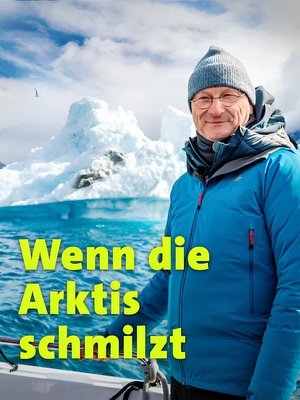
In the Arctic, ice is both all around and constantly disappearing. “Utuqaq” explores climate change from the perspective of this beautiful and vital element, as four researchers embark on an expedition to drill ice cores in subzero temperatures.
The flying foxes that soar across Sydney each evening face many challenges: impacted by heatwaves, evicted from urban parklands, struggling to survive an ongoing loss of habitat. Bat carers save a handful here and there, and ecologists document their struggles, as threats escalate. Filmed over six years, The Weather Diaries reaches its climax in 2020, as temperatures soar, bushfires rage, and flying fox pups die in record numbers. Drayton ruminates on our failure to value these essential pollinators and the forests they sustain, and reflects on the implications for her daughter Imogen, a girl long inspired by Studio Ghibli’s Princess Mononoke, who’s emerging from the classical confines of the Conservatorium High School to embark on a career as an electronic pop artist.
At the heart of the Moroccan High Atlas mountains, water is a resource in short supply. The village of Tizi N'Oucheg has undergone a transformation thanks to Rachid Mandili, who is well-aware that the development of his village depends on access to clean water and on his strong leadership of this project. Mandili rallies all the villagers together and calls upon the knowledge of French and Moroccan scientists to tap water sources, to purify, and reuse waste water for irrigation. The documentary highlights the Berbers' community ties and ingenuity in their dream of independently managing their village water resources. It equally paints a portrait of a man whose initiative and resourcefulness has opened Tizi N'Oucheg up to modernity while still conserving its cultural heritage. Tizi's example presents some of the problems of water access in semi-arid regions and puts forward concrete solutions to these problems.
Documentary about the work of Claude Lorius, who began studying Antarctic ice in 1957, and, in 1965, was the first scientist to be concerned about global warming.
Today, like a ship entering the storm, the world faces climate change induced collapse. Once You Know, by director Emmanuel Cappellin, is a poetic and poignant exploration of how four of the world’s leading climate scientists and energy experts find truth, chaos, and hope in their work.
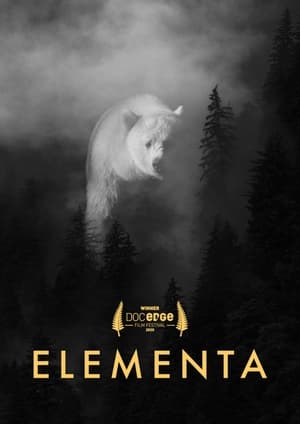
A black-and-white visual meditation of wilderness and the elements. Wildlife filmmaker Richard Sidey returns to the triptych format for a cinematic experience like no other.
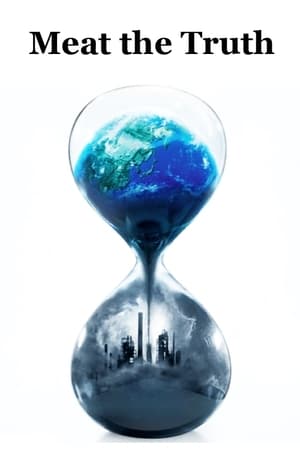
Meat the Truth is a high-profile documentary which forms an addendum to earlier films on climate change. Although such films have succeeded in drawing public attention to the issue of global warming, they have repeatedly ignored one of the most important causes of climate change: the intensive livestock production. Meat the Truth draws attention to this by demonstrating that livestock farming generates more greenhouse gas emissions worldwide than all cars, lorries, trains, boats and planes added together.
"It's Okay to Panic" is a nostalgic portrait of Professor Szymon Malinowski, a 62-year-old atmospheric physicist at the University of Warsaw who worries that climate change may cause human civilisation to collapse in the coming decades. A career educator, Prof. Malinowski studies phenomena leading to climate changes and for years he has been raising the alarm about the threats we face. The film visits him at a moment when he must deal with a personal tragedy which prompts him to evaluate the way his country has changed during his lifetime, for better and for worse.