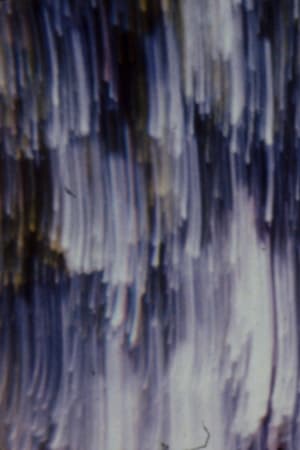
Peripeteia I and Peripeteia II, shot by the artist in Oregon’s rainforest, alone and without electricity. "Navigation spiraling sunwards. Exploring the movement of forest and body, seeking the larger pattern of my digressive attendance. Filmed in the Oregon coastal rain forest, fall." - A.C.
Peripeteia I and Peripeteia II, shot by the artist in Oregon’s rainforest, alone and without electricity. "Extending from PERIPETEIA 1 - a navigation by light, contrasting the camera's fixed sight with "in site" movement. A sculpture of glass, mirrors and film vies with the choreography of the cardinal points: dense shelter, rain, red emulsion. Filmed in the Oregon coastal forest, June." - A.C.
A continuous dissolve into a series of happy nude couples in various configurations: female/male, female/female, male/male, as the Rolling Stones sing 'We Love You'. –F.
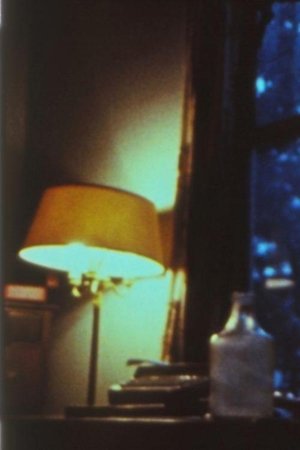
This is a short film description of a room, and the way light (coming through a window) illuminates papers on a desk. An attempt to use color, camera movement and editing to transform everyday surroundings
Welcome to Come, which depicts a somewhat mysterious transformation of the image in the course of a single zoom, was my only film to achieve a small measure of "popularity," with a short write up in Variety and prints purchased by several film teachers who still show it today.
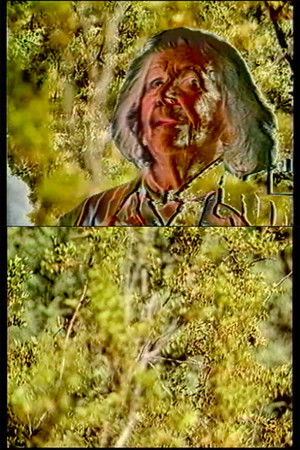
Against a field of swaying and halting yellow vegetation, another processed field: the image of the eponymous subject (performed by painter Doris Cross) riles and emits unintelligibly to the viewer. Conjuring the mystical biblical character Lilith, Steina's video layers both sound and image to produce an ever-shifting, frustrated presence.
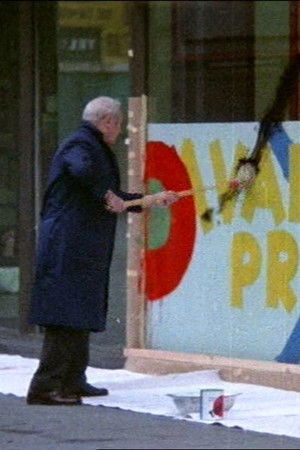
As publicity for the exhibit Miró L’altre, organized by the Colegio de Arquitectos de Catalunya in 1969, the Board commissioned Pere Portabella to film Miró painting the “poster” for the exhibit on the ground floor windows of the building. Portabella was not interested in simply filming a testimonial documentary. However, he said he would do the film if after the exhibit Joan Miró himself, with the help of the cleaning staff erased his own painting. Joan Miró accepted the idea without a doubt. The complicity between the film maker and the painter is evident in the filming.
In a low-key, enigmatic daily life where gestures and quiet moments speak louder than words, Dália, Duda, and Nikki feel almost like ghostly presences. It's a chaotic kind of silence, like vibes echoing through space, imagery, and time.
A daily commute on the Chicago Brown Line transformed into a dissociative stream of flickering, ephemeral images.
A strange wire-fingered homunculus navigates through his dreams of different faces and faces, traversing a subliminal and endless variety. They are all different faces, but all have huge eyes that are questioned as to what keeps them apart, perhaps left broken by an impossible love.
A collective portrait in which friends and acquaintances explore the complexities of Rodrigo Lira, a pivotal poet on the national scene of the 1980s. The short film exposes diverse literary and personal facets of Lira, while simultaneously fragmenting, reiterating, and juxtaposing the speeches of the group of interviewees, making it in itself a work of audiovisual experimentation. Originally filmed months after Lira's suicide, this film was recuperated and preserved by Universidad de Chile's Film Archive, who were able to release it in 2026.
“All that which in Picture is not of the body or argument thereof is Landskip, Parergon, or By-work” (Thomas Blount, Glossographia, 1656).
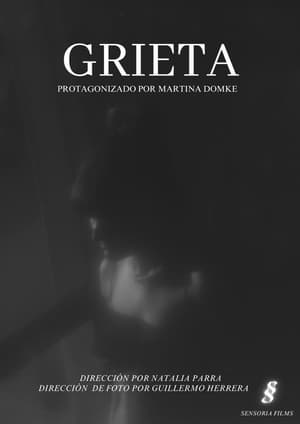
Daniela (24) is a ghost in pain. Her life ended suddenly and painfully, leaving her friend and roommate, Mónica (22) alone in their shared apartment in Santiago, Chile. Daniela feels her frustration grow within her, as she fears that her time in limbo will never end.
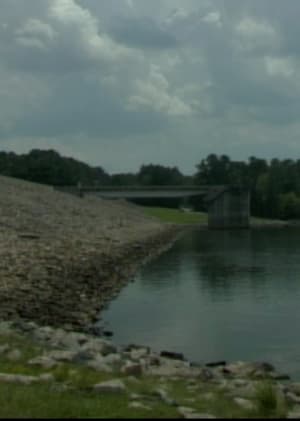
Set at an artificial reservoir in North Carolina, RESERVOIR (SEVEN FRAGMENTS) is a meditation on the unnatural histories of the American environment. The film approaches both the cinematic image and the landscape it captures as damaged, estranged things—things adrift in a world of irreparable discord.
A new exploration of familiar places located in the region of Rhône and Isère throught an reinvention of digital nuances, a study of perceptions and fluidity around the nature of motion in landscapes and human interactions.
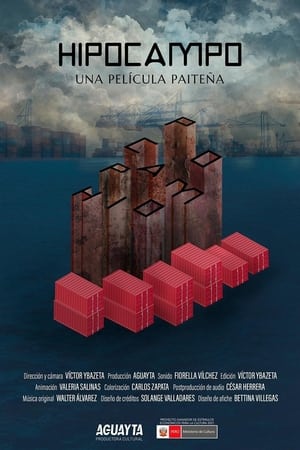
Formally eclectic, the first few seconds of the film seem to introduce us to a typical sensory documentary, but soon the flow of the narrative evolves into a much more complex portrait of the port of Paita, by concatenating recordings made by the author himself, videos generated by an AI, Google Maps views and archival images.
A collective experimental short / essay film—a fragment of a surreal inner landscape. Two performers torment themselves with immense sorrow in sand and slime, while a narrator from Hong Kong, speaking in a dreamlike monologue, attempts to rename a trauma that has been forced into forgetting. Through somatic exercises, the three creators explore the grief buried within their bodies. Gestures of grieving are captured through 3D scanning and transformed into digital copies so the two bodies become one, questioning how we can share our grief. In a third place beyond memory and reality, grief is born as a creature. Shaped by the embodied research of the creators, it transcends the digital/material realm, flesh, and language—transforming into a shared and liberated presence.
The parents of an adult infant named "Child", played by Todd Haynes, attempt to expel him from their home, by casting magical spell seen in a television documentary about Malaysian rites of passage.
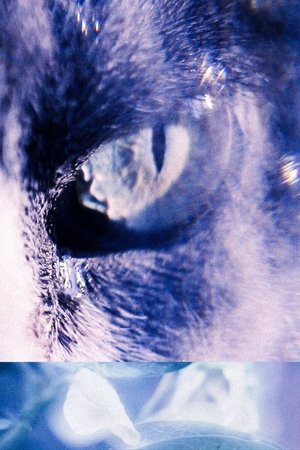
An experimental short film that explores the textures of nature and the gaze of a cat.
The second film in the Phosphenes series.