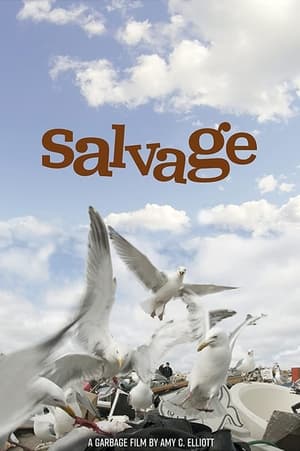
With a massive, unrestricted salvage area, the Yellowknife dump is one of the last and largest open dumps in North America. People from all walks of life go there, to search for everything from tools to clothes to home décor. This documentary follows a group of passionate salvagers over five years as the dump evolves and eventually succumbs to the inexorable efforts of city bureaucrats to subject it to sensible regulations and controls.
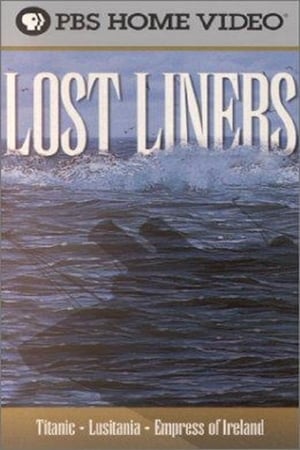
Dr. Bob Ballard explores the histories and the final resting places of famous 20th-century passenger liners, including the Titanic, the Lusitania, and the Empress of Ireland.
Varda focuses her eye on gleaners: those who scour already-reaped fields for the odd potato or turnip. Her investigation leads from forgotten corners of the French countryside to off-hours at the green markets of Paris, following those who insist on finding a use for that which society has cast off, whether out of necessity or activism.
The virtually untold story of the supersize steamship’s construction: how 15,000 men toiled day and night in life-threatening conditions to create a state-of-the-art floating city.
Guy joins an ambitious engineering project to recover a crashed WW2 Lancaster Bomber – and the remains of its missing crew members – from the depths of the Dutch lake where it’s lain for 80 years.
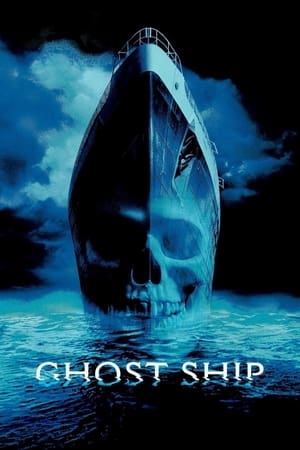
After discovering a passenger ship missing since 1962 floating adrift on the Bering Sea, salvagers claim the vessel as their own. Once they begin towing the ghost ship towards harbor, a series of bizarre occurrences happen and the group becomes trapped inside the ship, which they soon learn is inhabited by a demonic creature.
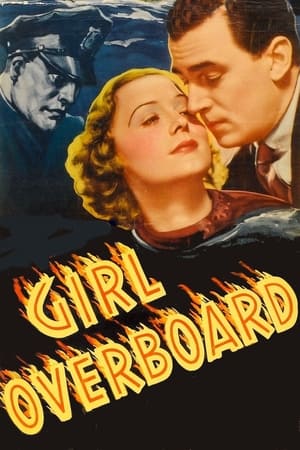
Passengers on an ocean liner can't recall how they got onboard or where they are going. Soon it becomes apparent that they all have something in common.
A beautiful girl on a passenger ship is suspected of murder.
Gaetano and Delia, a separated couple, try to pick up the pieces of their broken love, recalling all the faults and the mistakes which led them to where they are now.
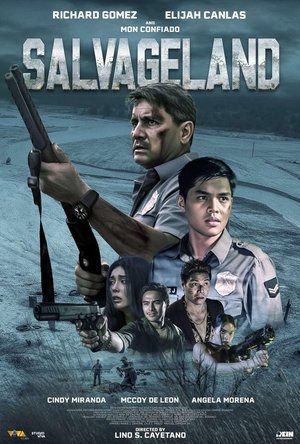
In a fictional town near Metro Manila against the volcanic landscape of Mount Pinatubo, a veteran police officer and his rookie son must defend their station when a crime syndicate target seeks sanctuary with them. The scenario forces the family duo into a violent confrontation that will challenge their relationship and survival skills.
A group of strangers find themselves aboard an unmanned ship, surrounded by fog and uncertain of their destination. As they attempt to make sense of their situation, the group of passengers discover a commonality that changes their perception of the nature of their journey. The film was later remade, with some changes, as Between Two Worlds (1944).
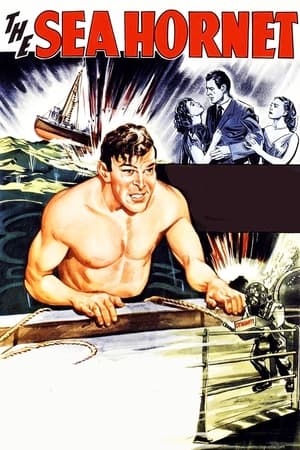
"The Sea Hornet" was a merchant ship sunk, supposedly by a torpedo, less than a mile off the California Coast during World War Two. Six years later when his buddy is killed, attempting to blow up the sunken ship, on the orders of Suntan Radford and Tony Sullivan, deep-sea diver "Gunner" McNeil has his suspicions aroused... especially since Suntan is the daughter of the ship's captain that died when the ship sunk, and Sullivan was a crew member. Plus the fact the ship had over a million dollars in cash on board. During the course of his investigation, he becomes romantically involved with Ginger Sullivan
The Hawaiian world view was once clearly reflected in a society created over 2000 years of existence in the islands. With the changes brought in the last 200 years, we who now live in the land of the Hawaiian may wonder: what does it mean to be Hawaiian in Hawaii today? A contemporary Hawaiian world view is shared here by 11 Hawaiians who have struggled with the question of maintaining cultural identity in this modern world, and who have each found their own answers. (Victoria Keith)
In memory of Brent Hinds 1974-2025
In Nauruan, Anubumin means "night"—and darkness is what the fourth joint film by Zanny Begg and Oliver Ressler begins with. The small and inconspicuous island of Nauru with close to 10,000 inhabitants lies in the Pacific at a great distance to the mainland. But Nauru is a tragic place steeped in history that has been overwritten by numerous narratives. The film addresses these different narratives, starting with the early exploitation of the island and its calcite and phosphate deposits by the colonial powers in the 19th century. After the golden 1970s, when the "Birdshit island" was flush with money, the phosphate was completely mined and the island state soon became insolvent. Since then, Nauru has turned into a gloomy place: 80% of the area is uninhabitable; the attempt to tap new sources of income led to the wide-scale practice of money laundering.
The film UMBRA deals with rare and common optical phenomena that occur in nature. These phenomena evoke familiar images such as shadows or reflections on a water surface; but also unusual ones like the "Brocken spectre" or the pinhole effect during a solar eclipse. These ancient and natural projections can be considered as precultural and independent of any apparatus. They occured even before mankind and are united by their intangible, ephemeral presence. In their immateriality and fragility, they are precursors of the cinema image. UMBRA develops a visual dialogue between phenomenon and apparatus, archetype and image, self and self-perception.
On the eve of postponed Congolese elections, two Congolese and two Belgian cineastes make a film about Kinshasa and its resistance against the legacies of colonialism. The four filmmakers want to tell a story together, but having grown up on other sides of history, they have different views on how to tell that story. What should it look like? Who should be in it? For whom is it made? Faire-part is the search of four filmmakers for a way to portray the city. Through filming artistic performances in public space, they paint a provocative picture of Kinshasa and its relations with the rest of the world.
Documentary about Givanchy and Audrey Hepburn.
A short documentary about pictures produced by Paramount in the 1950s, the directors who made them, and the stars in them.
"Beyond the Ararat" is the story of a woman of Turkish origin who embarks on a journey to better understand what makes up her identity. A road movie which brings her from her childhood neighborhood in Brussels to Turkey and Armenia. A quest where each woman she encounters could be the reflection of herself. Entering the land of her ancestors, Anatolia, she questions her cultural heritage. Stopping in her grandmother's village, she discovers the "Agit"; an antique oral tradition where women sing for their dead. The songs open a potential space for mourning, where Turkish, Kurdish but also Armenian women missing from that land, can sing "together". The confrontation with the "missing" from her memory, brings her farther eastward in Anatolia to the foot of the Ararat Mountain, and beyond.