Staggeringly simple films: a man itching his back, a man thinking, a man yawning, but like the works of Samuel Beckett, these minute gestures stand in as grand statements of the human condition, akin to the films of Bas Jan Ader and Marcel Broodthaers.
Drama in the Futurists' Cabaret No. 13
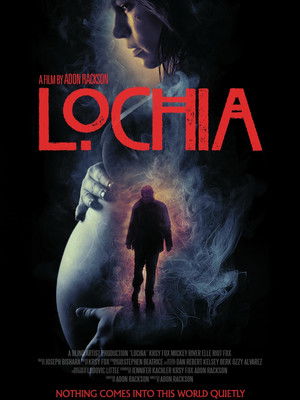
Lorna Green is a performer at a Lisbon nightclub who performs fictionalized acts that involve erotically charged sadomasochistic murders. As she begins to suffer violent, surreal nightmares, she starts to believe that she may be under mind control by a man who may be Satan incarnate.
Hotel guests look restrained, sedated in the diffuse light of the service provider’s shimmering cage. A network of joists, pilasters and fluting exposes the proverbial off-season chill in the seating arrangements. Smart-phones and tablets mask a total lack of communication.
The pantomime of two characters exchanging roles is accompanied by a three-layered phonogram, where sophisticated narrative text is interrupted by slightly accelerated excerpt from Brezhnev’s speeches, as well as by fragments of statements of the mentally ill person with the schizophasia symptom.
Luis Bunuel, the father of cinematic Surrealism, made his film debut with 'Un Chien Andalou' in 1929 working closely with Salvador Dali. Considered one of the finest and controversial filmmakers with, 'L’Age d’Or' (1930), attacking the church and the middle classes. He won many awards including Best Director at Cannes for 'Los Olvidados' (1950), and the coveted Palme d’Or for 'Viridiana' (1961), which had been banned in his native Spain. His career moved to France with 'The Diary of a Chambermaid' with major stars such as Jeanne Moreau and Catherine Deneuve.
The Olympean Collection is a visually poetic trilogy set against the vast landscapes of East Africa, following Daisy and a Boy Scout as their search for eternal youth spirals into a surreal odyssey of memory, loss, and transformation.
One of the early animation works of Benjamin Rabier, a former designer of Epinal images who produced elegant illustrated editions of La Fontaine's fables and created the trademark image of 'La Vache qui rit'.
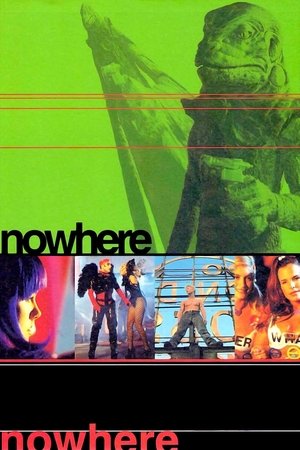
A young nihilistic New Yorker copes with pervasive urban violence, obscene phone calls, rusty water pipes, electrical blackouts, paranoia, and ethnic-racial conflict during a typical summer of the 1970s.
Dr. Jackie Stevenson is a Los Angeles based therapist and scientist who tries to invent a serum to separate the pure from the lustful side of the female psychosis. After she has an unsuccessful experiment with a female client named Martine, which drove her patient to insanity and to a mental hospital, Jackie tries part of the serum on herself and becomes her lustful alter ego Heidi Hyde; a voracious lesbian who prowls the streets of L.A. after dark looking for carnal pleasures.
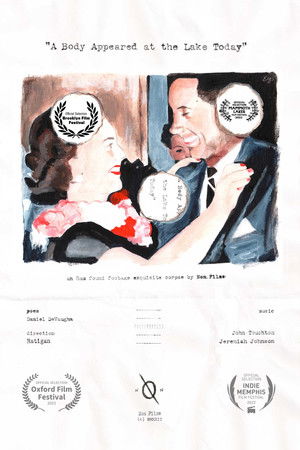
A found footage examination of what happened at the lake today. Where were you? An exquisite corpse by Non Films. 8mm images randomly selected from found footage; poem written without images; music written without images or words. WINNER: BEST BROOKLYN PROJECT (Brooklyn Film Festival).
In his motor home, while drinking too much wine, an old “Shlappsteur” (a luxury event waiter) shares anecdotes about the job that ate up his whole life. Funny, rough or melancholic, his memories materialize before our eyes and paint, piece by piece, the portrait of a life dedicated to work.
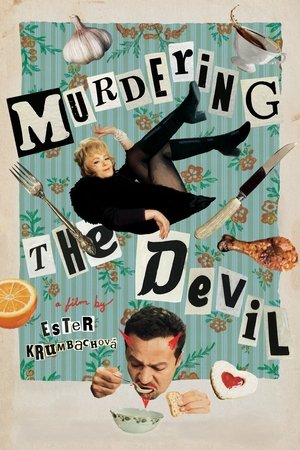
Events take a sinister turn one night in London, when two very different couples arrive at a double-booked apartment. Actions have consequences and not all debts are paid for with money. Leaving, it's harder than you think.
A film in which the one 60-story skyscraper that soars in the spaces between roofs spins with incredible speed. I centered the circumference with its 400 or 500 meter radius on the skyscraper and divided it into 48 sections, then took photographs from those spots and shot the photographs frame by frame.
The stage emulates life and compresses it, setting free skills learned over lifetimes in brief but dazzling displays for the amusement and judgment of others. For the performers, it is the ultimate risk, and some will rise while others must fall. Nowhere is this truer than at the Seisho Music Academy, where music, dance and real weapons all come into play in the creation of the next great Star. Karen and Hikari’s destinies have been linked since a childhood promise, but their journeys here have taken very different paths. Now, after Hikari leaves, Karen must discover who she is without her opposite, while Hikari must rediscover her own course. Nor are they the only girls who must reassess and change if they want to achieve their dreams, as the dance, magic, and swordplay continue!
We are first presented a cobweb castle, filled with the haunting doubts of the young protagonist. Spirits appear on the screen and are heard on the soundtrack. Gradually a female guide emerges and escorts the young man into an antechamber to another (and possibly higher) world.
For the first time I am animating hand-painted engraved cut-outs on a full-color background. The film is mood-filled: A duel scene in a snowy forest, obviously the morning after a masquerade ball. Harlequin lies dying, while Red Indian walks away with the wings of victory. The woman between them appears, cat-masked. The mask dissolves away. Her spirit passes into the face of the sun upon the sun upon the sun flower. But Harlequin cannot escape death. The blue world engulfs him.
A lonely man tries to enjoy a regular evening
Mute