JEWS excavates a lost world of manners and ritual in home movies shot by several Chicago families from the 1920s through the 1940s. Much as in similar found footage soliloquies by Péter Forgács, Jay Rosenblatt and Ken Jacobs, director Roger Deutsch wrings unexpected pathos from mundane traces of the past. Children mug for the camera with dances of the day, upright mothers march their strollers up the avenue, men smoke, the family gathers around the table to light the candles. The bare title cannot help but raise the specter of contemporaneous events in Europe, lending an extra degree of urgency to the film's meditation on disappearance. - Max Goldberg
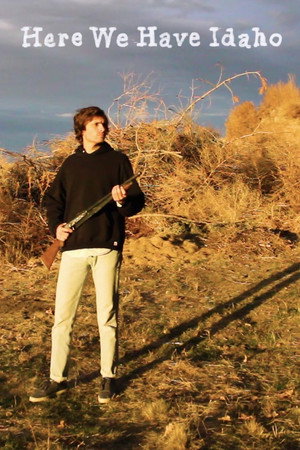
On a visit home to Idaho, Matt documents family dynamics and recalls scattered memories from childhood. “Here We Have Idaho,” is a witty self-portrait about small-scale resentments and feeling undervalued amongst loved ones. He leaves his “high-octane, balls-to-the-wall” life as a New York City alt comic to spend some time with the fam. But soon he learns there’s no room for him to stay in the house — he’s been demoted to sleeping in a trailer in the driveway, a fact that he stews on for days.
Angst 61
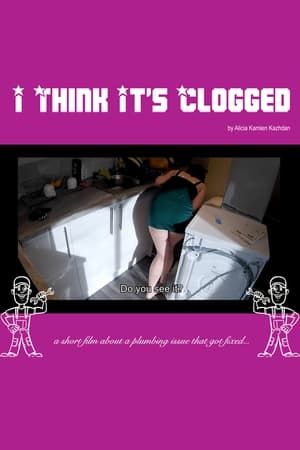
This short film explores the resolution of a plumbing problem through a narrative lens compiled from found footage sourced from pornographic websites.
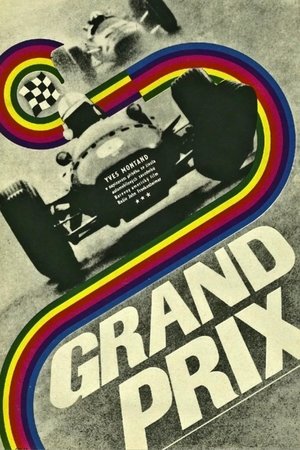
A short making of feature about the 1966 John Frankenheimer movie Grande Prix
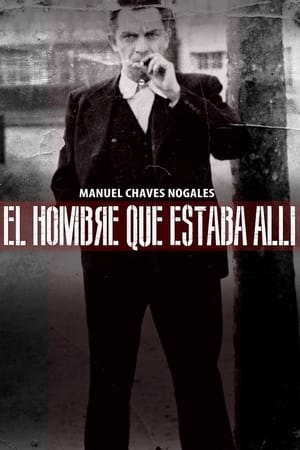
The Spanish journalist Manuel Chaves Nogales (1897-1944) was always there where the news broke out: in the fratricidal Spain of 1936, in Bolshevik Russia, in Fascist Italy, in Nazi Germany, in occupied Paris or in the bombed London of World War II; because his job was to walk, see and tell stories, and thus fight against tyrants, at a time when it was necessary to take sides in order not to be left alone; but he, a man of integrity to the bitter end, never did so.
Travessia de Toshiko
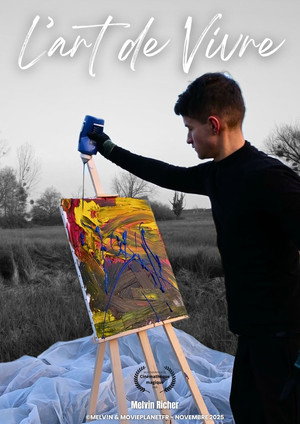
What is the Art of Living ? A few weeks ago, I asked myself this question, as silly in its formality as it is complicated in its complexity. In this video, I'll try to give you my definition and my vision of what the art of living is !
Washed up adult film star Buster Coffey attempts to get his career back.
Ordinary people who have gone to extra-ordinary lengths for retribution confess their crimes of passion...delve deep into the psyche of the wronged, the scorned and the spurned who sought out their revenge.
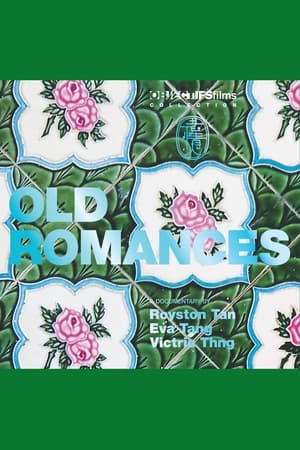
There is romance in every corner we turn. In this sequel to the documentary, Old Places, Old Romances takes us on a journey to experience Singapore through the collective voices of ordinary Singaporeans. Through their voices, we hear personal stories from members of the public who shared their anecdotes on radio. Everyday spaces come alive with these special memories, which are bonded forever with these places. Old Romances is a journal of love letters to places that we grew up with.
Los Cocheros de Drácula
Una Calle Especial
During the annual blackout, a couple says goodbye in a taxi.
Good Morning in Singapore.
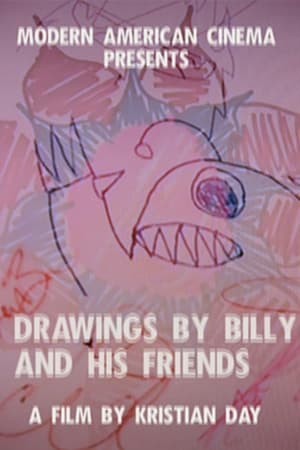
In this experimental short film, Kristian Day collected artwork created by the public. He found the majority of the pieces at "Sharpie marker demonstration tables" and it took almost a year to collect the artwork. All pieces were created by chance with no prior thought. He originally intended on using the photos for a collage canvas piece, however after deciding that a short film would stand the test of time longer, he took individual shots of over 30 pieces. The drone music was created using a variety of simple sound generators & tapes that are being manipulated by delays, filters, and reverberation effects.
Revisit the killer puppets and paranormal researchers, whose brain fluid they craved, with in-depth BTS footage and commentary from the cast and crew.
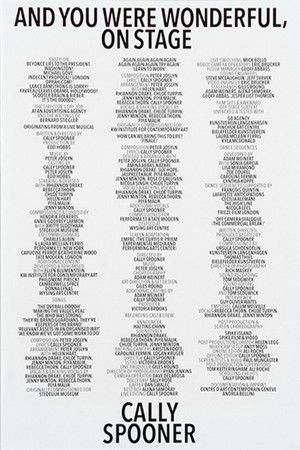
An immersive film installation by Cally Spooner. In this work, a musical for six continuously rolling cameras, a black box soundstage and its inhabitants, are recorded in a single take. The mechanics of the shoot (cameras, microphones, mixing boards, chromakey screens and crew) remain as present as the performers they capture. Cast and crew become a constant-motion human backdrop, pragmatically recomposing scene-changes through lighting cues, voice, body movement, or continuous shifts of filmic apparatus and props. The semblance of a post-production edit arrives through the organisation and orchestration of bodies on set. Delivered by a chorus line of women, the film gossips about various celebrities, athletes and politicians who have outsourced their performances to different technologies.
The housing market in South Korea is tight, and animator Sunghwan Lee moves from one semi-basement to another temporary home. This situation, combined with his difficult childhood, got him thinking. What is a home? What makes a house a home?
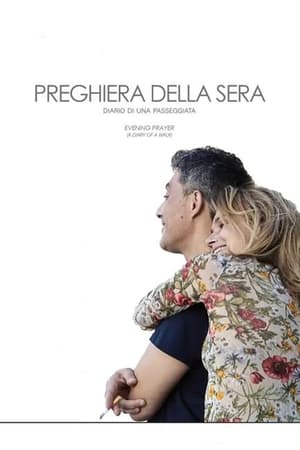
The film recounts an experience, that of a director and his two actors at grips with a play: from the first meeting to the initial readings, the rehearsals done at home, the ones done on stage and finally the first performance. But an experience that took place in the peculiar situation in which the whole of Italian culture found itself in the days between the first and second wave of the pandemic, when it really seemed possible to restart and the feeling of euphoria was accompanied by the illusion that the worst was behind us. Once again we were suddenly checked in our desire for beauty, for life.