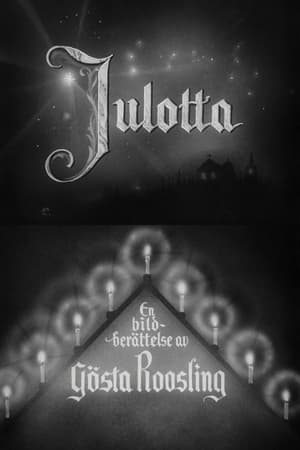
A Swedish short film taking us inside Värmdö church for the Christmas holiday.
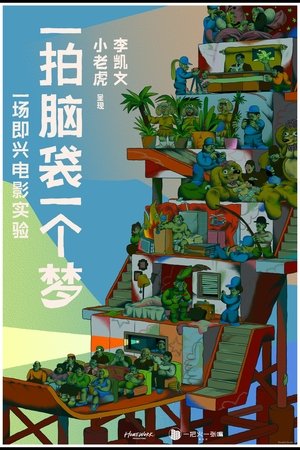
A filmmaker and rapper duo revive Michel Gondry’s “Be Kind Rewind” protocols - a set of filmmaking “rules” with which groups of strangers can conceive, shoot, and screen a film in just two and a half hours. Against the grim backdrop of the stringent Shanghai lockdown, the event soon turns into a sanctuary for individuals to forge collective dreams.
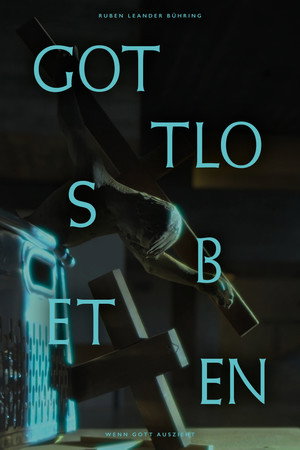
In a small chapel in Zug, Switzerland, a legend tells of a hidden treasure. There is only one rule: remain silent, and in time, the treasure will be yours. But the moment the silence is broken, it is lost forever. What if the treasure was never gold or jewels, but the chapel itself—a place where silence is still possible? Perhaps we have forgotten how to remain silent, and with that, we risk losing one of the last places that still allows it. Gottlos Beten follows the decline of a sacred place.
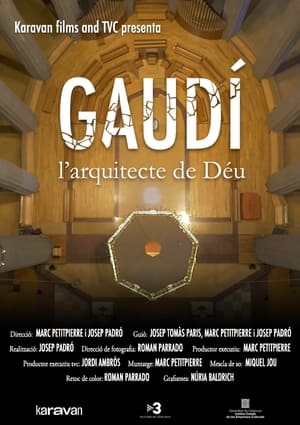
“Gaudí, l’arquitecte de Déu” is a story of faith, of overcoming, about five lay that decided to create an assossiation to demonstrate that Gaudí deserves one of most valuable titles of the Church: beatification. The Pro-Beatification Association of Antoni Gaudí has been working more than 25 years to manage to beatify the architect of Reus, picking up all witnesses and proofs that demonstrate that Gaudi lived like a beatus and, the most difficult part, wiaiting for a miracle to happen attributed do Gaudí himself, an essential condition for his beatification. The documentary will follow this case, showing Gaudi’s life and work from a new outlook, more intimate and linked to spirituality and beliefs of the architect.
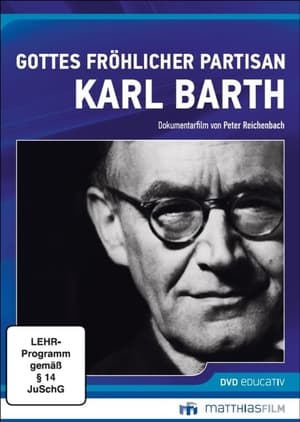
Gottes fröhlicher Partisan - Karl Barth
Ieri è Oggi
Love Costs Everything maps the history of Christian persecution from the first Christian martyrs to seven present-day stories of faith that knows no price. In the face of persecution, these followers of Christ fear compromise more than death itself. Filmed in Iraq, Columbia, India, Egypt, France and the United States, this feature-length documentary includes commentary from United States Congressmen, foreign government officials, religious leaders and scholars.
A documentary on the Pitiquito temple.
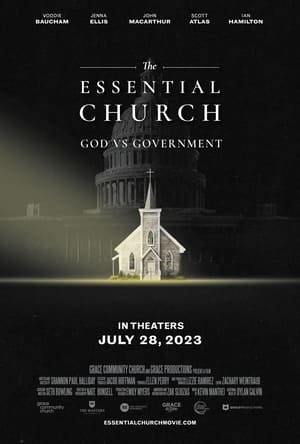
When governments use Covid emergency act edicts to restrict the gathering and worship of the Church, three pastors facing the risk of imprisonment, unlimited fines, and their own Churches splitting apart take a courageous stand and re-open in the face of a world that has chosen to comply.
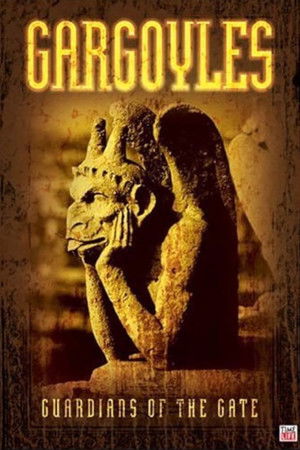
This documentary takes a look at gargoyles, the stone or cement creatures that adorn the lofty tops of buildings. Thought by some to contain the trapped souls of the condemned and believed by others to ward off evil, these adornments are sources of curiosity even today.
Le Sacré-Coeur : Mégastructure historique
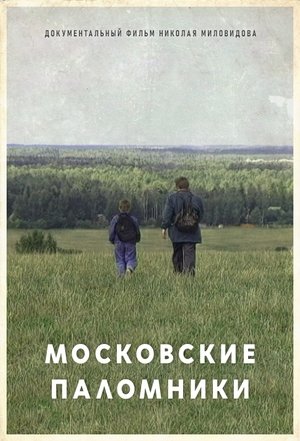
"The Moscow Pilgrims" is a film that takes you on a tour of Russia’s ancient capital. The film’s main characters – father and son – are doing the most intersting sights of old Moscow, including the Simonov Monastery, the New Spassky Cloister and the Krutitsky Church located on a picturesque bank of the Moskva River. The celibate priest Ilia, the dean of the church of the Holy Mother of God father Vladimir and other priests will help the pilgrims and visitors to see the world of Moscow’s ancient holy sites: the burial-vault of the noble Romanov family, the Cathedral of the Transfiguration of God recently cleared from security services, and the graves of the Kulikovo battle heroes, the monks Oslyabi and Peresvet.
Saint-Pierre : la basilique de tous les records
A documentary following Zhou Yuanquiang, a cultural worker in Jingdezhen, China who makes movies with untrained local actors.
An exploration of Rodez Cathedral and its stained glass windows: praying figures and scientific imagery. A study on color, repetition and flickering consisting of 292 photographs.
Sir John Betjeman visits and explains the architecture of various churches in the Diocese of Norwich. Among those visited: Sandringham church on the Queen's private estate, the Holy House of Our Lady of Walsingham and Norwich Cathedral.
Oscar, not quite a child anymore, scavenges for scrap metal for his father. He spends his life in improvised landfills among what remains of leftovers. Worlds apart, yet close-by, there is Stanley. He tidies the church in exchange for a monetised hospitality, picks fruits, herds sheep: anything that keep his foreign body busy. Oscar, the young Sicilian, and Stanley the Nigerian don’t seem to have much in common. Except for the feeling of being thrown into the world, to suffer the same refusal, the same overwhelming wave of choices imposed on them by others.
How was the Second World War experienced in Rouveen, Overijssel? This Orthodox Christian village near Staphorst was self-sufficient during the war. And largely isolated from the outside world. The last eyewitnesses of the war, the children of that time, are now all very old. In the Duutsers, residents of the Overijssel village of Rouveen talk movingly openly about their war memories to fellow villager and filmmaker Geertjan Lassche. Their stories are interspersed with historical video fragments and photos from the past. This is how an honest child's view of growing up in a rural village unfolds. How did the war come to the village? Who is that stranger in the village in front of them, that German? And in what those of other strangers? When does unrest arise, and unrest in fear of hatred? What about the Jewish labor camps in the village and how did they view the Canadian liberators?
Camino a Higüey
The church is the body of Christ. In Greece, the church embodied a philosophy. Then in Rome, it became an institution. Spreading throughout Europe, it became one with the culture there. Traveling to the US, the church became a business. And when it arrived in Korea, it became a conglomerate. The top five largest churches in the world are located in Korea. However, Christ has long been absent in the nation. So then, what is the church? Who is Jesus Christ? What kind of world do Christians want? If the church is indeed the body of Christ, then we must ask the questions point-blank. Where do we stand in all this? And where exactly are we headed? Korean churches—“Quo Vadis?” Korean society—“Quo Vadis?”