A Suitable Girl follows three young women in India struggling to maintain their identities and follow their dreams amid intense pressure to get married. The film examines the women's complex relationship with marriage, family, and society.
"Fascinating India" spreads an impressive panorama of India’s historical and contemporary world. The film presents the most important cities, royal residences and temple precincts. It follows the trail of different religious denominations, which have influenced India up to the present day. Simon Busch and Alexander Sass travelled for months through the north of the Indian subcontinent to discover what is hidden under India’s exotic and enigmatic surface, and to show what is rarely revealed to foreigners. The film deals with daily life in India. In Varanasi, people burn their dead to ashes. At the Kumbh Mela, the biggest religious gathering of the world, 35 million pilgrims bathe in holy River Ganges. This is the first time India is presented in such an alluring and engaging fashion on screen.
The Jarawas live in the Andaman Islands on the Indian Ocean. The origin of the tribe is in Africa some 70,000 years back. They have lived in almost perfect isolation from the rest of the world until recent times.
The Little Ballet Troupe of Bombay performs a "puppet ballet" of the Hindu epic, the Ramayana.
Documentary on the construction of Chandigarh, the new capital of the Indian Punjab region, planned by Albert Mayer and Swiss architect Le Corbusier.
By drawing a parallel between the Indian Durga Puja festival and other forms of celebrating the divine feminine, Santa Shakti reveals the Sacred Power beyond languages and religions.
The Run is a feature length documentary film which follows Australian Pat Farmer’s test of human spirit and behind the scenes drama as he runs the length of India – 80 kilometres a day for 64 days with the backdrop of colourful, enchanting, challenging, organized chaos of India, which will saturate your senses.
The River of Life and Death captures the slow time in the well-known Indian pilgrimage place of Benares, the act of purification by water, the burning funeral pyres, and the dandling snakeheads under the temple stairs.
Gods in Shackles is an expose revealing the dark side of the Indian state of Kerala's glamorous cultural festivities that exploit temple elephants for profit in the name of culture and religion.
Hundreds of thousands of Indian men and women – indigenous inhabitants and landless farmers – demand their right to existence by making a 400 kilometre protest march from Gwalior to Delhi. How can one fight for one’s rights without using violence? With such an important contemporary question, the film spreads far beyond the borders of India. It shows the multiple facets of this imposing protest march and focuses as well on the daily realities of these proud people.
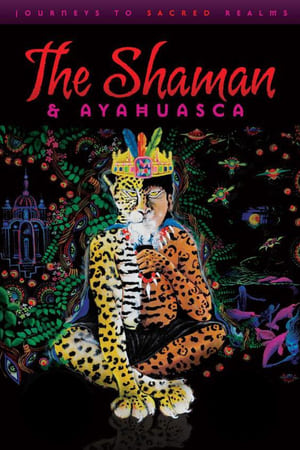
This documentary examines ayahuasca shamanism near Iquitos (a metropolis in the Peruvian Amazon), and the tourism it has attracted. The filmmakers talk with two ayahuasqueros, Percy Garcia and Ron Wheelock, as well as ayuahuasca tourists and local people connected with the ayahuasca industry.
PyeongChang 2018 Olympic Closing Ceremony: The Next Wave
Sochi 2014: Olympic Closing Ceremony: Reflections of Russia
Somi is pregnant with her second child. A girl, she hopes. Together with her husband she prepares for this new phase of their parenthood. It means that their son has to go to school, but as an ex-Naxalite that is tough to achieve in contemporary India, where people like them are third-rate citizens. They lack the certificates and an opaque bureaucratic process doesn't help. Directors Isabella Rinaldi, Cristina Hanes and Arya Rothe of the NoCut Film Collective concentrate on Somi's close family ties, painting a portrait of ex-Naxalites in India. Once, Somi and her husband were communist rebels fighting for the rights of Indian tribes. However, to safeguard their family's welfare, they surrendered to the government in exchange for marginal compensation and simple accommodation.
The 2008 Summer Olympics opening ceremony was held at the Beijing National Stadium, also known as the Bird's Nest. It began at 8:00 p.m. China Standard Time (UTC+8) on August 8, 2008, as 8 is considered to be a lucky number in Chinese culture. Featuring more than 15,000 performers, the ceremony lasted over four hours and cost over $100 million USD to produce.
The anti-Slumdog Millionaire in documentary form, "Buzz" charts the tumultuous rise of India's most famous tattoo artist as he struggles to overcome the demons of his poverty-stricken childhood through art.
This documentary focuses on the Green Gabon program in the Congo Basin and explores rainforest conservation efforts as a way to stem climate change.
Uttarakhand, aux sources du Gange
Opening Ceremony
Since the rise to power of Hindu nationalists in 2014, India has been gradually moving away from democracy towards a regime where ethnic identity prevails. This transition is driven by Hindutva, a Hindu supremacist ideology embodied by Narendra Modi. For the past 10 years, Prime Minister Modi has relentlessly pursued his fascist policy based on Hindu supremacy. This ideology of hatred towards other religions in the country, particularly Islam, has also spread globally. Those who follow this belief want India to be only for Hindus, treating people of other religions, like Muslims or Sikhs as second-class citizens. Attacks against Christians have surged by 400% since Modi's election, accompanied by discriminatory laws targeting Muslims and widespread lynching incidents. Hindutva's influence permeates all levels of Indian society. This documentary thus unveils a darker side of India, far from its portrayal as the world's largest democracy and Gandhi's dream of peace among communities.